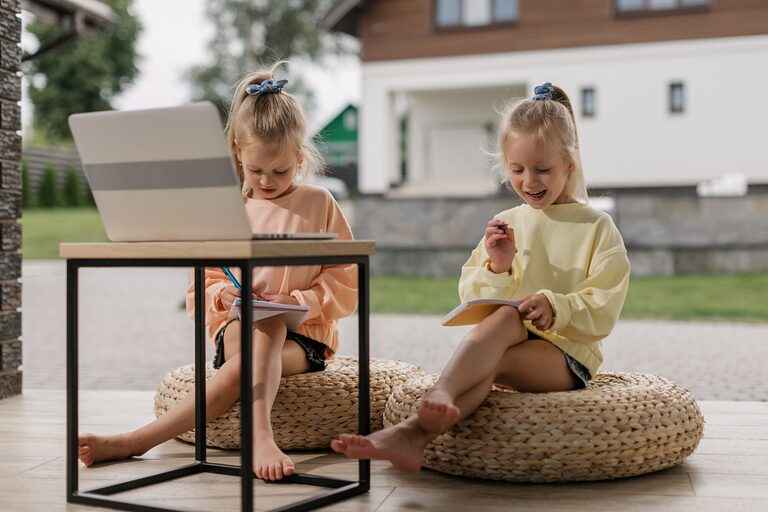
Homeschooling while travelling can take many forms. Some families follow a traditional homeschooling approach, while others keep their children enrolled in an online school or distance learning programme that provides lessons, assignments and teacher support. In most cases, travel becomes an extension of the learning experience, allowing children to combine formal education with real-world experiences.
Overview: Quick Answers for Busy Parents
- Homeschooling while travelling may involve online schooling, distance learning programmes, parent-led education or a combination of structured lessons and real-world experiences
- Online platforms such as Khan Academy, Outschool and IXL make remote learning while travelling easier to manage wherever reliable internet access is available
- A simple daily routine with set study hours helps children stay consistent even when locations change often
- Museums, historical sites and nature parks make excellent free or low-cost classrooms
- Short-term travel rarely affects a family’s homeschooling arrangements, but requirements vary depending on your country of residence and the education model you follow.
- A mix of screen-based lessons and hands-on activities keeps children engaged without screen fatigue
- Travel journals can turn everyday experiences into writing, geography and history lessons
- Downloading lessons, books and worksheets before travel days helps avoid disruptions when internet access is unreliable
Different Ways to Educate While Travelling
Not every travelling family approaches education in the same way. Common options include:
- Online schools, where children remain enrolled and complete lessons with teacher support
- Distance learning programmes, which provide curriculum materials and assessments remotely
- Parent-led homeschooling, where parents choose and deliver the curriculum themselves
- Worldschooling, which combines formal education with learning through travel experiences
- Hybrid approaches, which blend online lessons, independent study and educational travel
Many travelling families use a combination of these methods depending on their child’s age, learning style and travel schedule.
Best Online Learning Tools for Travelling Families
Reliable internet access has made education while travelling far more manageable than it was a decade ago. Here are some tools that families often rely on:
- Khan Academy: Free lessons covering maths, science and reading for most age groups
- Outschool: Live online classes with real teachers, useful for keeping social interaction alive
- IXL: Adaptive practice questions that adjust to a child’s level in real time
- Duolingo: A fun way to pick up the local language before or during a trip
- Epic!: A digital library filled with books suited to younger readers
- Google Classroom: Handy for organising assignments if you are following a specific curriculum
- Google Earth: Useful for geography lessons, route planning and helping children understand where they are travelling
Travel hack: If your child is enrolled in an online school, inform teachers about upcoming travel days in advance. Many schools can provide assignments early, helping children stay on track during flights, transfers or periods with limited internet access.
Another useful tip is to store important school records and completed work in cloud storage, so they remain accessible even if a device is lost or damaged during the trip.
Benefits of Homeschooling While Travelling
The growing interest in flexible and experience-led family holidays also reflects wider Gen Z family travel trends, including a preference for meaningful experiences that combine travel with everyday learning.
Families often choose to educate while travelling because it offers:
- Greater flexibility around travel schedules
- Opportunities for hands-on learning in real-world settings
- Exposure to different cultures, languages and perspectives
- More family time and shared experiences
- The ability to tailor learning to a child’s interests and pace
- Practical life skills such as budgeting, navigation and communication
For many children, visiting historical sites, museums and natural landmarks helps bring classroom subjects to life in a memorable way.
Creating a Travel-Friendly Study Routine
Consistency matters more than the exact hours you choose. Children thrive on predictability, even when the location around them keeps changing. Try these practical tips:
- Set a regular study block each morning before heading out to explore, so core learning is completed before distractions take over
- Keep a simple daily checklist with three or four core learning goals rather than an overly packed timetable
- Use travel days as a natural break, then return to lessons once you settle into the next stop
- Pack a small folder or waterproof pouch with pencils, notebooks and a tablet so lessons can happen anywhere, even on a train or ferry. Families travelling with younger children can also use a packing list for travelling with toddlers to make sure essential learning materials, snacks and other everyday travel items are easy to organise.
- Involve children in trip planning, since researching a destination is itself a valuable lesson in reading and geography
- Use airport lounges, train journeys and ferry crossings for reading, journalling or educational games
- Schedule one catch-up study day every week or two to revisit any lessons missed during busy travel periods
Many travelling families find that two to three hours of focused study each day is enough to cover core subjects, particularly when educational experiences throughout the day reinforce what children are learning. This balance keeps both parents and children from feeling burnt out.
Educational Destinations for Children
Some destinations naturally lend themselves to educational travel. A few examples worth considering include:
- Rome, Italy: Ancient ruins and museums bring history lessons to life in a way no textbook can match
- Kyoto, Japan: Temples, gardens and traditional crafts offer lessons in culture, art and history
- Costa Rica: Rainforests and wildlife reserves make excellent settings for science and biology lessons
- Cairo, Egypt: The pyramids and museums provide a hands-on introduction to ancient civilisations
- Cape Town, South Africa: A mix of natural history, marine life and cultural diversity in one city
- London, England: World-class museums, historic landmarks and many free educational attractions make it ideal for travelling learners
Visiting a science museum, national park or historical landmark often costs less than a full day of paid activities and gives children a memorable, practical lesson at the same time.
Travel hack: Many museums offer free family activity sheets, children’s trails or junior guidebooks. Checking ahead can help turn a simple visit into a more engaging learning experience
Balancing Sightseeing and Schoolwork
One of the biggest challenges parents face is fitting in lessons without turning every trip into a chore. A few strategies can help:
- Treat sightseeing as an extension of the curriculum rather than a break from it, so a castle visit doubles as a history lesson
- Assign simple journal entries after major outings, encouraging children to record what they saw, learned or found surprising
- Avoid overloading the schedule, since trying to combine full lessons with a jam-packed itinerary often leads to frustration on both sides
- Build in rest days with no formal lessons at all, allowing children to recharge
- Use photographs taken during the day as prompts for writing, art projects or presentations later in the trip
Flexibility is the key here. Some days will be full of structured learning, while others will be entirely experience based. Both approaches have value and flexibility is often one of the greatest advantages of learning while travelling.
Legal Considerations for Homeschooling Abroad
Rules around homeschooling vary widely depending on your home country and how long you plan to travel. A few points worth checking before you go:
- Confirm whether your home country requires you to register as a homeschooling family, even while abroad
- Some countries have specific visa, residency or education requirements for long-term stays that may affect schooling arrangements
- Keep records of lessons completed, including photos, worksheets or a simple logbook, in case you need to show proof of education later
- If you plan to return your child to a traditional school system, check what documentation that school may require
- Speak with other travelling homeschool families online, since many have already navigated the paperwork for popular routes
- Keep both digital and printed copies of important educational records, particularly if you plan to travel for several months or more
It is worth spending an afternoon researching your specific situation before setting off, since laws can change and requirements differ by country and by how long you intend to stay.
Frequently Asked Questions
Yes, some families use online schools, virtual academies or distance learning programmes that allow children to continue following a recognised curriculum while travelling. Availability depends on your home country and education provider.
Not necessarily. Many parents use online classes, tutors, curriculum providers or distance learning programmes to support subjects they do not wish to teach themselves.
Many travelling families find that two to three hours of focused study each day is sufficient, with additional learning taking place through sightseeing, museums, cultural experiences and everyday travel activities.
Keep a simple record of subjects covered, along with samples of work, so the receiving school can assess your child’s level easily.
Yes. Teenagers can take on more independent research projects and online courses, while younger children usually benefit from a more hands-on, structured approach.