Pet travel in train journeys is becoming more common as owners look for calmer, greener ways to explore with their furry companions. If you have ever stood on a platform wondering whether your dog needs a ticket or your cat will cope with hours in a carrier, you are not alone. Rail travel with pets can feel confusing at first, but with the right preparation it can actually be one of the most relaxed ways to travel together. This guide breaks down the rules, gear and small habits that make a real difference, drawn from the experiences of pet owners who have done it many times over.
Overview: Quick Answers for Busy Readers
- Most train companies allow small to medium pets in carriers and larger dogs on a lead, but rules vary by operator and country
- Book your tickets early and check whether a pet reservation is required, since many trains cap the number of animals per carriage.
- Use a well-ventilated, secure carrier that your pet has already practised sitting in
- Feed pets lightly a few hours before departure to avoid travel sickness
- Plan toilet breaks around station stops, not during the journey itself
- Carry updated vaccination records or a pet travel passport if crossing borders
- Avoid peak commute hours and school holidays when carriages are crowded
- Bring familiar bedding or a worn t-shirt to keep your pet’s scent nearby and reduce anxiety
- Choose direct services where possible to reduce the number of station changes and minimise stress for your pet.
Train Company Pet Policies Explained
Every rail operator sets its own pet rules, so checking the rules before travelling saves a lot of stress at the station. Generally, policies fall into a few common patterns:
- Small pets in carriers: Usually free or low cost, often treated like hand luggage
- Dogs on a lead: Many operators allow one or two dogs per passenger, sometimes with a paid ticket
- Weight or size limits: Some operators set weight limits, especially for larger dogs travelling without a carrier.
- Breed or species restrictions: A few countries restrict certain breeds on public transport for safety reasons
- Seat reservations: Some operators require pets to travel in specific seating areas or ask owners to reserve a designated space in advance.
For example, on many European rail networks such as those in France, Germany and the Netherlands, small dogs and cats travel free in a carrier, while larger dogs need a muzzle, a lead and sometimes a half-price ticket. In the UK, most train operators allow up to two dogs per passenger at no extra charge, though assistance dogs always travel free regardless of size. Always check the specific operator’s website close to your travel date, since rules can change with little notice. If your train journey includes an overnight stop, check for unexpected pet fees at hotels before booking, as some properties charge additional cleaning fees or deposits for animals.
Best Carriers and Travel Accessories for Trains
Choosing the right gear makes a bigger difference than most owners expect. A poor-quality carrier can turn a short trip into a stressful one for both you and your pet.
Look for:
- A well-ventilated hard-sided or sturdy soft-sided carrier, depending on your journey
- Enough space for your pet to stand, turn and lie down comfortably
- A secure zip or lock so anxious pets cannot push their way out
- Wheels or a shoulder strap if you are also managing luggage
Useful extras to pack:
- A collapsible travel bowl for water stops
- Puppy pads or absorbent liners in case of accidents
- A favourite chew toy or blanket for comfort
- A printed copy of your pet’s vaccination record
- A lightweight towel to cover the carrier if your pet becomes overstimulated
- Spare identification tags in case one becomes damaged or detached during the journey
Many experienced pet owners recommend placing a worn t-shirt or blanket inside the carrier a day before travel. The familiar scent helps many pets settle more quickly and makes the carrier feel like a safe space rather than somewhere unfamiliar.
Tips for Keeping Pets Calm During Journeys
Long train journeys can be unsettling for animals used to quiet homes. A few simple habits help enormously:
- Practise short train trips before a longer journey, if possible
- Keep the carrier securely on the floor in front of your seat where permitted, rather than balancing it on a table or the edge of a seat.
- Speak in a calm, steady voice rather than checking on your pet anxiously, since animals pick up on tension
- Cover part of the carrier with a light cloth to reduce visual stimulation
- Avoid feeding right before boarding to lower the chance of nausea
- If your pet also becomes nauseous during road journeys, understanding pet motion sickness in cars can help you recognise the symptoms and prepare suitable ways to keep them comfortable.
- Reward calm behaviour with quiet praise or a favourite treat during longer journeys, provided your pet is not prone to travel sickness.
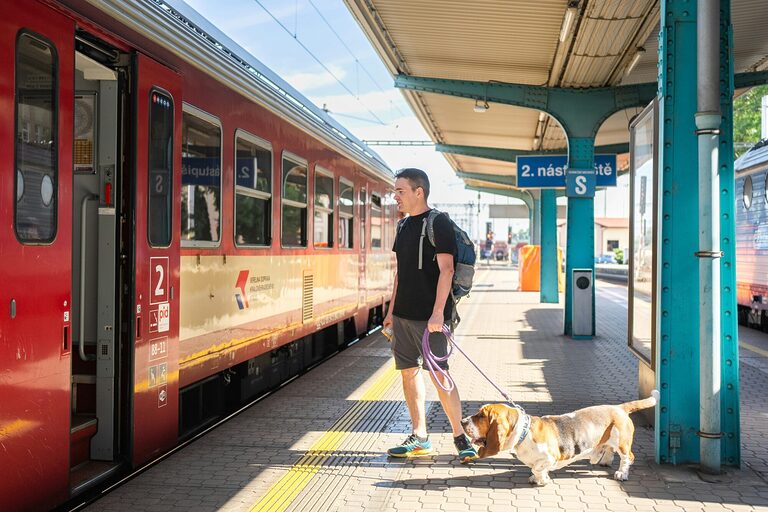
Dogs travelling on a lead rather than in a carrier often settle faster if given a short walk on the platform just before boarding. This burns off nervous energy and encourages them to rest once seated.
Travel hack: Board the train a little earlier where possible. It gives your pet time to settle before other passengers begin filling the carriage.
Food, Water and Toilet Break Planning
Timing meals and toilet breaks properly is one of the most overlooked parts of pet travel in train journeys.
- Feed a light meal two to three hours before departure, not immediately before
- Offer small amounts of water little and often rather than a full bowl at once to reduce spills.
- For dogs, plan toilet breaks at station stops with enough platform time, checking the timetable in advance
- For cats and small pets, a portable litter tray works well for journeys over four hours
- Avoid sugary or salty snacks that increase thirst and toilet needs
- Carry a few absorbent wipes and waste bags somewhere easy to reach in case of unexpected accidents during the journey.
If your route includes a stop of at least ten minutes, that is usually enough time for a quick walk near the platform. Always check the door closing times posted on the platform screen so you are not caught out.
Travelling With Pets During Busy Travel Times
Peak periods bring more people, tighter aisles and higher stress for animals. If you can, avoid:
- Weekday rush hours, generally 7 to 9 in the morning and 4:30 to 6:30 in the evening
- School holidays and public holiday weekends
- Major sporting or festival dates in the cities you are passing through
Travelling mid-morning or early afternoon on weekdays tends to give you a quieter carriage, more space for the carrier and a calmer overall experience for your pet.
Travel hack: Reserve seats close to luggage areas or at the end of a carriage where there is often a little more floor space for carriers and larger dogs.
Pet Passport and Document Requirements
If you are planning pet travel within EU borders or wider international rail routes, documentation matters as much as the ticket itself. A pet travel passport, used by eligible pets travelling within the EU, records vaccinations, microchip details and health checks in one official document.
Typical requirements include:
- A microchip fitted before or at the same time as rabies vaccination
- Proof of rabies vaccination, usually valid from 21 days after the first dose
- A completed pet travel passport or equivalent health certificate for non-EU travel
- Tapeworm treatment records if travelling to or from certain countries such as the UK, Ireland, Finland, Norway or Malta
- Carry printed copies of important documents even if you have digital versions, as internet access may not always be available during your journey.
For pet travel Europe routes, rules are fairly harmonised, but always confirm current requirements with the relevant government or transport authority a few weeks before departure, since regulations do get updated.
Overnight Train Travel With Pets
Sleeper trains add another layer of planning. Space is tighter and other passengers are trying to rest too.
- Book a private cabin where possible, rather than a shared sleeper berth
- Bring a comfortable carrier or travel bed that fits easily within your cabin
- Feed and offer a toilet break as close to boarding time as the schedule allows
- Pack a calming aid, such as a pheromone spray recommended by your vet, for particularly anxious pets
- Set an alarm before major stops in case an unscheduled walk is needed
- Pack a quiet chew or favourite toy to help your dog settle before bedtime.
Overnight rail journeys offer a smoother ride than many road trips, but opportunities for toilet breaks are limited. Planning feeding times and station stops carefully helps keep your pet comfortable throughout the night.
Common Mistakes to Avoid When Travelling by Train
- Booking tickets without checking the pet policy first, then finding no space left in the pet quota
- Using a carrier your pet has never sat in before travel day
- Overfeeding right before boarding
- Forgetting printed vaccination proof, since not every conductor accepts a phone screenshot
- Assuming all carriages allow pets, when quiet or first-class coaches sometimes restrict them
- Ignoring the weather at your destination, since a carrier that suits a cool climate may not suit a hot one
- Forgetting to exercise your dog before arriving at the station
- Packing food or medication in luggage that is difficult to reach during the journey
- Allowing your pet to block aisles or carriage doors, which may inconvenience other passengers
Comparison: Small Carrier vs Lead-Walking on Trains
| Factor | Carrier Travel | Lead Travel |
| Best suited for | Cats, small dogs, rabbits | Medium to large dogs |
| Typical cost | Often free or low fee | May require a paid or half-price ticket |
| Space needed | Fits under seat or on lap | Needs floor space and clear aisle access |
| Calming difficulty | Easier to create a quiet, enclosed space | Needs pre-walk to settle |
| Document needs | Same passport rules apply | Same passport rules apply |
Travel Hacks for Easier Rail Journeys
- Download the train operator’s app before travelling so you receive live updates about delays or platform changes.
- Keep your pet’s lead attached before the train reaches your station, rather than waiting until the doors open.
- If changing trains, allow extra transfer time so you do not have to rush through busy stations with your pet.
- Avoid seating close to automatic doors if your pet is easily startled by sudden noises.
- Pack a small microfibre towel to dry muddy paws before reboarding after station walks.
Frequently Asked Questions
No. Policies vary widely, so always check the specific operator’s rules before booking.
Costs vary by operator, ranging from free for small pets travelling in carriers to around $10 to $30 USD for larger dogs where tickets are required.
Yes, though you will usually need a pet travel passport or health certificate, plus proof of vaccination.
Cover the carrier partly, keep your voice calm and bring a familiar item with your pet’s scent. Speak to your vet before travelling about calming products if your pet regularly becomes anxious.
It depends on your pet’s temperament and the length of the journey. Trains offer a smoother, quieter ride, while car travel gives you complete flexibility over rest stops and travel times.