Finding the best food cities for families in Asia can turn a stressful mealtime search into one of the highlights of your whole trip. If you have ever stood on a busy street with a hungry toddler, scrolling through menus you cannot read, you already know the struggle. The good news is that some Asian cities make family dining wonderfully easy, with mild flavours, casual dining options and dishes that even many fussy eaters will enjoy. This guide walks you through the cities, dishes and practical hacks that make eating out with children abroad far less daunting.
Overview: Quick Answers for Busy Parents
If you only have a minute, here is what you need to know:
- Top family friendly food cities in Asia: Bangkok, Singapore, Tokyo, Taipei and Kuala Lumpur
- Easiest local dishes for kids: fried rice, dumplings, noodle soups, grilled skewers and steamed buns
- Best restaurant type for families: food courts and hawker centres, since they offer variety and quick seating
- Budget tip: eat where locals eat, not near major tourist landmarks, to save on both cost and waiting time
- Allergy tip: carry a translated allergy card on your phone and a printed copy, especially for nut, dairy and shellfish allergies
- Encouraging kids to try new food: let them pick one dish each meal, so they feel in control of the choice
- Save a shortlist of family-friendly restaurants near major attractions before sightseeing days to avoid last-minute searches with hungry children
- Use offline translation apps: to help read menus when English translations are unavailable
Most Family Friendly Food Cities in Asia
Some cities are simply built for family dining, thanks to their food culture, safety standards and range of options.
Bangkok, Thailand is one of the easiest cities for family dining Asia has to offer. Street food stalls sit right next to shopping malls with air-conditioned food courts, so you always have a backup plan on a hot afternoon. A real example many parents share online is ordering khao man gai, a simple chicken and rice dish, for a picky eater who refuses spicy food. It is mild, filling and available almost everywhere.
Travel hack: Many shopping malls in Bangkok have large food courts with dozens of affordable options under one roof, making them excellent backup plans during hot weather or sudden rainstorms.
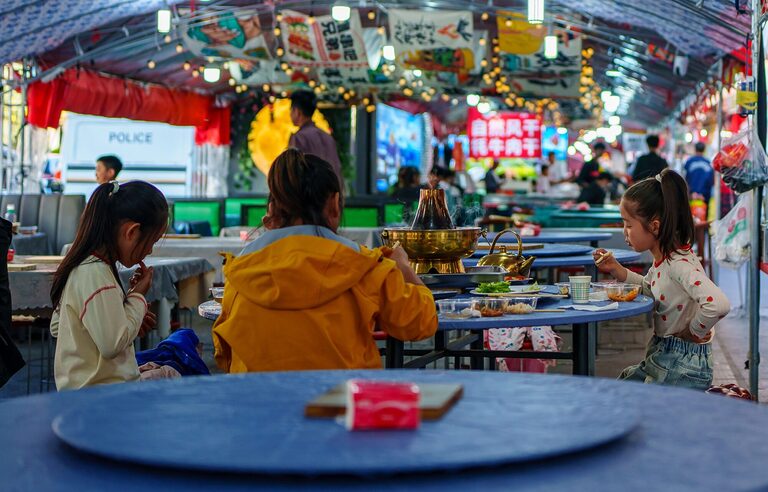
Singapore deserves a spot near the top of any list for kid friendly restaurants abroad. Hawker centres such as Maxwell Food Centre or Old Airport Road Food Centre offer dozens of stalls in a shared dining space, so each family member can choose something different without leaving the table. Hygiene standards are strictly regulated, which gives many parents extra peace of mind.
Travel hack: Visit popular hawker centres slightly before peak meal times to secure seating more easily, especially when travelling with strollers.
Tokyo, Japan surprises a lot of visiting families with how welcoming it is for children, despite its reputation as a fast-paced city. Many restaurants provide small chairs, kid sized cutlery and picture menus. Conveyor belt sushi restaurants, known as kaiten-zushi, let children pick their own plates as they pass by, turning a meal into a small game.
Taipei, Taiwan combines night markets with sit-down restaurants, giving families flexibility depending on the child’s mood that day. Shilin Night Market is famous, but quieter neighbourhood markets often have shorter queues and calmer surroundings for toddlers.
Kuala Lumpur, Malaysia blends Malay, Chinese and Indian cuisine, which means an enormous variety of mild and flavourful choices. Food courts inside malls such as Pavilion or Suria KLCC are air conditioned, clean and stocked with familiar options like fried noodles or roti canai.
Travel hack: Large shopping centres often provide family rooms, nursing facilities and baby-changing stations, making meal breaks much easier with younger children.
Best Local Dishes for Children
Some Asian dishes translate especially well to younger palates. When exploring Asian food for kids, look out for these:
- Fried rice in almost any country, since it is mild, familiar and easy to customise
- Dumplings or steamed buns, which are soft, bite-sized and rarely spicy
- Noodle soups with the broth served on the side if the child is unsure
- Grilled skewers, popular in Thailand, Vietnam and Indonesia, which older children often enjoy holding themselves
- Congee or rice porridge, gentle on the stomach and common across East and Southeast Asia
- Fresh fruit stalls, offering mango, watermelon and dragon fruit that are naturally sweet and hydrating, preferably where fruit is freshly cut or peeled in front of you
- Plain noodle dishes with simple sauces
- Egg-based dishes such as omelettes or egg fried rice
- Soup dumplings or wontons where available
A useful hack is asking for dishes “not spicy” or “mild” in the local language before ordering, since spice levels can vary far more than travellers expect.
Restaurant Tips for Families Abroad
Eating out with children in an unfamiliar country becomes far smoother with a few habits in place.
- Eat early. Arriving just before typical local meal times, such as 11.30am for lunch, means shorter queues and calmer restaurants.
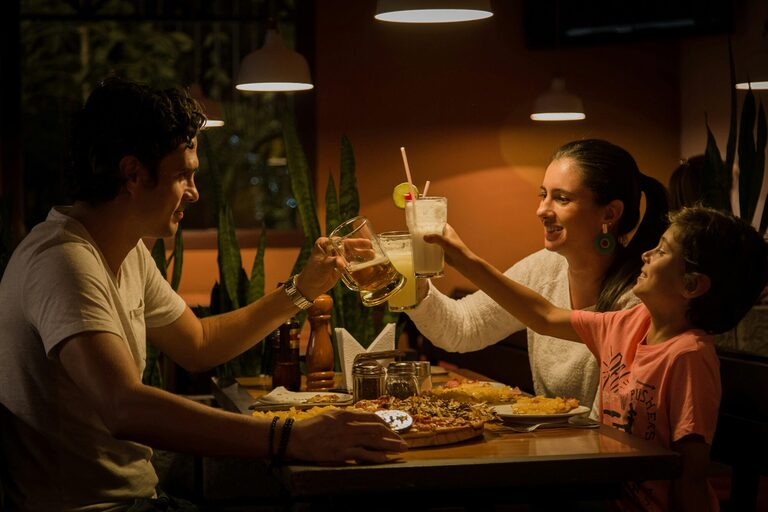
- Consider casual dining venues with flexible seating. Casual spots like hawker centres and food courts rarely require booking and let you leave quickly if a child gets restless.
- Look for picture menus or plastic food displays. Many Asian restaurants, particularly in Japan and Thailand, display realistic food models, which makes ordering far easier without shared language.
- Bring familiar snacks as backup. A packet of crackers or a favourite snack from home can rescue a meal if the local food does not appeal that day.
- Ask staff for recommendations. Servers often know exactly which dish suits a child’s taste, even without much shared language.
- Check restaurant reviews from other families rather than relying only on overall ratings
- Keep a small emergency snack in your bag in case service is slower than expected
- Ask whether children’s portions are available before ordering
Budget Eating Strategies in Asia
A budget eating abroad with kids guide would not be complete without a few money saving habits that also happen to improve the experience.
- Skip restaurants near major attractions. Prices near famous landmarks are often double what you would pay two streets away.
- Share portions. Many Asian dishes are generously sized, so ordering fewer plates for the table often works out cheaper and reduces food waste.
- Visit local markets for fruit and snacks. Buying fruit from a market stall costs a fraction of hotel or restaurant prices.
- Use food courts over standalone restaurants. They tend to offer lower prices, faster service and more variety under one roof, useful when children have different tastes.
- Set a daily food budget. A reasonable estimate for a family of four eating mostly at local food courts, markets and casual local restaurants is around 30 to 60 USD per day in many Southeast Asian cities, though costs vary significantly by destination and dining style.
- Order a few dishes first and add more if needed rather than over-ordering immediately
Vegan and Allergy Friendly Food Options
Asia has grown far more accommodating for dietary needs in recent years, though preparation still helps.
For a vegan family travel food guide, note that Buddhist influenced cities such as Chiang Mai, Taipei and Kyoto often have excellent plant-based options, since vegetarian eating has long been part of local religious practice. Tofu, vegetable dumplings and plain noodle dishes are widely available and simple to request.
For allergies, keep these tips in mind:
- Carry a translated allergy card showing your child’s specific allergy in the local language
- Avoid street stalls with shared cooking equipment if cross-contamination is a concern
- Choose restaurants with English menus when available, since they may provide more detailed ingredient information
- Ask specifically about peanut and shellfish-based sauces, since these appear in many dishes without obvious mention
- Learn the local words for your child’s allergy in addition to carrying a translated allergy card
How to Encourage Kids to Try Local Cuisine?
Getting children excited about new food often comes down to how the choice is framed rather than the food itself.
- Let them choose one new dish per meal, while keeping one familiar option available
- Turn it into a small game, such as trying three new foods during the trip and marking them off a simple list
- Involve them in the ordering process, even just pointing at pictures, since it gives a sense of control
- Start with familiar shapes, like dumplings or skewers, before moving to less familiar textures
- Praise the attempt, not just finishing the plate, which keeps mealtimes relaxed rather than stressful
- Visit food markets together and let children choose one fruit, snack or dessert to try
Comparison Table: Family Food Cities in Asia
| City | Best For | Kid Friendly Highlight |
| Bangkok | Street food variety | Mild rice and noodle dishes everywhere |
| Singapore | Hygiene and variety | Hawker centres with dozens of choices |
| Tokyo | Structured dining | Conveyor belt sushi and kid menus |
| Taipei | Night market culture | Soft, bite-sized street snacks |
| Kuala Lumpur | Multicultural cuisine | Air-conditioned mall food courts |
Frequently Asked Questions
Bangkok, Kuala Lumpur and Singapore tend to work particularly well, since they offer a wide range of mild rice, noodle and grilled dishes alongside more adventurous local options.
Busy stalls with high customer turnover are often a good sign, especially when food is cooked fresh and served hot. Families should also look for good hygiene practices and clean preparation areas.
Carry a translated allergy card, research restaurants in advance and avoid stalls where cross contamination is likely, such as shared woks or grills.
Yes, particularly in Singapore, Tokyo and Kuala Lumpur, where international chains and Western style cafes are common backup options.
Most families can expect to spend between 25 and 60 USD per day on food for a family of four, depending on the city and how often they eat at sit down restaurants versus food courts or markets.
Food courts, hawker centres and casual family restaurants are often among the easiest options because they offer variety, quick service and flexible seating for different ages and tastes.
Eating slightly before local peak meal times, saving restaurant options in advance and carrying emergency snacks can help reduce waiting-related stress.