If you’ve ever come back from a long day on the trail with a sunburnt neck and a pounding headache, you’ll already know why the best hiking hat deserves a proper place on your kit list. It’s one of those pieces of gear that easy to overlook until you desperately need it and by then, it’s too late. A good hat does far more than keep the sun off your face. It regulates temperature, protects your skin from UV damage, manages sweat and, on the right trail, keeps the rain off too.
Whether you’re tackling a coastal path, heading into the mountains or simply going on a long weekend walk in the countryside, choosing the right hat can genuinely make or break your comfort on the trail.
Overview: Quick Answers for Hikers on the Go
- Best all-round option: A wide-brim hat (10cm or more) with UPF 50+ fabric offers the most comprehensive sun protection for most hikers.
- Best for active, fast-paced hikes: A lightweight, ventilated hiking cap with a moisture-wicking sweatband keeps you cool and comfortable during high-output activity.
- Best for wet conditions: A waterproof walking hat or a waxed cotton wide-brim is ideal for British weather and mountain environments.
- Best for women: Ladies hiking hats with adjustable chin straps and packable brims strike the ideal balance between practicality and fit.
- Best for men: Hiking caps mens styles with structured brims and UPF ratings work well for trail running and fast hiking.
- Key features to look for: UPF 50+ rating, moisture-wicking lining, adjustable fit, breathable panels and a packable design.
Why a Good Hiking Hat Actually Matters?
It’s easy to assume any old baseball cap will do the job. And for a short stroll, perhaps it will. But once you’re several hours into a hike, the differences between a proper hiking hat and an ordinary cap become very obvious.
Prolonged sun exposure is a serious health risk, not just a comfort issue. UV radiation at altitude is significantly stronger than at sea level — for every 300 metres you climb, UV intensity increases by roughly 4%. On a high mountain route, you could be receiving 25–30% more UV radiation than you would at the trailhead. A hat with a proper UPF (Ultraviolet Protection Factor) rating of 50+ blocks over 98% of UV rays and is the single most effective piece of sun protection for your face, ears and neck.
Beyond sun protection, a well-designed hiking hat helps regulate body temperature. In hot conditions, a breathable hat with ventilation panels wicks moisture away from your forehead and allows heat to escape. In cooler or wet weather, the right hat shields you from wind and light rain, reducing the chill factor considerably.
There’s also the practical matter of visibility. A decent brim cuts glare from bright skies and snow-covered terrain, reducing eye strain and making it easier to read the trail ahead. On a long descent into the afternoon sun, that alone is worth the investment.
A hiking hat is only one part of a complete setup and understanding the essential hiking accessories for beginners can help you build a safer and more comfortable kit for longer walks in changing outdoor conditions.
Types of Hiking Hats: Which One Is Right for You?
Wide-Brim Hats
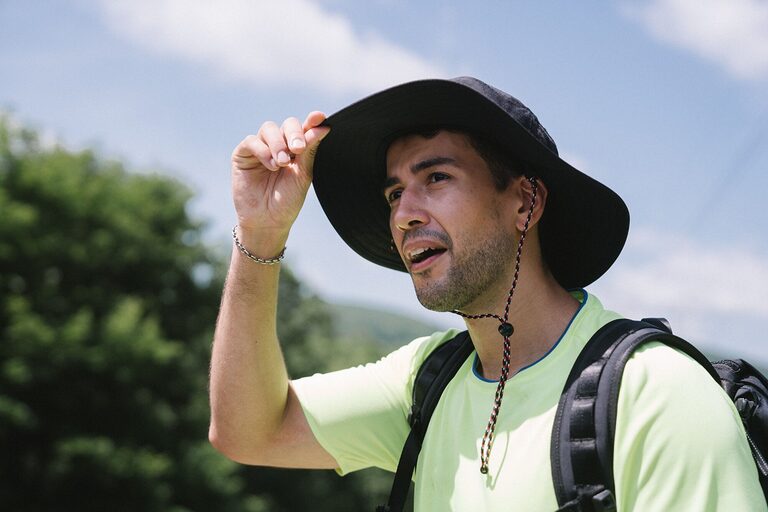
The wide-brim is the gold standard for sun protection on the trail. With a brim of 7–10 centimetres or more, these hats shade your face, ears and the back of your neck and areas that standard caps leave completely exposed. They’re particularly popular as women’s hiking hats and ladies hiking hats because they offer full-face coverage without sacrificing style.
The trade-off is that wide-brim hats* can feel bulky in windy conditions. Look for designs with an adjustable chin strap to keep the hat secure on exposed ridges or coastal paths. Packable versions that compress into your rucksack are ideal for trips where conditions change throughout the day.
Brands like Tilley, Sunday Afternoons and Outdoor Research have built excellent reputations in this category. The Tilley LTM6 Airflo, for instance, has been a favourite among long-distance walkers for years, it’s lightweight, ventilated and virtually indestructible.
Bucket Hats for Hiking
Bucket hats for hiking* have had something of a revival in recent years and with good reason. They offer a slightly smaller all-round brim than a traditional wide-brim hat, making them a bit more packable and less prone to catching the wind. They tend to sit closer to the head, which many hikers find more secure.
A good hiking bucket hat in nylon or polyester dries quickly after rain and weighs almost nothing in your pack. They work particularly well as a cool hiking hat in humid, tropical environments where ventilation and quick-drying properties are a priority. The Uniqlo UV Protection Hat and Columbia’s Bora Bora Booney are popular examples that balance function and everyday wearability.
Hiking Caps and Baseball-Style Hats
The hiking cap* is by far the most popular choice for trail runners, fast hikers and those who find wider brims impractical. Best hiking caps in this style offer a structured or unstructured front brim that shades the eyes and a lightweight, breathable body that sits close to the head.
For men, hiking caps men’s options often come with technical fabrics, reflective detailing and sweat-activated cooling properties. For women, a hiking cap for women with an adjustable back strap and a lower-profile brim works well for everything from day hikes to multi-day treks.
The main limitation of the standard cap is the lack of coverage on the ears and neck. If you’re spending long hours in full sun, you’ll want to pair a cap with a high-SPF neck sunscreen or a buff worn underneath.
Waterproof Walking Hats
For hikers in the reliably wet climates, waterproof walking hats* are a category worth taking seriously. A waxed cotton Tilley or Barbour-style hat repels light rain effectively while remaining breathable enough for active use. Gore-Tex or similar DWR-coated hats go further, handling sustained downpours without soaking through.
Walking hats for ladies in waterproof fabrics tend to feature softer, more pliable brims that don’t become stiff and uncomfortable when wet. Walking hats ladies styles also increasingly include packable designs that fold flat into a jacket pocket — very practical when weather shifts mid-route.
Best Materials for Breathability and Comfort
The fabric of your hiking hat matters more than most people realise. Here’s how the most common materials compare:
| Material | Breathability | UV Protection | Dries Quickly | Packable |
| Nylon | Excellent | Good (with UPF treatment) | Yes | Yes |
| Polyester | Very good | Good (with UPF treatment) | Yes | Yes |
| Cotton | Moderate | Poor unless treated | No | No |
| Merino Wool | Good | Naturally moderate | Moderate | Moderate |
| Waxed Cotton | Low | Good | No | No |
For most active hikers, nylon and polyester are the go-to choices. They’re lightweight, quick-drying and can be treated with UPF coatings that last the life of the garment. Cotton feels pleasant initially but becomes heavy and cold when wet — a genuine problem on exposed routes.
Merino wool is worth considering for cooler, shoulder-season hiking. It regulates temperature naturally, resists odour and provides a degree of inherent UV protection, though most merino hats will benefit from an additional UPF treatment to reach the 50+ standard.
Choosing a Hat for Different Weather Conditions
Hot and sunny: Prioritise a wide brim and UPF 50+ rating. Look for mesh panels or ventilation eyelets in the crown. Light colours (white, beige, light grey) reflect heat rather than absorbing it. Since prolonged sun exposure is one of the biggest risks on the trail, learning skin safe travel tips for outdoor adventures can help you better protect yourself beyond just choosing the right hiking hat, especially during long days outdoors.
Warm and humid: A bucket hat or hiking cap in technical nylon or polyester with strong moisture-wicking properties will prevent the sweat-soaked misery of a cotton hat in tropical conditions.
Cool and overcast: A standard hiking cap or a close-fitting bucket hat provides enough coverage without overheating. Look for a thermal lining if you’re heading into the hills in autumn or early spring.
Wet and windy: A waterproof walking hat with a chin strap is the most practical choice. Waxed cotton is classic but heavy; a DWR-treated nylon hat offers better performance for active hiking.
Cold and alpine: A wide-brim hat loses its practicality in snow and high wind. A thermal beanie or a balaclava-compatible cap is a better option for winter mountaineering, though a sun hat remains essential on bright, snow-covered terrain where reflection is intense.
Tips for Getting the Fit Right
A hat that doesn’t fit properly is a hat that will either fly off your head or cause a headache by mid-afternoon. Most good hiking hats come in multiple sizes or with an adjustable drawcord or dial-fit system inside the crown.
To measure your head, run a fabric tape measure around the widest part of your head, roughly 2.5 centimetres above your eyebrows. Most adult heads fall between 54 and 62 centimetres. If you’re between sizes, go up rather than down, a slightly larger hat with a drawcord can be tightened but a too-small hat can’t be stretched.
For women’s hat hiking options specifically, many brands now offer women-specific fits that account for differences in head shape and the practical challenge of wearing a hat with a ponytail. Look for hats with a ponytail port or an open-back adjustable strap if you tend to hike with your hair tied back.
Frequently Asked Questions
UPF (Ultraviolet Protection Factor) measures how much UV radiation a fabric blocks. A UPF 50+ rating means the fabric allows less than 2% of UV rays to pass through, blocking over 98% of UV radiation. For reference, a standard white cotton T-shirt has a UPF of around 7.
Most quality hiking hats retain their UPF rating through many washes, as the protection is woven into the fabric structure rather than applied as a topical coating. However, some budget hats use a spray-on treatment that degrades with washing. Always check the care label and manufacturer’s guidance.
In most cases, yes. A well-made hat from a reputable outdoor brand will last years of regular use, whereas cheaper alternatives often lose their shape, fade quickly or have sweatbands that deteriorate after a season.
Hiking hats are designed specifically for active outdoor use. They tend to be lighter, more breathable, quicker-drying and more durable than general sun hats. They also usually have features like chin straps, adjustable fits and moisture-wicking sweatbands that standard sun hats lack.
Final Thoughts
Finding the best hiking hat comes down to understanding your own hiking style and the conditions you most commonly face. If you’re a fair-weather weekend walker, a packable wide-brim in UPF 50+ nylon will serve you brilliantly across spring, summer and autumn. If you’re heading into wetter, more exposed terrain, a waterproof walking hat with a secure fit is the smarter call. And if you tend to hike fast and light, a technical hiking cap gives you the ventilation and freedom of movement to keep pushing hard on the trail.
Whatever your style, invest in something with a proper UPF rating, a comfortable and adjustable fit and a material suited to your climate. Your skin and your enjoyment of the trail will thank you for it.
*This article contains affiliate links. If you make a purchase, we may earn a small commission at no extra cost to you.