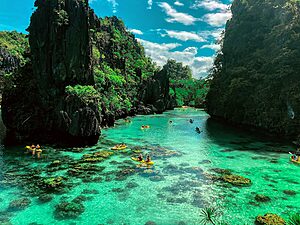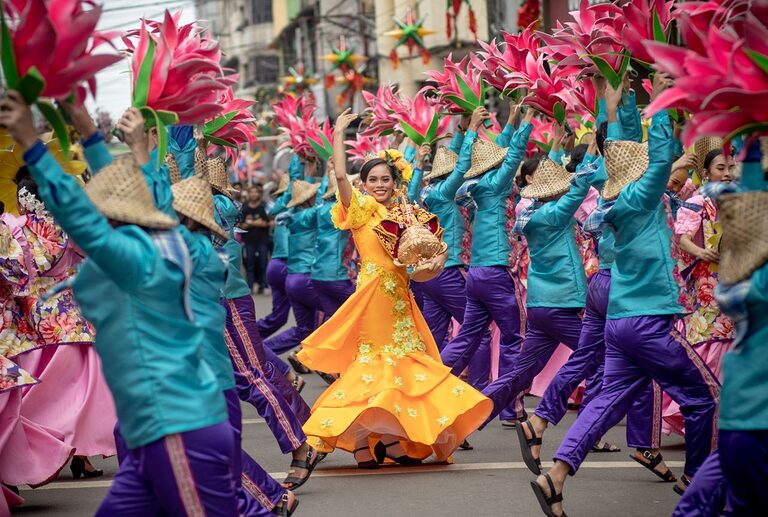
So, you are travelling to the Philippines.
You are probably dreaming about swimming in crystal-clear waters, exploring tropical islands, discovering spectacular waterfalls and enjoying fresh mangoes while watching the sunset.
And quite rightly so.
The Philippines is a remarkable country filled with natural beauty, fascinating traditions, delicious food and wonderfully hospitable people.
However, like every destination, the Philippines has its own cultural customs, social expectations, environmental challenges and unwritten rules that visitors should understand.
What might seem perfectly normal in your home country could be considered disrespectful, inappropriate or simply impractical in the Philippines.
Fortunately, Filipinos are generally welcoming and understanding towards international visitors.
Nobody expects you to arrive knowing every local tradition, speaking fluent Filipino or understanding the complicated payment system inside a crowded jeepney.
However, a little cultural awareness can make an enormous difference.
It can help you avoid awkward situations, unnecessary expenses and potentially dangerous experiences.
Because there is a considerable difference between returning home with an amusing travel story and returning home with an expensive medical bill, an offended host or a photograph of the ferry you were supposed to be on.
To help you enjoy your adventure responsibly, respectfully and safely, here are the top 10 things you should not do as a tourist in the Philippines.
1. Do Not Try To Visit Too Many Islands In One Trip
🏝️ The Philippines consists of more than 7,000 islands.
That is an extraordinary number of potential adventures.
It is also an extraordinary number of opportunities to underestimate travelling distances.
One of the most common mistakes first-time visitors make is attempting to visit too many destinations during a single holiday.
Manila.
Boracay.
El Nido.
Coron.
Cebu.
Bohol.
Siargao.
All in ten days?
Your enthusiasm is admirable.
Your itinerary may require professional intervention.
Although destinations can appear relatively close together on a map, travelling between them often involves domestic flights, ferries, buses, passenger vans and smaller boats.
Some journeys require multiple connections, while others may be affected by weather conditions, traffic or transport delays.
A seemingly straightforward island transfer can easily consume most of your day.
And spending your tropical holiday repeatedly unpacking your suitcase inside different hotel rooms is probably not what you originally had in mind.
💡 What To Do Instead: Concentrate on a particular region or a small number of conveniently connected destinations.
For example, consider combining Cebu, Bohol and Siquijor rather than attempting to explore the entire country in one visit.
Allow several nights in each destination and leave sufficient time between transport connections.
If you have an international flight home, consider spending your final night near your departure airport.
Avoid treating your holiday itinerary like a competitive sporting event.
The Philippines is best enjoyed slowly.
You do not receive a medal for visiting the greatest number of islands.
Although your luggage might deserve one.
2. Do Not Underestimate The Tropical Weather
🌦️ The Philippines is famous for its tropical climate.
Beautiful sunshine.
Warm ocean temperatures.
Spectacular sunsets.
And rain showers that occasionally appear to have been organised by somebody with a personal disagreement with your holiday plans.
The country experiences different weather patterns depending on the region and time of year.
While the dry season generally extends from December to May across many areas, the rainy season typically occurs between June and November.
However, these patterns vary geographically.
The Philippines is also regularly affected by tropical storms and typhoons, which can bring heavy rainfall, strong winds, flooding and dangerous sea conditions.
Domestic flights and ferry services may be delayed or cancelled during severe weather.
Unfortunately, some travellers underestimate these risks because they are determined to follow their original itinerary.
They may insist on visiting waterfalls after heavy rainfall, travelling by boat during rough sea conditions or hiking despite weather warnings.
This is not adventurous.
It is unnecessarily dangerous.
💡 What To Do Instead: Monitor official weather updates from PAGASA, the Philippine Atmospheric, Geophysical and Astronomical Services Administration.
Pay attention to local authorities, tour operators and Philippine Coast Guard announcements.
Never pressure boat operators or guides to continue an activity when conditions are considered unsafe.
Pack a compact rain poncho, waterproof bags and quick-drying clothing.
Purchase suitable travel insurance and choose flexible bookings whenever possible.
If an excursion is cancelled, find an alternative activity.
Visit a museum.
Explore a local café.
Enjoy a massage.
Order another plate of Filipino food.
The weather may have interrupted your adventure, but it does not necessarily have to interrupt your enjoyment.
3. Do Not Disrespect Local Customs And Traditions
🙏 Filipino culture places considerable importance on respect, family, hospitality and community.
Visitors are often welcomed warmly and treated with remarkable generosity.
However, this hospitality should never be mistaken for permission to ignore local customs.
One important aspect of Filipino culture is showing respect towards older people.
In Tagalog-speaking communities, the words po and opo are commonly used to express politeness and respect.
You may also encounter a traditional gesture called mano po, in which a younger person gently brings an elder’s hand towards their forehead as a sign of respect.
International visitors are not generally expected to perform every traditional gesture.
However, understanding their significance can help you appreciate Filipino culture.
Other behaviours worth avoiding include:
- Speaking aggressively or disrespectfully towards older people.
- Entering religious buildings wearing inappropriate clothing.
- Photographing people without their permission.
- Mocking local traditions, accents or religious beliefs.
- Entering private homes or sacred areas without permission.
- Assuming that every community follows the same cultural practices.
The Philippines is culturally diverse, with Christian, Muslim and Indigenous communities maintaining their own traditions and social expectations.
What is appropriate in a beachfront resort may not be appropriate in a religious site or traditional village.
💡 What To Do Instead: Observe how local people behave and follow their example when appropriate.
Dress modestly when visiting churches, mosques and sacred locations.
Learn a few polite Filipino expressions, such as salamat po (thank you) and paumanhin po (excuse me or sorry).
Ask questions respectfully if you are unfamiliar with a particular tradition.
Most importantly, remember that you are visiting somebody else’s home country.
You do not need to understand every custom immediately.
You simply need to respect it.
4. Do Not Rely Entirely On Credit Cards Or Large Banknotes
💰 Modern technology has made travelling considerably easier.
You can book flights using your phone, reserve accommodation online and pay for dinner without touching a single banknote.
Wonderful.
Until you arrive on a small Philippine island where the nearest working ATM is several kilometres away and the restaurant only accepts cash.
Although credit and debit cards are widely accepted in many major cities, hotels and shopping centres, cash remains essential in numerous parts of the Philippines.
Small restaurants, public markets, sari-sari stores, tricycle drivers and local boat operators may not accept international cards.
Digital payment platforms such as GCash and Maya are popular among Filipinos, but international visitors may encounter registration or payment limitations.
Then there is the problem of large banknotes.
Imagine purchasing a ₱20 snack and handing the vendor a ₱1,000 note.
You may suddenly discover that the entire neighbourhood has become involved in locating your change.
ATMs in smaller towns and remote islands may also experience technical problems, limited cash supplies or connectivity issues.
💡 What To Do Instead: Carry sufficient Philippine pesos before travelling to remote destinations.
Keep a mixture of smaller notes and coins, particularly ₱20, ₱50 and ₱100 denominations.
Check your bank’s international transaction and withdrawal fees before travelling.
Keep emergency cash separately from your main wallet and avoid displaying large amounts of money in public.
Use reputable ATMs, preferably those located inside banks or secure establishments.
And always confirm accepted payment methods before ordering food, arranging transport or booking an excursion.
Your credit card may be accepted internationally.
That does not necessarily mean the person selling bananas beside a provincial road has received the announcement.
5. Do Not Drink Untreated Tap Water Or Ignore Food Hygiene
🍽️ Filipino cuisine is one of the country’s greatest pleasures.
Crispy lechon.
Delicious adobo.
Comforting sinigang.
Fresh tropical fruit.
And halo-halo, a dessert that appears to have been created by somebody who refused to choose between several different desserts.
Exploring local food is an essential part of visiting the Philippines.
However, travellers should exercise sensible precautions when it comes to drinking water and food hygiene.
Tap water quality varies throughout the country.
While some locations may have treated water supplies, visitors should not automatically assume that tap water is safe to drink.
Consuming contaminated water or improperly prepared food can lead to stomach problems and other illnesses.
Which is particularly unfortunate when your accommodation has a spectacular ocean view but you are spending most of your time admiring the bathroom tiles.
Street food can be delicious and affordable.
However, pay attention to how food is prepared, stored and served.
Food that has been sitting uncovered in tropical temperatures for extended periods deserves particular caution.
💡 What To Do Instead: Drink bottled water from sealed containers or properly purified drinking water.
Check whether your accommodation provides safe drinking water or a reliable refill station.
Choose busy food stalls and restaurants with good hygiene practices.
Look for freshly cooked food served hot.
Wash your hands regularly and carry hand sanitiser when travelling.
If you have food allergies or dietary restrictions, communicate them clearly before ordering.
Filipino cooking frequently uses fish sauce, shrimp paste, pork and seafood-based ingredients that may not be immediately obvious.
You should absolutely explore Filipino cuisine.
Just remember that culinary bravery and sensible food hygiene can happily coexist.
Your stomach does not need its own adventure itinerary.
6. Do Not Touch Wildlife Or Damage Marine Ecosystems
🐢 The Philippines is home to some of the world’s most remarkable marine environments.
Colourful coral reefs.
Beautiful sea turtles.
Whale sharks.
Tropical fish.
And underwater landscapes that can make you feel as though you have entered an entirely different world.
However, these extraordinary ecosystems are also extremely vulnerable.
Unfortunately, some visitors become so determined to capture the perfect holiday photograph that they forget they are interacting with living creatures.
Sea turtles are chased.
Starfish are lifted out of the water.
Coral reefs are stood upon.
Marine animals are touched or surrounded by swimmers.
All for a photograph that will probably receive approximately 37 likes on social media.
Wildlife should never be treated as a tourist attraction that exists purely for human entertainment.
The Philippines is also home to the Philippine tarsier, a small primate famous for its enormous eyes.
Tarsiers are sensitive animals that can become stressed by excessive noise, handling and inappropriate human interaction.
Responsible wildlife tourism is particularly important when visiting these remarkable creatures.
💡 What To Do Instead: Choose reputable tour operators that follow responsible wildlife and environmental practices.
When snorkelling or diving:
- Never touch, stand on or collect coral.
- Maintain a respectful distance from marine animals.
- Avoid chasing sea turtles or whale sharks.
- Never remove starfish from the water.
- Do not feed wildlife.
- Follow marine sanctuary regulations.
- Avoid experiences that rely on feeding or manipulating wildlife to guarantee encounters.
When visiting tarsier sanctuaries, remain quiet, avoid flash photography and never attempt to touch the animals.
Do not collect sand, shells, coral or other natural materials where prohibited.
Take photographs.
Enjoy the experience.
Leave the environment as you found it.
The sea turtle does not need to appear in your selfie.
It has its own schedule.
7. Do Not Lose Your Temper Or Publicly Embarrass People
😊 Filipinos are generally known for their warmth, friendliness and sense of humour.
However, social harmony and maintaining respectful relationships are also important aspects of Filipino culture.
One cultural concept you may encounter is hiya.
Although it does not have a perfect English translation, it is associated with a sense of propriety, embarrassment and awareness of how one’s behaviour affects social relationships.
Publicly humiliating somebody, shouting aggressively or creating an unnecessary confrontation can be particularly uncomfortable.
This does not mean that you should never complain or raise concerns.
If something goes wrong with your accommodation, transport or tour booking, you are entitled to seek a reasonable solution.
However, how you communicate can make an enormous difference.
Imagine that your hotel room is not ready.
Or your island-hopping tour has been delayed.
Or your restaurant order has somehow developed a mysterious relationship with another table.
These situations can be frustrating.
But shouting at the nearest member of staff is unlikely to improve matters.
💡 What To Do Instead: Remain calm, polite and clear when discussing problems.
Explain the issue respectfully and give the other person an opportunity to resolve it.
If necessary, ask to speak privately with a manager or supervisor.
Avoid insulting people, making personal remarks or publicly embarrassing somebody over a relatively minor mistake.
Useful Filipino expressions include:
| Filipino phrase | Meaning |
| Pasensya na po | Sorry / Please excuse me |
| Pakiusap po | Please / A polite request |
| Maaari po bang magtanong? | May I ask a question? |
| Salamat po sa tulong | Thank you for your help |
Remember that misunderstandings can happen anywhere, particularly when travelling between different cultures.
A little patience and humour can often achieve considerably more than an angry speech.
Besides, you are on holiday.
Your blood pressure deserves a holiday too.
8. Do Not Ignore Transport Safety Or Accept Unclear Prices
🚐 Travelling around the Philippines can be wonderfully entertaining.
Colourful jeepneys.
Motorised tricycles.
Traditional outrigger boats.
Passenger vans.
And motorcycle journeys that occasionally make you appreciate the existence of seat belts.
However, transport standards and safety practices can vary considerably.
One mistake visitors sometimes make is accepting transport services without confirming the price, destination or safety arrangements.
Tricycle fares, for example, may depend on the distance, location and whether you are paying for a shared ride or hiring the entire vehicle.
If you do not clarify this beforehand, you may receive a rather unexpected bill at the end of your journey.
Another common mistake is hiring a scooter or motorcycle without sufficient experience, appropriate documentation or insurance.
Riding through tropical scenery may look wonderfully romantic on social media.
What those photographs rarely show are potholes, slippery roads, unpredictable traffic and the occasional chicken with absolutely no understanding of road safety.
Boat safety is equally important.
Not every small vessel operates under the same safety standards.
💡 What To Do Instead: Confirm transport prices before beginning your journey.
Use reputable taxi services, official airport transport or ride-hailing platforms such as Grab where available.
When travelling by boat, choose licensed operators and wear a properly fitted life jacket.
If hiring a motorcycle or scooter, ensure you have:
- The appropriate driving licence.
- Suitable travel insurance coverage.
- A properly fitted helmet.
- Sufficient riding experience.
- A vehicle in good working condition.
Remember that vehicles drive on the right-hand side of the road in the Philippines.
Avoid travelling with visibly unsafe or overloaded vehicles.
And never assume that because everybody else appears comfortable with a particular situation, it must automatically be safe.
Your holiday photographs will look considerably better without a collection of bandages.
9. Do Not Treat The Philippines As One Identical Culture
🇵🇭 One of the most fascinating things about the Philippines is its diversity.
Unfortunately, one of the most common misconceptions is assuming that every island, province and community is essentially the same.
The Philippines is home to numerous ethnolinguistic groups, regional languages, religious communities and cultural traditions.
Travel from Manila to Cebu and you will encounter different linguistic and cultural influences.
Visit Northern Luzon and you will discover remarkable mountain communities with distinctive traditions.
Explore Iloilo or Bacolod and you will experience different culinary specialities and local expressions.
Travel through parts of Mindanao and you will encounter a rich mixture of Indigenous, Christian and Muslim cultures.
Even familiar Filipino dishes can vary considerably depending on where they are prepared.
Adobo, for example, has numerous regional and household variations.
Asking which version is the best may result in a surprisingly passionate discussion.
Particularly if several Filipino families are involved.
It is also important to avoid assuming that everyone speaks Tagalog as their first language.
Although Filipino and English are official languages, many people grow up speaking Cebuano, Ilocano, Hiligaynon, Waray, Kapampangan or other regional languages.
💡 What To Do Instead: Approach each destination with curiosity and an open mind.
Learn about regional traditions, try local specialities and appreciate the differences between communities.
A few regional greetings can be particularly useful:
| Language | Greeting | Meaning |
| Filipino/Tagalog | Magandang umaga | Good morning |
| Cebuano | Maayong buntag | Good morning |
| Ilocano | Naimbag a bigat | Good morning |
| Hiligaynon | Maayong aga | Good morning |
| Waray | Maupay nga aga | Good morning |
Respect religious and cultural practices, particularly when visiting traditional communities and places of worship.
Avoid making sweeping generalisations based on your experiences in one city or island.
The Philippines is not simply one tropical destination repeated thousands of times.
Its diversity is precisely what makes exploring it so rewarding.
And what makes deciding where to go next considerably more complicated.
10. Do Not Ignore Local Laws, Safety Advice And Environmental Regulations
⚠️ Travelling is about enjoying new experiences.
However, being on holiday does not provide temporary immunity from local laws.
The Philippines has regulations concerning protected natural areas, public behaviour, prohibited substances, wildlife protection and various other activities.
Some destinations also have their own environmental restrictions.
Boracay, for example, has introduced regulations designed to protect its beaches and natural environment.
Depending on the location, activities such as smoking, drinking alcohol, littering and certain commercial activities may be restricted on beaches or within protected areas.
Visitors should check local regulations rather than assuming that behaviour permitted in one destination is acceptable everywhere.
Another important consideration is regional security.
Although many popular Philippine destinations welcome international visitors, safety conditions vary across the country.
Certain areas, particularly parts of western and southern Mindanao and the Sulu archipelago, are subject to serious international travel advisories.
This does not mean that every destination in Mindanao presents the same level of risk.
However, travellers should make informed decisions based on current official advice.
💡 What To Do Instead: Familiarise yourself with local laws and destination-specific regulations before travelling.
British travellers should consult the latest FCDO travel advice for the Philippines, while visitors from other countries should consult their respective government travel advisory services.
Other important precautions include:
- Avoid illegal drugs entirely.
- Do not litter or dispose of rubbish irresponsibly.
- Follow smoking and vaping restrictions.
- Obtain necessary permits before entering protected areas.
- Avoid swimming in prohibited locations.
- Respect private property.
- Follow instructions from local authorities and licensed guides.
- Ensure your travel insurance covers your intended destinations and activities.
Keep copies of your important documents and emergency contact details accessible.
The national emergency number in the Philippines is 911, although service availability and response times may vary by location.
Remember that local regulations are often designed to protect both visitors and communities.
Breaking them is unlikely to make your holiday more enjoyable.
And explaining your behaviour to local authorities is probably not the cultural experience you were hoping for.
🌴 Bonus Things You Should Avoid In The Philippines
Before you pack your bags, here are a few additional mistakes worth avoiding.
Do Not Bargain Excessively
Bargaining may be acceptable in certain public markets, souvenir stalls and informal shopping environments.
However, it is not appropriate everywhere.
Supermarkets, restaurants, shopping centres and businesses with clearly displayed fixed prices generally do not expect customers to negotiate.
When bargaining is appropriate, remain friendly and reasonable.
Remember that many small vendors depend on their daily earnings to support their families.
Saving a few pesos can be satisfying.
Spending 20 minutes negotiating over the equivalent of a few pennies is considerably less impressive.
Do Not Assume Everything Will Run Exactly On Time
Traffic congestion, weather conditions, transport disruptions and unexpected circumstances can affect travel schedules.
This is particularly important when arranging airport transfers and inter-island journeys.
Allow additional time for important connections.
Avoid booking separate flights or ferries with extremely short transfer windows.
And do not become unnecessarily frustrated when minor delays occur.
Sometimes the best solution is simply to sit down, enjoy a coffee and reconsider your schedule.
Your itinerary is a guide.
Not a legally binding agreement with the universe.
Do Not Forget To Protect Yourself From Mosquitoes And The Sun
The Philippine sun can be remarkably intense, even when the sky appears cloudy.
Mosquitoes can also transmit illnesses such as dengue, making insect protection important throughout your visit.
Use broad-spectrum sunscreen, effective insect repellent and suitable protective clothing.
Stay hydrated and take breaks in shaded areas.
Consult a travel health professional before departure regarding recommended vaccinations and other health precautions.
Returning home with a collection of beautiful photographs is wonderful.
Returning home looking like a particularly distressed lobster is considerably less desirable.
Do Not Be Careless With Your Personal Belongings
Like any popular travel destination, the Philippines has locations where petty theft and opportunistic scams can occur.
Be particularly mindful in crowded markets, busy transport terminals and heavily populated tourist areas.
Avoid leaving your phone, wallet or passport unattended.
Use secure bags, suitable luggage padlocks and hotel safes where available.
Keep digital copies of important documents and store emergency money separately.
You do not need to spend your entire holiday worrying about theft.
Simply practise the same sensible precautions you would use when visiting any unfamiliar destination.
Do Not Assume Everyone Wants To Be Photographed
The Philippines offers countless wonderful photography opportunities.
Colourful festivals.
Traditional markets.
Beautiful rural communities.
Historic buildings.
And spectacular natural landscapes.
However, people are not automatically part of the scenery.
Ask permission before photographing individuals, particularly children, religious ceremonies and members of traditional or Indigenous communities.
Some sacred locations and cultural activities may have photography restrictions.
Respect these rules.
If somebody declines your request, accept their decision politely.
A meaningful travel experience does not always require photographic evidence.
Do Not Compare Everything To Your Home Country
Travelling to another country means experiencing different ways of living.
Food may be prepared differently.
Public transport may operate differently.
Social customs may be unfamiliar.
And your breakfast might contain considerably more rice than you are accustomed to.
That is part of the experience.
Constantly comparing the Philippines unfavourably with your home country can come across as disrespectful and prevent you from appreciating what makes the destination special.
Instead, approach unfamiliar experiences with curiosity.
Ask questions.
Try something new.
Learn why things are done differently.
You might even discover a few traditions that you wish existed back home.
Particularly the availability of freshly cooked garlic rice for breakfast.
🌺 Final Philippines Thoughts
The Philippines is an extraordinary destination that offers considerably more than its spectacular beaches and tropical scenery.
The landscapes are breathtaking.
The food is wonderfully diverse.
The culture is fascinating.
The hospitality is memorable.
And the opportunities for adventure are almost endless.
However, being a good traveller involves more than simply visiting famous attractions and collecting beautiful photographs.
It means respecting local communities, understanding cultural differences, protecting the environment and making responsible decisions throughout your journey.
Do not rush from island to island, do not underestimate tropical weather, do not disrespect local traditions, do not disturb wildlife.
Do not ignore safety advice.
And do not allow minor inconveniences to prevent you from enjoying an otherwise remarkable adventure.
Instead, travel with patience, curiosity and a willingness to learn.
You might arrive in the Philippines expecting your favourite memory to involve a spectacular beach in Palawan.
And perhaps it will.
But it might also be a conversation with a friendly market vendor.
A spontaneous invitation to share a family meal.
A jeepney journey that initially seemed confusing but eventually became one of your favourite travel stories.
Or an evening spent singing karaoke with people you had only met a few hours earlier.
These experiences are often what make the Philippines so special.
The country’s natural beauty may inspire you to visit, but its people, traditions and everyday moments may give you countless reasons to return.
So respect the culture.
Protect the environment.
Support local communities.
Bring your sense of humour.
Leave your unnecessary expectations at home.
And remember that the best travellers are not necessarily those who have visited the greatest number of destinations.
They are the ones who leave a positive impression wherever they go.
With more than 7,000 islands waiting to be explored, the Philippines offers enough adventures for several lifetimes.
Your greatest challenge may not be avoiding these common tourist mistakes.
It may be convincing yourself that it is actually time to go home.
Ingat at maligayang paglalakbay!
Take care and happy travels! 🇵🇭