So, you are travelling to Puerto Rico.
Excellent choice.
You are about to discover a beautiful Caribbean island filled with colourful colonial streets, spectacular beaches, lush tropical rainforests, historic Spanish fortresses, delicious food, lively music and enough sunshine to make your winter wardrobe feel completely unnecessary.
And then there are the people.
Warm.
Expressive.
Proud of their culture.
And wonderfully enthusiastic about food, music and celebrating life.
Puerto Rico is one of those destinations where an ordinary afternoon can unexpectedly turn into a memorable adventure.
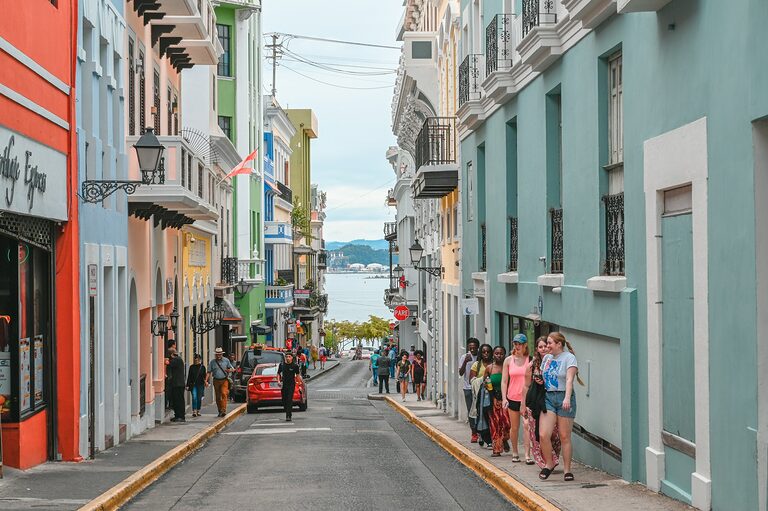
You might begin your morning wandering through the colourful streets of Old San Juan.
Spend your afternoon exploring a tropical rainforest.
And finish your evening enjoying delicious mofongo while listening to live salsa music.
Sounds wonderful.
And it absolutely can be.
But here is the thing.
Puerto Rico is not simply a beautiful Caribbean holiday destination where everything works exactly as it does back home.
It has its own cultural customs, environmental challenges, transport limitations and practical considerations.
And understanding these differences can make your visit considerably more enjoyable.
Because nothing interrupts a perfectly organised holiday quite like discovering that the beach you planned to visit has dangerous currents.
Or that your ferry tickets should have been booked several weeks earlier.
Or that the charming little mountain road your navigation app recommended is considerably more adventurous than expected.
Then there are the cultural mistakes.
The assumptions.
The misunderstandings.
And those awkward tourist moments when you realise that something perfectly ordinary back home may not be particularly appropriate somewhere else.
Fortunately, most of these situations are easy to avoid with a little preparation.
To help you travel respectfully, stay safe and enjoy your Caribbean adventure without unnecessary complications, here are 10 things you should never do as a tourist in Puerto Rico.
1. Don’t Assume Puerto Rico Is Just Another American State
🇵🇷 Let’s begin with something important.
Puerto Rico is a United States territory.
But it is not a US state.
And it is certainly not simply a tropical version of Florida.
Although both destinations have sunshine, palm trees and plenty of opportunities to complain about the humidity.
Puerto Rico has its own distinctive history, culture, traditions and identity.
Spanish is the dominant everyday language.
Puerto Rican cuisine reflects Indigenous Taíno, African and Spanish influences.
The island has its own musical traditions, festivals and customs.
And many Puerto Ricans take enormous pride in their identity as boricuas.
The word comes from Borikén or Borinquen, the Indigenous Taíno name for the island.
While people born in Puerto Rico are generally US citizens, this does not mean everyone identifies culturally in exactly the same way as somebody from the mainland United States.
Puerto Rico’s political status also remains an important and sometimes sensitive subject.
Some residents support statehood.
Others favour independence.
And others support different arrangements for the island’s relationship with the United States.
So arriving with strong assumptions about what Puerto Rico should be is probably not the best way to begin your holiday.
💡 Travel Hack: Respect Puerto Rico’s distinct cultural identity.
Learn a little about its history before arriving.
Visit historic sites, museums and cultural attractions to understand the island beyond its beaches.
Avoid assuming that everyone prefers English or identifies primarily with mainland American culture.
And if a conversation turns towards Puerto Rico’s political status?
Listen respectfully.
Ask thoughtful questions.
And remember that a week-long holiday does not automatically qualify you to resolve a complicated political debate.
Especially one that has continued for generations.
2. Don’t Expect Everyone To Speak English
🗣️ English is an official language in Puerto Rico.
And you will hear it frequently in hotels, airports, tourist attractions and many businesses around San Juan.
However, Spanish is the language most commonly used in everyday life.
Particularly outside major tourist areas.
So do not assume that everybody you meet will be comfortable holding a detailed conversation in English.
You might visit a small bakery.
A local market.
A family-run restaurant.
Or a beautiful mountain village.
And discover that your usual English phrases are not quite as effective as expected.
This is not a problem.
It is part of travelling somewhere with a different linguistic culture.
And fortunately, learning a few Spanish expressions is not particularly difficult.
Start with the basics.
Hola.
Hello.
Por favor.
Please.
Gracias.
Thank you.
¿Cuánto cuesta?
How much does it cost?
¿Dónde está el baño?
Where is the toilet?
That last one is especially important.
Because there are few situations more motivating than needing a toilet while your phone struggles to load a translation app.
💡 Travel Hack: Learn at least five useful Spanish phrases before your trip.
Download an offline translation app and save important addresses in Spanish.
When speaking with locals, begin politely and ask whether they speak English if necessary.
Do not speak louder simply because somebody does not understand you.
Volume is not a substitute for translation.
And if your pronunciation is slightly questionable?
Smile.
Try again.
Most people will appreciate a genuine effort more than perfect grammar.
Just avoid pretending you understand an entire conversation when you have only recognised three words.
You might accidentally agree to purchase something.
Like an enormous decorative ceramic frog.
Which could make the journey home considerably more interesting.
3. Don’t Underestimate The Ocean
🌊 Puerto Rico has some truly spectacular beaches.
Golden sand.
Turquoise water.
Beautiful palm trees.
And the kind of scenery that makes you wonder whether returning to work is really necessary.
However, beautiful beaches are not automatically safe beaches.
This is particularly important along Puerto Rico’s northern coastline, where Atlantic swells can produce powerful waves and dangerous rip currents.
Some beaches are popular with experienced surfers precisely because of their strong waves.
Which should probably tell you something.
If somebody is carrying a surfboard the size of a small dining table, the water may not be ideal for a casual afternoon paddle.
Rip currents can pull swimmers away from shore.
And they are not always obvious from the beach.
Even confident swimmers can get into difficulty.
Conditions can also change quickly depending on weather, tides and seasonal swells.
💡 Travel Hack: Always check local beach warnings before swimming.
Choose beaches with lifeguards whenever possible.
Pay attention to warning flags and safety signs.
Avoid swimming alone, particularly at unfamiliar beaches.
If caught in a rip current, remain calm and avoid attempting to swim directly against it. Float or tread water if necessary, signal for help and swim parallel to shore when able.
Do not assume a beach is safe simply because other people are nearby.
And never enter dangerous water just to recreate a photograph you saw on social media.
The photograph might look impressive.
But your holiday memories are considerably better when everybody returns safely.
4. Don’t Treat El Yunque Rainforest Like A Casual Walk In The Park
🌿 El Yunque National Forest is one of Puerto Rico’s most remarkable natural attractions.
Lush tropical vegetation.
Beautiful waterfalls.
Mountain scenery.
Exotic birds.
And the wonderful sound of nature surrounding you.
It is also the only tropical rainforest in the United States National Forest System.
Which makes it rather special.
However, El Yunque is not an ordinary city park.
It is a tropical rainforest.
And tropical rainforests have a habit of being rather enthusiastic about rain.
Weather conditions can change quickly.
Trails may become slippery.
Streams can rise suddenly.
And heavy rainfall can create dangerous flash flooding around rivers and waterfalls.
Some trails are steep or uneven.
Others may be temporarily closed because of maintenance, weather damage or safety concerns.
Which means that arriving in flip-flops with one small bottle of water and an optimistic attitude is not necessarily the best strategy.
💡 Travel Hack: Check official forest information and trail conditions before visiting.
Wear suitable walking shoes with good grip.
Bring drinking water, insect repellent and lightweight waterproof clothing.
Stay on designated trails and respect closures.
Never enter rivers or waterfalls during heavy rain or when water levels are rising.
Avoid hiking unfamiliar routes alone.
And do not underestimate how quickly tropical humidity can make an easy-looking walk feel considerably more demanding.
Take breaks.
Stay hydrated.
And remember that reaching a beautiful viewpoint is not a competition.
Nobody is awarding medals for completing a rainforest hike while pretending you are not completely exhausted.
5. Don’t Assume Public Transport Will Take You Everywhere
🚗 Puerto Rico may appear relatively small on a map.
But travelling around the island can require more planning than expected.
San Juan has taxis, ride-hailing services and public transport options.
Old San Juan is particularly enjoyable to explore on foot.
However, outside the main metropolitan area, transport becomes less convenient.
Many beaches, mountain villages, waterfalls and rural attractions are difficult to reach without private transport.
There is no comprehensive island-wide passenger railway network.
And relying on public transport to visit remote destinations can be frustrating.
Especially when your carefully planned afternoon adventure depends on a connection that does not exist.
Or a taxi that is nowhere to be found.
Then there are the roads.
Some mountain routes are narrow, winding and steep.
Beautiful scenery?
Absolutely.
A relaxing experience for somebody who gets carsick after three bends?
Perhaps not.
💡 Travel Hack: If you plan to stay mainly in San Juan, consider using taxis, Uber and walking.
Hiring a car may be unnecessary if your activities are concentrated around the capital.
However, if you want to explore the island independently, renting a vehicle is often the most practical option.
Remember that traffic drives on the right-hand side of the road.
Check rental insurance, toll arrangements and parking costs before collecting your vehicle.
Download offline maps and allow extra time for journeys through mountainous areas.
Avoid scheduling too many destinations in one day.
Puerto Rico is best enjoyed at a comfortable pace.
Not as a competitive driving challenge where the winner visits six beaches, three waterfalls and two historic towns before lunch.
6. Don’t Leave Ferry Tickets And Popular Tours Until The Last Minute
⛴️ Puerto Rico has some beautiful offshore islands.
Vieques.
Culebra.
And spectacular beaches that look almost suspiciously perfect.
Flamenco Beach in Culebra is particularly famous for its clear turquoise water and beautiful white sand.
Vieques is known for its beaches, natural scenery and remarkable bioluminescent bay.
Naturally, these destinations attract visitors.
Lots of them.
And here is where some travellers make a mistake.
They assume they can simply arrive at the ferry terminal and purchase tickets whenever they feel like going.
Unfortunately, that is not always possible.
Passenger ferries to Vieques and Culebra depart from Ceiba.
Tickets can sell out, especially during weekends, holidays and busy travel periods.
Schedules can also change because of weather or operational conditions.
And reaching the ferry terminal from San Juan requires additional travel time.
So your spontaneous island adventure may become considerably less spontaneous than intended.
💡 Travel Hack: Book ferry tickets as early as practical.
Check official schedules and confirm departure arrangements before travelling.
Arrange transport to and from the terminal in advance.
If visiting Vieques or Culebra, consider staying overnight rather than attempting a rushed day trip.
Popular bioluminescent bay tours should also be booked ahead, particularly during peak travel periods.
For the best chance of seeing the glow clearly, consider visiting around a new moon when skies are darker.
And remember that booking a ferry ticket does not automatically arrange your hotel, island transport or return journey.
Unfortunately, holiday logistics have not yet developed that level of intelligence.
7. Don’t Ignore Local Food In Favour Of Familiar Fast Food
🍽️ Puerto Rico has a wonderful food culture.
And ignoring it would be a genuine missed opportunity.
You could spend your entire holiday eating familiar international fast food.
But why would you?
Especially when Puerto Rico offers dishes such as mofongo, lechón asado, arroz con gandules, alcapurrias and bacalaitos.
Mofongo is one of the island’s most recognisable dishes.
Made from mashed fried green plantains, often combined with garlic and other ingredients, it is commonly served with meat, seafood or vegetables.
It is delicious.
Filling.
And capable of making you reconsider everything you previously believed about plantains.
Then there is lechón asado.
Slow-roasted pork with wonderfully crisp skin.
Particularly famous in Guavate, where roadside restaurants attract visitors looking for traditional Puerto Rican food.
And do not forget the local bakeries.
Fresh pastries.
Sandwiches.
Coffee.
And enough tempting treats to make your original breakfast plans completely irrelevant.
💡 Travel Hack: Visit local bakeries, family-run restaurants and traditional food kiosks.
Ask about the plato del día, or daily special.
These meals can offer excellent value and an opportunity to experience local cooking.
Try at least a few traditional dishes during your visit.
If you have dietary restrictions, ask about ingredients before ordering.
Some dishes contain pork, seafood or other ingredients that may not be immediately obvious.
And remember that portions can be generous.
You may arrive expecting a light lunch.
Then discover that your plate contains enough food to sustain a small expedition.
Do not worry.
You can always walk it off later.
Possibly.
8. Don’t Disrespect Historic Sites, Local Communities Or Natural Attractions
🏛️ Puerto Rico has a rich and fascinating history.
Old San Juan is famous for its colourful colonial architecture, cobbled streets and impressive Spanish fortifications.
Castillo San Felipe del Morro and Castillo San Cristóbal are among the island’s most important historic landmarks.
These remarkable structures have stood for centuries.
They have witnessed wars, political changes and generations of Puerto Rican history.
And they deserve more respect than being treated as oversized photography props.
Unfortunately, some visitors forget that historic sites are places of cultural importance.
Not simply attractive backgrounds for holiday photographs.
The same applies to residential neighbourhoods.
Those beautiful colourful houses in Old San Juan?
People actually live in some of them.
Which means their doorways, windows and private spaces are not automatically available for your personal photography session.
Natural attractions deserve equal consideration.
Puerto Rico’s beaches, forests and marine ecosystems are beautiful but vulnerable to damage.
💡 Travel Hack: Follow all rules when visiting historic sites and protected natural areas.
Do not climb restricted structures or enter closed sections.
Avoid touching fragile historic features unnecessarily.
Respect private property and ask permission before photographing people.
Do not leave litter on beaches or hiking trails.
Avoid disturbing wildlife or removing protected natural materials.
When visiting bioluminescent bays, follow your guide’s conservation instructions.
And remember that the perfect photograph is never worth damaging a historic monument or disturbing a fragile ecosystem.
Your social media followers will survive without that particular picture.
The monument deserves to survive too.
9. Don’t Ignore Weather Warnings Or Travel Without A Backup Plan
🌦️ Puerto Rico enjoys a warm tropical climate.
Which is wonderful.
Until the weather decides to remind you what the word tropical actually means.
Rain showers can arrive suddenly.
Thunderstorms can develop.
And during hurricane season, tropical storms may disrupt transport, accommodation and outdoor activities.
The Atlantic hurricane season officially runs from 1 June to 30 November.
Activity typically peaks between August and October.
This does not mean you should avoid Puerto Rico throughout the entire season.
But it does mean that weather preparation matters.
Heavy rain can cause local flooding.
Strong winds can affect ferry services and flights.
And severe weather can sometimes lead to power cuts or temporary closures.
Even outside hurricane season, weather conditions can affect outdoor activities.
So do not assume that a perfectly sunny morning guarantees a perfectly sunny afternoon.
The Caribbean weather system has not signed any agreement to cooperate with your itinerary.
💡 Travel Hack: Monitor official weather forecasts throughout your visit.
If travelling during hurricane season, consider suitable travel insurance that covers relevant disruptions.
Choose flexible bookings when possible.
Keep essential travel documents accessible offline.
Carry a charged power bank, drinking water and any necessary medication.
If severe weather warnings are issued, follow official instructions and avoid unnecessary travel.
Do not attempt to drive through flooded roads.
And never ignore warnings simply because your hotel has a beautiful swimming pool.
The pool will still be there when conditions improve.
Your safety is considerably more important than maintaining your original holiday schedule.
10. Don’t Forget That Puerto Rico Is A Real Home, Not Just A Holiday Destination
❤️ This may be the most important point of all.
Puerto Rico is beautiful.
Its beaches are spectacular.Its culture is vibrant.
Its music is infectious.
And its hospitality can make visitors feel welcome almost immediately.
But Puerto Rico is not simply a holiday resort.
It is home to millions of people.
People who work.
Raise families.
Run businesses.
Maintain communities.
And deal with everyday challenges that tourists may never notice during a short visit.
Some communities face concerns involving housing affordability, tourism development, infrastructure and environmental protection.
These issues can be complex.
And visitors should be mindful of how their behaviour affects local residents.
For example, staying in residential neighbourhoods requires consideration.
Loud late-night gatherings may disturb people who have work the following morning.
Blocking narrow streets for photographs can inconvenience residents.
And treating local communities as entertainment rather than places where people live can create unnecessary tension.
💡 Travel Hack: Support locally owned businesses whenever possible.
Choose responsible accommodation providers.
Respect neighbourhood rules and quiet hours.
Be considerate when taking photographs.
Avoid blocking pavements, doorways or residential entrances.
Learn about Puerto Rican culture from local guides, museums and community experiences.
And remember that being a respectful visitor is not complicated.
Treat people as you would want visitors to treat your own community.
With courtesy.
Patience.
And a little common sense.
Because the best travellers are not necessarily the ones who visit the most attractions.
They are the ones who leave places with good memories.
And without creating unnecessary problems for the people who call those places home.
✨ Final Puerto Rico Travel Thoughts
Puerto Rico is a destination that offers far more than beautiful beaches and tropical sunshine.
The history is fascinating.
The food is delicious.
The music is infectious.
And the scenery is spectacular.
But enjoying the island is not simply about knowing where to go.
It is also about knowing what to avoid.
Respect the local culture.
Learn a little Spanish.
Take beach safety seriously.
Plan your transport.
And remember that Puerto Rico is home to people, not just a backdrop for holiday photographs.
Most importantly, stay curious, be respectful and leave room for unexpected adventures.
Because sometimes the best travel memories come from the moments you never planned.
Like discovering a wonderful local restaurant.
Stumbling upon a lively street performance.
Or realising that your supposedly relaxing rainforest walk involves considerably more climbing than expected.
So pack your sunscreen, bring comfortable shoes and keep your itinerary flexible.
And if you manage to avoid all ten tourist mistakes?
Congratulations.
You are already better prepared than the traveller who arrives with nothing but flip-flops, an overloaded itinerary and the belief that every Caribbean beach is perfectly safe for swimming.
Although, to be fair, at least they remembered the flip-flops.
¡Buen viaje! 🇵🇷