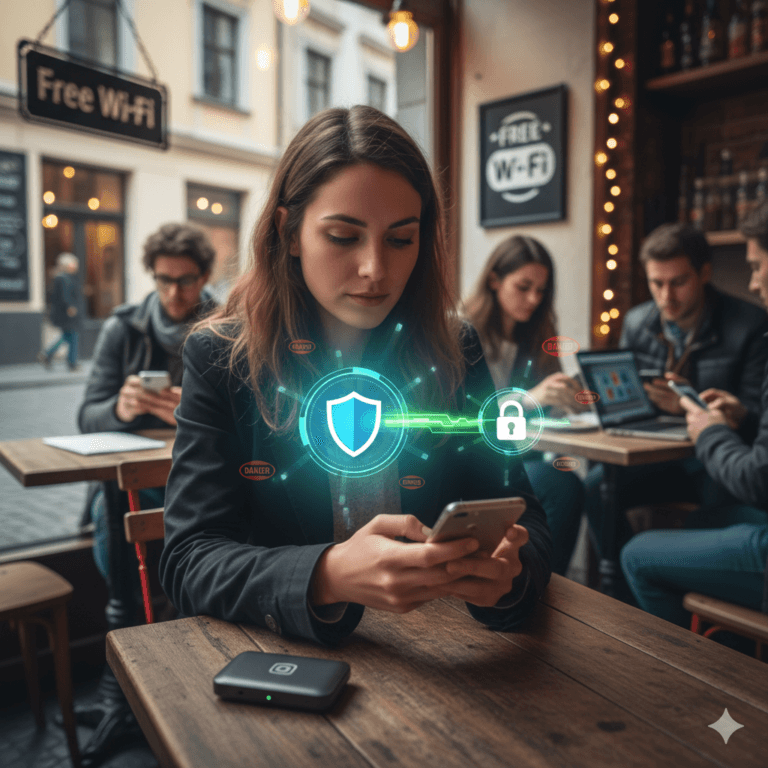
Free Wi-Fi in airports, cafés and hotels can feel convenient, but public Wi-Fi abroad carries risks that travellers must recognise. Public networks often lack proper security. Hackers can intercept data you send or receive, including passwords, banking details and personal emails.
Never conduct sensitive transactions while using public Wi-Fi. Avoid activities such as online banking or making e-commerce purchases. Instead, wait until you connect to a secure network at your accommodation or use your personal mobile hotspot.
Protecting Your Data on Public Networks
For general browsing, a Virtual Private Network (VPN) provides one of the safest protections. A VPN encrypts your internet connection. This encryption creates a private tunnel for your data. Hackers on the same network then struggle to monitor your activity.
You should also check your device settings before connecting. Disable file sharing or AirDrop functions to reduce security risks. These features can expose your device to unwanted access on public networks.
A few simple precautions can significantly improve your online safety while travelling. Using a VPN and adjusting device settings takes only a few moments. However, these steps provide valuable protection for your personal and financial information.
For extra security, travellers can refer to safeguard your important documents when travelling which highlights how digitising and securely sending key documents before travelling adds an additional layer of protection.
*Getting a VPN service is straightforward. You simply choose a provider, subscribe to a plan and install the application on your devices.
Similarly, eSIMs and digital connectivity offers guidance on maintaining secure and reliable internet access abroad, ensuring travellers can stay connected without compromising data safety