One of the most common frustrations for anyone travelling alone is coming home with hundreds of photos of stunning landscapes and almost none of yourself actually in them. If you’ve ever handed your phone to a stranger and received a blurry, poorly framed shot in return, you’ll know the feeling. The good news is that solo travel photography tips for beginners have never been more practical or accessible and with a few simple techniques and the right tools, you can document your travels properly without relying on anyone else.
Overview
- A tripod or mini tripod is the single most useful tool for solo travellers who want to appear in their own photos
- Your smartphone camera is more than capable of producing stunning travel images, a dedicated camera is not essential
- Learning a few basic composition rules transforms average snapshots into genuinely compelling images
- The self-timer and burst mode on any modern phone can replace the need for a photographer
- Remote shutter triggers give you full control over your shots
- Golden hour lighting (the hour after sunrise and before sunset) makes almost any photo look better
- Shooting from lower or higher angles adds variety and visual interest to your content
Why Solo Photography Feels Difficult (and Why It Doesn’t Have to Be)?
There’s a genuine skill gap between what solo travellers want from their photos and what they typically end up with. Most people rely on other travellers or locals to take their picture and while this occasionally works brilliantly, it more often produces results that feel rushed, randomly framed or just slightly off. Learning how to take photos of yourself while travelling alone is partly about gear and partly about confidence, once you understand the basics, it becomes second nature.
The rise of content creation has also shifted expectations. Whether you’re building a travel blog, posting to Instagram or simply wanting a proper visual record of your trip, the standard for what counts as a “good” travel photo has risen significantly. That doesn’t mean you need professional equipment. It means you need to think more intentionally about how you’re approaching each shot.
If you are travelling somewhere with an unfamiliar language, learning a few useful phrases before you arrive can also make asking locals about photo spots or requesting permission for portraits much easier, so these best language learning apps for solo travel are well worth exploring before your trip.
Camera Tips: Getting the Technical Basics Right
You don’t need an expensive mirrorless camera or a full DSLR to take impressive travel photos. Many of the best solo travel photography accounts on social media are shot entirely on smartphones. That said, there are a few technical principles worth knowing regardless of what you’re shooting with.
Shoot in portrait mode for people, landscape mode for scenery.
This sounds obvious, but portrait mode on modern smartphones uses computational photography to blur backgrounds (known as bokeh), which makes you stand out as the subject rather than blending into the scene behind you.
Use gridlines
Almost every camera app has an optional grid overlay that divides the frame into thirds. Placing yourself at one of the intersection points — rather than dead centre — creates a more dynamic and visually interesting composition. This is called the rule of thirds and it works.
Expose for your face, not the background
In bright conditions, tap your face on your phone screen to ensure the camera is exposing correctly for you rather than for a bright sky or lit background. A properly exposed face with a slightly blown-out background is far more appealing than a silhouette.
Shoot in RAW if your phone allows it
RAW files retain significantly more information than JPEGs and give you much more flexibility when editing in Lightroom or Snapseed. Many Android phones and newer iPhones support this natively.
Tripod Use: Your Most Important Solo Travel Accessory
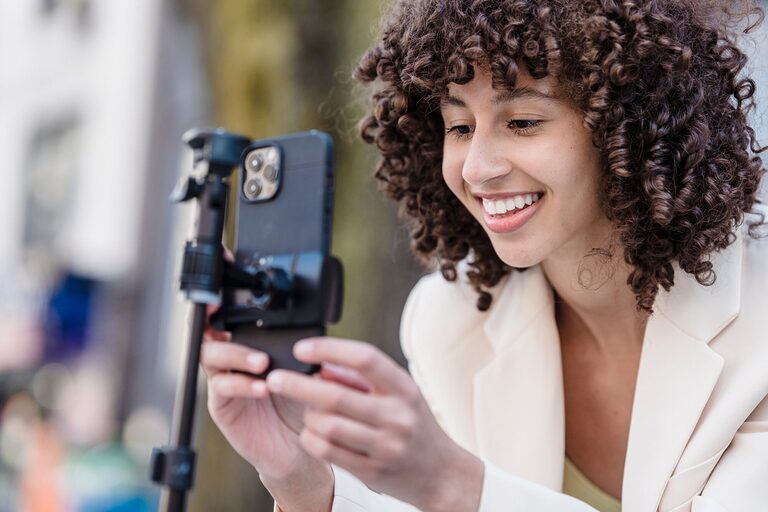
If there is one piece of advice that will immediately change how you document your travels, it is to buy a tripod. Not necessarily a heavy, full-sized one, a compact flexible tripod like the Joby GorillaPod can wrap around railings, sit on uneven ground or perch on a low wall, making it incredibly versatile for travel.
Understanding how to take pictures of yourself without someone else really comes down to two things: a stable surface and a timer. Set your tripod up, frame the shot, switch on the self-timer (10 seconds gives you enough time to walk into position) and let the camera do the work. For the best results, use burst mode alongside the self-timer so it takes a rapid series of shots, you’ll have a far wider selection to choose from and at least one where your expression and posture look natural.
For smartphone users, a Bluetooth remote shutter trigger is a genuinely useful upgrade. These small devices pair with your phone via Bluetooth and let you trigger the shutter from a distance, giving you complete control over the timing of each shot. They typically cost between $10 and $20 USD and are small enough to slip into any pocket.
A note on placement: Don’t just set the tripod up at head height and hope for the best. Experiment with positioning it lower to the ground and shooting upward — this creates a flattering angle and often includes more sky or background context. Equally, placing it higher and shooting slightly downward works well in crowded locations where you want to avoid cluttered foregrounds.
Photography gear is only one part of travelling well on your own, so it is also worth checking a complete solo travel packing list for beginners to make sure you have all the practical essentials before setting off.
Getting the Angles Right
Angle makes an enormous difference to how a photo feels. Most people set their camera at eye level and shoot straight ahead, which produces photos that are technically fine but rarely memorable. Solo photography really opens up once you start experimenting with perspective.
Low angles make subjects look more powerful and place them against the sky or a broader background. This works particularly well for architectural shots, wide open landscapes or any location where the surroundings are dramatic.
High angles (shooting from above, looking slightly down) are flattering for portraits and work well in tight spaces or busy streets where a lower angle would capture too much clutter.
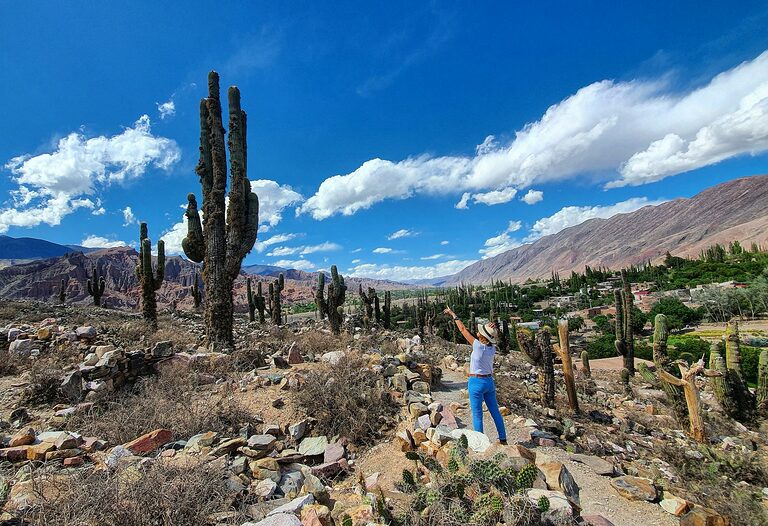
Environmental context shots — where you appear small in a large landscape — tell a more compelling story than close-up portraits. A figure standing at the edge of a canyon, on a mountain path or at the entrance to an ancient temple conveys scale and atmosphere in a way that a simple headshot cannot.
One technique used by experienced travel photographers is to set the camera rolling on video, walk through the scene naturally, then extract stills from the footage. This removes the stiffness that comes from posing and produces images that look genuinely candid.
Phone Photography: Making the Most of What You Have
Learning how to take really good pictures of yourself doesn’t require anything beyond the phone already in your pocket. Modern smartphones, particularly flagship models from Apple, Samsung and Google, have cameras that outperform many entry-level dedicated cameras in most everyday shooting conditions.
A few phone-specific tips worth building into your routine:
- Clean your lens. It sounds trivial, but a fingerprint smear on the lens softens every photo you take. Wipe it before each session.
- Use the rear camera, not the front-facing one. The main camera on almost every phone is significantly higher quality than the selfie camera. Use your timer or a remote trigger so you can face the main lens.
- Try ProCamera mode or native pro settings if your phone has them. Manually controlling ISO and shutter speed allows you to shoot in low light without the grainy results that auto mode often produces.
- Avoid digital zoom. Moving physically closer to your subject (or repositioning your tripod) always produces a sharper result than pinching to zoom.
- Edit with intention. Apps like Lightroom Mobile and Snapseed are free and genuinely powerful. Adjusting exposure, contrast, highlights and shadows after the shot can rescue an average photo and lift a good one considerably.
Practical Habits That Make a Real Difference
Beyond gear and technique, the travellers who consistently produce good solo photography tend to share a few behavioural habits:
Scout locations before shooting
Arriving somewhere and immediately trying to get the shot rarely produces the best results. Walking around first, noting the light direction and identifying your background before you set up takes an extra ten minutes and consistently improves the outcome.
Shoot at golden hour
The hour after sunrise and the hour before sunset produce a warm, directional light that is flattering for portraits and adds atmosphere to landscape shots. Midday light, by contrast, is harsh and creates unflattering shadows. Many experienced travel photographers schedule their entire day around golden hour shoots.
Be comfortable with looking like a tourist
Setting up a tripod in a public space, adjusting it repeatedly and taking multiple attempts at the same shot draws some attention, but far less than most people fear. In popular tourist destinations, nobody notices because everyone is doing exactly the same thing.
Take far more shots than you think you need
The professional standard is to take dozens of images and select the one or two that genuinely work. A ratio of 50 shots to one keeper is not unusual.
FAQ: Solo Travel Photography
For most travel photography purposes, a modern smartphone is entirely sufficient. Dedicated cameras offer advantages in low light and telephoto situations, but for daylight travel photography and self-portraits, your phone will produce excellent results.
Look for stable surfaces like walls, benches, rocks, ledges. A small bean bag or even a rolled-up jacket can prop your phone at the right angle. It’s not perfect, but it works in a pinch.
Lightroom Mobile (free version) is the most versatile option and works across both iOS and Android. Snapseed is a strong alternative that is completely free and requires less of a learning curve.
Walk into the frame naturally rather than standing and waiting for the timer. Look off into the distance rather than directly at the lens. Use video-to-still extraction for completely candid results.
Use your judgement based on the location. In busy tourist areas, stay close and keep the shoot brief. In quieter or higher-risk locations, consider using a wrist strap and never leave your gear unattended.
Solo travel photography does take a little more preparation than snapping a quick shot with a friend’s help, but the results are worth the small investment of time and equipment. Start with a basic tripod and a remote shutter trigger, apply the composition principles above and give yourself permission to take far more attempts than feels comfortable. The improvement will be noticeable within a single trip.