Finding the best travel-sized yoga mat can feel harder than it should, especially when your suitcase is already full of chargers, shoes and that one jacket you swore you’d wear once. Whether you are heading to a yoga retreat in Bali, working from a co-living space in Lisbon or squeezing in a sunrise stretch before your next flight, a good travel mat should be light enough to carry, compact enough to pack and grippy enough to trust. This guide breaks down what actually matters when choosing a travel yoga mat, so you can pick one that fits your luggage and your style of practice without adding unnecessary bulk.
Yoga has become part of daily life for many travellers, not just something reserved for a studio back home. A good mat means you can roll out a practice on a hostel floor, a hotel balcony or a quiet outdoor space, and still have a familiar surface for your practice.
Overview: Quick Answer for Busy Travellers
If you’re skimming and just need the short version, here’s what to look for:
- Weight: Aim for around 1kg or less if you want to keep your luggage light.
- Thickness: Around 1.5mm to 2mm works well for maximum portability, although 3mm to 4mm can offer more cushioning if comfort matters more than minimum weight.
- Fold type: Foldable mats pack flatter and fit better in carry-on bags, while rollable mats can be quicker to lay out but take up more room.
- Material: Look for natural rubber, TPE or other materials suited to your preferred grip and practice style.
- Price range: Travel mats range from budget options below US$30 to premium models costing US$80 or more.
- Grip when sweaty: If you practise hot yoga, look for a surface designed to maintain traction when damp rather than assuming a microfibre top will always be better.
- Cleaning: Wipe-clean surfaces are useful for anyone living out of a suitcase.
- Latex sensitivity: If you have a latex sensitivity, check the material carefully before buying a natural rubber mat.
The key trade-off is simple:the thinner and lighter the mat, the less cushioning you usually get. Now let’s go through the details so you know exactly what you’re paying for and why.
Features to Look for in a Travel Yoga Mat
Not every “travel” mat is actually built for travel. Some brands label a thinner version of a standard mat as a travel model, but the most useful option is the one that fits your luggage and your type of practice. Here’s what genuinely matters.
- Packed size, not just weight: A mat can be light but still bulky if it doesn’t fold small. Check the packed dimensions, not just the total weight, since this determines whether it fits comfortably in your carry-on.
- Grip and traction: Thin mats can feel less forgiving, so look for a textured surface that suits the type of yoga you practise, particularly if you’ll be practising somewhere warm and humid.
- Durability: Travel mats get thrown into backpacks, dragged through airports and unrolled on different surfaces, so a durable surface can be worth paying slightly more for.
- Cushioning: Thinner mats are lighter but can be harder on the knees and wrists. Many travellers pack a small travel towel or folded clothing item as backup cushioning for tougher surfaces.
- Odour and moisture management: Material and surface design affect how easily a mat can be cleaned and dried. This matters when you’re reusing the same mat daily on the road.
- Strap or bag included: A carry strap or drawstring bag makes a real difference when you’re hopping between destinations with limited free hands.
- Material compatibility: Natural rubber can provide good grip but may not be suitable for travellers with latex sensitivities.
- Outdoor suitability: If you plan to practise on grass, sand or rough ground, check the manufacturer’s care guidance because some thin mats are better suited to clean indoor surfaces.
These features fall under what’s often called portable yoga accessories, gear designed specifically to travel well without losing function.
Best Lightweight Yoga Mats Compared
Here’s a comparison of well-known lightweight yoga mats for travel, based on their published specifications and practical features.
| Mat | Weight | Thickness | Fold Type | Approx. Price (USD) | Best For |
| YOGO Ultralight Travel Mat | Around 0.9kg | 1.5mm | Folds | Around US$85 to $95 | Frequent flyers wanting a highly portable option |
| Manduka eKO Superlite | 1kg | 1.5mm | Folds | Around US$70 to $80 | Travellers wanting natural rubber and a firmer feel |
| Mikkoa Travel Mat | Around 1kg | 1.5mm | Folds flat | Around US$60 to $75 | Travellers looking for a thin, portable mat |
| Primasole Foldable | Under 0.9kg | 4mm | Folds | Around US$25 to $35 | Budget-conscious backpackers |
| Gaiam Foldable Travel Mat | 3lb / 1.36kg | 2mm | Folds | Around US$25 to $40 | Travellers wanting a budget foldable mat |
Product specifications and prices can vary by retailer and market, so check the manufacturer’s current listing before buying.
Shopping hack: Before buying, compare the packed dimensions as well as the weight. A mat that weighs only a few hundred grams more but folds into a much smaller package can sometimes be the more practical choice for a traveller.
Foldable vs Rollable Yoga Mats
This is one of the biggest decisions when comparing foldable yoga mats with traditional rolled mats, and it really comes down to how you pack.
Foldable mats
- Pack into a flat rectangle, similar to a folded towel
- Fit neatly into a suitcase alongside clothes
- Are usually easier to slide into a backpack or carry-on
- Can develop crease lines over time, though most soften with use
- Are particularly useful for travellers who want to avoid carrying a separate mat tube
Rollable mats
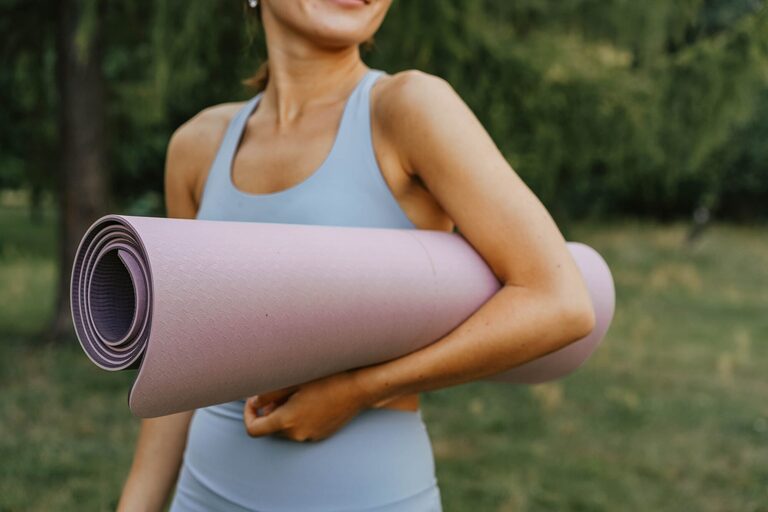
- Roll into a tube shape, like a standard yoga mat
- Can offer more cushioning when you choose a thicker model
- Take up more space and can be awkward to strap to a backpack
- Do not develop fold lines, so they feel more like a conventional mat underfoot
- Can be a better choice if you prioritise comfort over minimum packed size
If your main concern is fitting the mat inside your luggage without external straps, go foldable. If you’d rather have a bit more comfort and don’t mind carrying it separately, a compact rollable mat can still work well. Some compact yoga mats now offer hybrid designs, so check the packed dimensions carefully before buying.
Packing hack: Foldable mats are particularly useful when you are travelling between several hotels because you can place the folded mat against the inside wall of your suitcase rather than carrying another bulky item externally.
How to Clean Yoga Mats While Travelling?
Keeping your mat fresh matters more on the road, since you’re likely reusing it daily in different climates without access to a washing machine.
- Wipe it down after every use with a damp cloth or manufacturer-approved mat cleaner, focusing on sweat-heavy areas.
- Follow the manufacturer’s cleaning instructions rather than using the same homemade spray on every material. Some mats can be damaged by oils, vinegar or strong cleaning products.
- Air dry fully before folding or rolling, since packing a damp mat can encourage unpleasant odours and moisture build-up, particularly in humid destinations.
- Avoid prolonged direct sunlight, as some materials can become brittle or deteriorate with extended UV exposure. Gaiam specifically advises against prolonged sun exposure for its Foldable Yoga Mat.
- Give it a deeper clean when recommended by the manufacturer if you’re on an extended trip.
- Pack a small microfibre towel to place over the mat during particularly sweaty sessions, which can make cleaning easier.
Travel hack: Keep a small reusable cleaningcloth in your yoga bag. It takes almost no space and means you can wipe the mat down immediately rather than packing it away sweaty.
This kind of low-effort maintenance keeps your travel wellness gear in good shape for the whole trip, not just the first week.
Packing Tips for Wellness Travel
A few small habits make a noticeable difference when travelling with yoga gear:
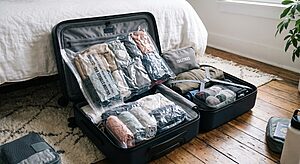
- Fold your mat and place it against the back panel of your suitcase where it can also help protect other items.
- Use a dedicated mat bag or a large drawstring pouch to keep it separate from clothes, particularly if it’s still slightly damp.
- If flying with hand luggage only, check the airline’s cabin baggage dimensions and weight allowance before travelling.
- Weigh your packed bag, not just the mat. A lightweight mat can still push your overall luggage over the limit once you add clothes and other wellness gear.
- Pack a lightweight travel towel alongside your mat for extra cushioning or as a sweat layer.
- Avoid packing the mat while wet. If you have no choice, keep it separate from clothing and unpack it as soon as you arrive.
- Choose a darker or patterned mat if visible marks bother you, although colour will not affect performance.
- Consider a mat that doubles as a stretching or picnic surface if you want to make your travel gear more versatile.
- Do not sacrifice too much cushioning simply to save weight. If you regularly experience discomfort in your knees or wrists, a slightly thicker mat may be a better travel choice.
Space-saving hack: If your mat folds flat, use the empty space between folded clothes rather than giving it a separate compartment. This can make a surprisingly noticeable difference in a small carry-on.
FAQ: Travel Yoga Mats
Anything around 1mm or thinner can feel very firm on hard floors. Many travellers find 1.5mm to 2mm a useful compromise between portability and cushioning, although your preferred thickness depends on your practice and comfort needs. Gaiam describes 2mm as suitable for yoga on the go while also noting that thicker mats provide more cushioning.
It depends on the airline and how the mat is packed. Foldable mats are generally easier to fit within cabin baggage dimensions, while rolled mats can be awkward because of their length. Always check your airline’s current baggage rules before flying.
For many styles of yoga, yes. However, very thin travel mats provide less cushioning than standard studio mats. If you practise high-impact exercise or regularly need more joint support, consider a thicker mat or use the travel mat on top of another suitable surface.
Wipe it down after every session, let it dry fully before packing and follow the manufacturer’s cleaning instructions during longer trips. Avoid sealing a damp mat inside a bag.
Fold lines can remain visible on some mats, but this does not necessarily affect how they perform. How noticeable the creases are depends on the material and how the mat is stored and used.
Not necessarily. Natural rubber may contain latex, so travellers with latex sensitivities should check the manufacturer’s material information before buying. Manduka, for example, states that its eKO Superlite is made from natural tree rubber and is not recommended for people with latex sensitivities.
Choose 1.5mm if minimum packed size and weight are your priorities. Choose 2mm if you want a little more cushioning while still keeping the mat highly portable. If comfort is more important than luggage space, consider going thicker.
Final Thoughts
Whether you’re a full-time digital nomad or someone squeezing in a weekend wellness retreat, the right travel yoga mat means one less thing to worry about and one more way to keep your routine going wherever you land. The best choice is not necessarily the lightest mat on the market. It is the one that gives you the right balance of weight, packed size, grip and comfort for the way you actually travel. If you are constantly moving between destinations, a thin foldable mat may be ideal. If you are staying in one place for longer or need more cushioning, a slightly heavier option could be worth the extra luggage space.