When you are standing at a trailhead, deciding what to carry for water can feel surprisingly complicated. A hiking hydration pack promises hands-free convenience and large capacity, whilst a good hiking drinking bottle offers simplicity, durability and ease of cleaning. Both have genuine merit and both have real limitations and choosing the wrong one for the wrong hike can leave you frustrated, dehydrated or just weighed down with gear you did not need.
Overview: Hydration Pack or Water Bottle at a Glance
For readers who want a quick answer before diving into the detail:
- Choose a hydration pack if you are heading out on long-distance hikes, multi-hour mountain treks, technical trails where stopping is impractical or any route lasting more than three hours.
- Choose a water bottle if you are doing short day walks, urban hikes, trips where refill points are frequent or you want minimal kit to clean and carry.
- Carry both on challenging multi-day treks where capacity and backup reliability both matter.
- Hydration packs hold between 1.5 and 3 litres as standard and are worn on your back, delivering water through a bite valve and drinking tube without breaking stride.
- Water bottles are lighter, cheaper, easier to clean and far more durable in cold weather, but require you to stop and reach for them.
- A filter water bottle hiking setup is a smart middle ground for remote routes where water sources exist but quality is uncertain.
What Is a Hiking Hydration Pack and How Does It Work?
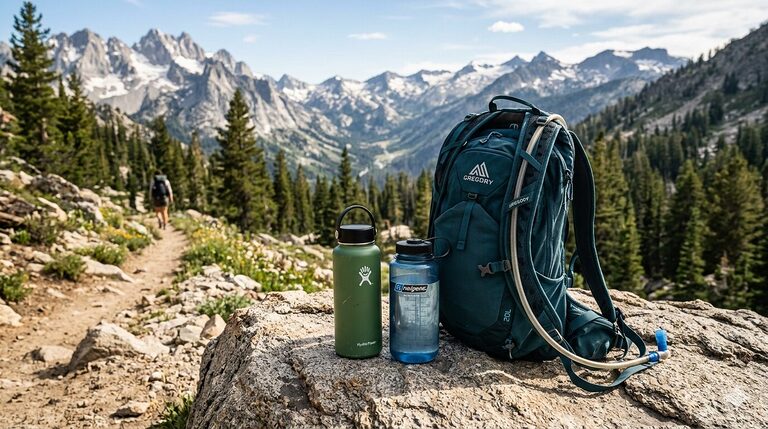
A hiking hydration pack is a backpack or vest fitted with a water reservoir, commonly called a bladder, that sits in a dedicated sleeve inside the pack. A flexible drinking tube routes from the bladder, over your shoulder and clips near your collar or chest strap, ending in a bite valve. You bite down gently and sip as you walk, without slowing your pace or reaching into a side pocket.
Most bladders are made from food-grade polyethylene or TPU (thermoplastic polyurethane) and hold between 1.5 and 3 litres. The opening at the top is wide enough for ice and allows for refilling at streams or taps. Some models include a locking mechanism on the bite valve to prevent accidental drips when not in use.
Some are slim trail-running vests barely larger than the bladder itself. Others are full 20-litre hiking packs with the reservoir as one component among many storage compartments. Brands like Osprey, CamelBak and Deuter have built strong reputations in this space and the quality of the bladder seals and tube connections tends to vary significantly between budget and mid-range options.
The Case for a Hiking Water Bottle
A hiking water bottle is not simply a lesser option. For many situations it is the better one.
The best hiking water bottle is typically made from stainless steel or BPA-free hard plastic, with a wide mouth for easy filling and cleaning. Insulated models keep water cold for hours, which matters enormously on hot, exposed trails. Nalgene and Hydro Flask are widely trusted names and for good reason, these bottles are extraordinarily durable. Drop them, freeze them, run them through a dishwasher. They simply keep working.
Bottles are also quicker to fill from narrow mountain streams, easier to share with others and straightforward to inspect for cleanliness. There is no tube, no bladder and no bite valve to harbour bacteria or develop a musty smell after a few weeks of use. If you have ever pulled a hydration pack out of storage and sniffed the tube, you will understand why this matters.
The key limitation is that you have to stop or at least reach into your pack to drink, which interrupts pace and rhythm on technical terrain. On a simple walk-through open countryside, that is not a meaningful disadvantage. On a steep, exposed ridge where maintaining momentum and balance is important, it can genuinely affect your experience.
Hydration Pack vs Water Bottle: Direct Comparison
| Feature | Hydration Pack | Water Bottle |
| Hands-free drinking | Yes | No |
| Typical capacity | 1.5 – 3 litres | 0.5 – 1.5 litres |
| Ease of cleaning | Moderate to difficult | Easy |
| Durability | Good (bladder is vulnerable) | Excellent |
| Cold weather performance | Poor (tube can freeze) | Good |
| Weight (empty) | 150 – 300g | 80 – 350g depending on material |
| Cost | $30 – $100+ | $12 – $55 |
| Best for | Long, technical or fast-paced hikes | Short walks, cold climates, casual use |
| Refilling ease | Wide mouth, but awkward in field | Easy from any source |
When a Hydration Pack Wins?
There are certain hike types where a hydration pack is not just convenient but genuinely the smarter choice.
Long-distance and mountain routes are the clearest example. On a ten-hour ridge traverse, stopping frequently to drink disrupts pace, balance and body temperature regulation. Sipping continuously through a tube means your hydration stays consistent without effort. Research into hiking performance consistently shows that people drink more when access is effortless and that regular small sips outperform infrequent larger drinks for endurance.
Trail running and fast hiking are also obvious matches. If you are moving quickly, you simply cannot safely pull a bottle from a side pocket on technical terrain. Running vests with integrated hydration are standard equipment in the trail running community for exactly this reason.
Warm or humid climates increase your sweat rate significantly and staying ahead of fluid loss becomes more demanding. On jungle trails in the Philippines, where humidity can exceed 80 per cent before noon, I found that a 2-litre pack was the minimum I would consider for anything beyond a short morning hike.
When a Water Bottle Wins?
Short walks and casual day hikes rarely justify the added complexity of a hydration pack. If you are out for two hours on a well-marked trail with a rest stop or ranger station midway, a single 750ml hiking drinking bottle is perfectly sufficient and far less gear to think about.
Cold weather hiking is where water bottles have a genuine technical advantage. The drinking tube on a hydration pack can freeze in temperatures below zero, even with insulated tube covers. I learned this in a memorable and unpleasant way on a winter trek in the mountains of Central Asia, arriving at the top of a col to find the tube completely blocked and needing to remove my pack to drink directly from the bladder. A well-insulated bottle kept in an inner pocket or chest harness stays liquid and accessible. This is one of the situations where the simplicity of a bottle is not just convenient but practically important.
If you regularly hike during colder months, pairing an insulated bottle with a quality thermal flask can make a noticeable difference to both comfort and safety. Read our guide on why a good thermal flask is a winter hiker’s best friend for tips on keeping hot drinks warm throughout your adventure.
Multi-day backpacking with limited resupply also favours bottles in some respects, because you can see exactly how much water you have remaining, which matters for rationing on remote stretches between reliable water sources.
The Filter Water Bottle Option
For hikers who venture into remote terrain where natural water sources are plentiful but reliability is uncertain, a filter water bottle hiking setup is worth serious consideration. These bottles incorporate built-in filtration, either through a straw-style filter in the lid or a squeeze-through membrane, allowing you to drink safely from streams, rivers and lakes without carrying treatment tablets or a separate filter system.
The Lifestraw Go and Sawyer Squeeze are two of the most widely trusted options. They handle most bacterial and protozoan contaminants effectively, though they do not filter viruses, which is relevant for some parts of South and Southeast Asia. For those destinations, chemical treatment or a UV purifier remains the safer choice.
The practical value of a filter bottle is significant on long wilderness routes. Instead of carrying all your water from the last resupply point, you can top up from the environment and keep pack weight lower throughout.
Cleaning and Maintenance: The Bit People Skip
This is arguably where the hydration pack loses its most loyal converts over time. Keeping a bladder clean requires genuine effort. After each outing, the bladder should be emptied, rinsed and left to dry thoroughly, ideally with a drying frame or rolled paper towel inside to keep the walls apart. The tube needs to be flushed separately. If water sits inside a sealed bladder for more than a day or two, especially in warm conditions, mould and bacteria can establish themselves quickly.
Cleaning tablets specifically designed for hydration bladders are widely available and worth using monthly if you hike regularly. Most bladders can also be put in the freezer between uses if you prefer a low-effort preservation method.
Water bottles, by contrast, can go straight into the dishwasher or be scrubbed clean with a bottle brush in under a minute. For anyone who has dealt with a mouldy bladder mid-trip, this simplicity is not a small thing.
Choosing Based on Hike Length and Difficulty
A practical way to frame the decision:
Under 2 hours, flat to moderate terrain: a 750ml hiking water bottle is sufficient for most conditions. No need for additional kit.
2 to 5 hours, moderate terrain: a 1-litre bottle or a small 1.5-litre hydration pack both work well. Choose based on personal preference and whether refill points exist.
5 to 10 hours, technical or exposed terrain: a 2-litre hydration pack is generally the right call. The hands-free access and capacity become meaningful advantages at this duration.
Multi-day trekking: carry both. Use the hydration pack as your primary drinking source and a bottle as backup capacity or for camp use. On a four-day trek I completed on Mindanao, having a secondary bottle meant I could fill up at camp each evening without relying on a cold, damp bladder as my only vessel.
Hydration is only one part of being properly prepared on the trail. If you are building your hiking kit from scratch, our guide to the must-have hiking accessories for beginners covers the other essentials worth packing before you head outdoors.
Frequently Asked Questions
Technically yes, but it requires much more thorough cleaning afterwards. Sugary liquids accelerate bacterial and mould growth in the tube and bladder. If you use anything other than water regularly, invest in cleaning tablets and flush the system thoroughly every time.
Most quality bladders last three to five years with proper care. Signs that replacement is needed include persistent musty smell despite cleaning, visible mould that will not shift and leaks at the seams or valve.
Yes, if you are planning hikes of more than a few hours. The hands-free convenience encourages better hydration habits from the start. Just factor in the cleaning routine before you commit.
Double-walled stainless steel insulated bottles are the best choice for cold weather hiking. They keep water from freezing far longer than plastic alternatives and are robust enough to handle drops on hard ground.
Slim hydration vests are intended for trail running or fast day hikes and carry very little else. For most hiking, a pack with a dedicated hydration sleeve and additional storage is the practical choice.