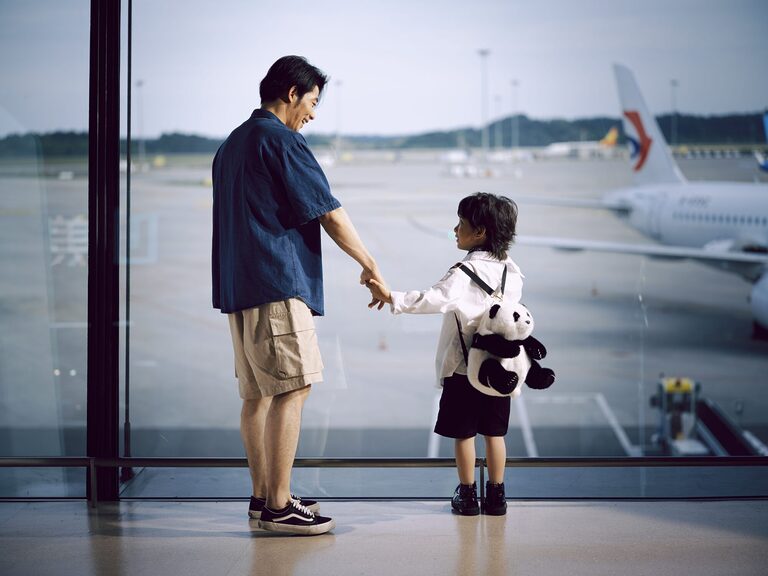
Travelling internationally after a divorce or separation can feel overwhelming, especially when children are involved. One of the biggest concerns parents have about children travelling abroad with one parent is understanding the legal requirements before arriving at the airport. Missing a single document can lead to delays, denied boarding or problems at immigration checkpoints.
While laws vary from country to country, one rule is universal. Preparation matters. Many countries have strict safeguards in place to prevent international child abduction and to ensure both parents are aware of a child’s travel plans.
The good news is that travelling alone with your child is entirely manageable when you understand the rules, organise your paperwork and plan ahead.
Overview
- Requirements for children travelling abroad with one parent vary by country.
- Some destinations require written consent from the non-travelling parent.
- Parents should prepare passports, custody documents and identification.
- Airlines may have additional requirements beyond immigration rules.
- Border officers may ask questions even if consent is not legally required.
- Preparing documents in advance helps avoid unnecessary delays.
Why extra rules exist for children travelling internationally?
Many parents are surprised by the number of checks involved when travelling internationally with children. These safeguards exist primarily to protect children from international parental child abduction and custody disputes.
Border officials are trained to identify situations where a child may be travelling without appropriate authorisation. This does not mean they suspect wrongdoing. It simply means they have a responsibility to verify that everyone has permission to travel.
Even if you have sole custody, you should never assume that a passport alone is sufficient.
It is always safer to carry additional supporting documents.
Understanding travel laws for children
There is no single worldwide law that applies everywhere. Each country sets its own requirements.
Generally, authorities will consider several factors:
- Whether both parents have legal custody
- Whether the child is travelling with one parent or a guardian
- Whether the child has a different surname from the accompanying parent
- The child’s age
- The destination country’s regulations
If you share custody arrangements, you may need additional paperwork before making travel arrangements.
Parents involved in shared custody travel abroad situations should always review their custody agreements carefully. Some agreements contain clauses requiring written permission before any international travel.
Do not wait until a few days before departure to check these details.
When is consent from the other parent required?
This is often the most common question.
In many cases, a signed travel consent letter is strongly recommended and sometimes legally required.
You may need consent if:
- You have joint legal custody
- Your divorce agreement requires permission
- Your destination country requires written authorisation
- Your child is travelling without both legal guardians
A consent letter typically includes:
| Information to include | Details |
| Child’s full name | As shown on the passport |
| Child’s date of birth | Exact birth date |
| Travel dates | Departure and return dates |
| Destination countries | Every country being visited |
| Accompanying parent’s details | Full legal name and passport information |
| Non-travelling parent’s details | Full legal name and signature |
| Emergency contact information | Telephone number and email |
Whenever possible, have the letter notarised. While not always mandatory, notarisation adds credibility and can reduce complications at border checks.
Essential documents to prepare
Keeping your paperwork organised is one of the easiest ways to avoid stress.
Create a dedicated travel folder that contains both physical and digital copies.
Important child travel documents may include:
Child’s passport
Check the expiry date carefully. Many countries require at least six months of validity remaining from the date of entry.
Birth certificate
Bring a copy even if it is not required. This is particularly useful if your child has a different surname.
Travel consent letter
Carry an original signed copy rather than a digital screenshot.
Custody agreement or court order
Bring certified copies if possible. These documents can help clarify your legal rights if questions arise.
Travel itinerary
Include:
- Flight details
- Accommodation bookings
- Return tickets
Emergency contact information
Carry contact details for:
- The non-travelling parent
- A trusted family member
- Your accommodation
One common mistake is relying entirely on your smartphone. Always bring printed copies in case your device loses power or internet access.
Airline requirements can differ from immigration rules
Many parents overlook this important detail.
Airlines may enforce additional policies beyond government regulations.
Some airlines may ask for:
- A travel consent letter
- Proof of relationship
- Birth certificates
- Custody paperwork
Always check directly with your airline at least two weeks before departure.
Do not rely solely on general internet advice because airline policies change frequently.
This is especially important if you have connecting flights through multiple countries.
Border control questions you may encounter
Even if you have all your paperwork, border officers may still ask questions.
Remain calm and answer honestly.
You may be asked:
- Where is the other parent?
- How long will you be travelling?
- What is the purpose of your trip?
- Where will you be staying?
- When will you return home?
This is a routine part of the process and not a sign that you have done anything wrong.
Children may also be asked simple questions, particularly older children.
Prepare them beforehand so they feel comfortable and not frightened.
Special considerations for divorced and separated parents
If your relationship with your former partner is cooperative, discuss travel plans early.
Provide:
- Travel dates
- Accommodation information
- Flight numbers
- Emergency contact details
Open communication can prevent misunderstandings later.
Parents planning international trips may also benefit from a comprehensive kids with divorced parents travel guide, which covers practical strategies for managing travel arrangements, communication and shared parenting considerations.
If communication is difficult or there is a history of conflict, consult a family lawyer before making bookings.
Never assume that verbal permission is enough when legal documentation may be required.
This is particularly important for single parent travel rules because requirements can vary significantly between destinations.
Practical tips for smooth travel with children
A little preparation goes a long way.
Here are some practical tips experienced parents often recommend:
Organise a dedicated document folder
Use clear plastic sleeves to separate documents.
Label sections so you can quickly access them.
Arrive earlier at the airport
Allow extra time for document checks.
Aim to arrive at least three hours before international flights.
Explain the journey to your child
Tell them:
- Where you are going
- How long you will stay
- Who they can speak to if asked questions
This reduces anxiety for everyone.
Keep documents accessible
Do not pack important paperwork in checked luggage.
Keep everything in your carryon bag.
Alongside your travel documents, packing a few essential electronic travel gadgets for families that can help keep children entertained, devices charged and important information easily accessible throughout the journey.
Check destination specific requirements
Some countries have unique border requirements children must meet.
Always verify requirements through official government sources before departure.
Frequently Asked Questions
It depends on your custody arrangement and destination country. Some situations require written consent while others may not. Always check your legal agreement and destination requirements.
Not always but it is highly recommended because it adds legitimacy and may prevent delays.
Bring a birth certificate and additional documents that prove your relationship.
Yes. If required documentation is missing, authorities may delay or deny travel.
Yes. Carry original documents whenever possible along with photocopies and digital backups.
Final thoughts
Travelling internationally with children after divorce does not need to be stressful. Understanding the rules for children travelling abroad with one parent allows you to prepare confidently and avoid common setbacks.
The most important lesson experienced travellers learn is that it is always better to be overprepared than underprepared. A few extra documents may seem unnecessary when packing at home but they can make all the difference at the airport or border crossing. With careful planning, organised paperwork and clear communication, you can focus less on legal worries and more on creating positive travel memories with your child.