Introduction
Choosing the right travel mattresses can significantly improve sleep quality during camping and outdoor trips. This guide explains the differences between inflatable and foam options. You will learn how each type performs in comfort, weight, durability and real outdoor conditions so you can choose the best option for your needs.
Quick Overview
Understanding both options helps travellers avoid poor sleep and unnecessary gear weight.
- Inflatable mattresses focus on comfort and compact storage
- Foam mattresses focus on durability and simplicity
- Weight and packing size matter for long distance travel
- Ground conditions affect insulation and comfort
- Setup and inflation methods differ significantly
What are Inflatable Travel Mattresses?
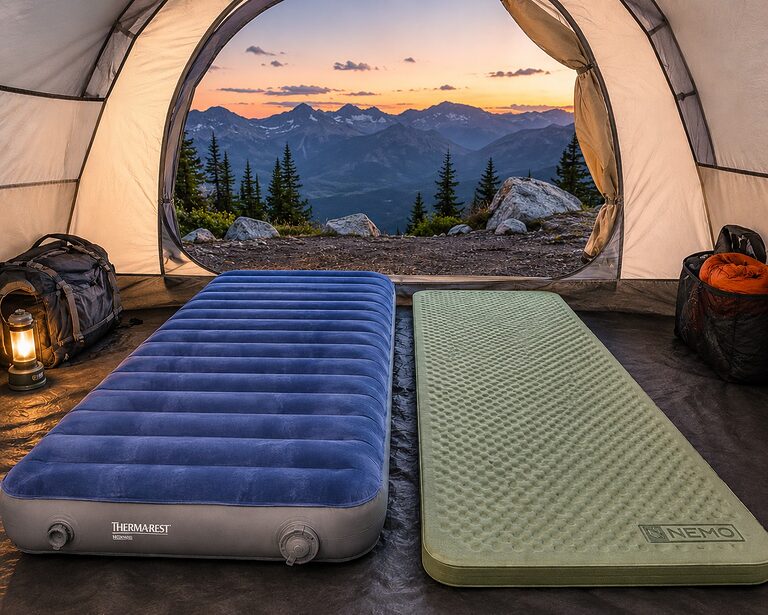
Inflatable mattresses* are air-filled sleeping pads designed to create a cushioned layer between the sleeper and the ground. They are inflated before use and deflated after sleeping. This allows users to adjust firmness based on preference.
Inflatable mattresses require a pump or manual blowing to inflate. Mouth inflation can introduce moisture inside the mattress, which may lead to mold and if the inside of the mattress is not properly dried.
These mattresses are popular with travellers who prioritise comfort. They pack down into a very small size, which helps save backpack space. However, they require time and effort to inflate and pack away.
They are best suited for camps where travellers stay in one place for longer periods. On uneven ground, they provide a softer sleeping surface compared to foam options.
The key takeaway is that inflatable mattresses prioritise comfort and compact storage over speed.
What are Foam Travel Mattresses?
Foam mattresses* are made from dense or layered foam material that provides cushioning without air. They are ready to use immediately and require no setup.
This makes them highly reliable in outdoor environments. There is no risk of punctures or air leakage, which is useful on rough terrain. They also provide steady insulation from cold ground surfaces.
However, foam mattresses are bulkier when packed. They usually need to be carried externally on a backpack and offer less softness than inflatable options.
The key takeaway is that foam mattresses prioritise durability and simplicity over compactness and softness.
Comfort, Warmth and Sleeping Experience
Inflatable mattresses provide a softer and more cushioned sleeping surface. Air distributes body weight evenly, reducing pressure points on uneven ground. This is especially helpful for side sleepers. The thicker the mattress the more insulation it offers.
Inflatable travel mattresses can vary significantly in warmth depending on insulation design and ground conditions. Understanding how thermal performance works in different environments is important when choosing the right setup, as explained in travel mattress R-value and warmth guide, which breaks down insulation ratings and their impact on outdoor sleep comfort.
Foam mattresses feel firmer and are more robust as they cannot be punctured.
The key takeaway is that comfort and warmth depend on structure rather than softness alone.
Weight, Durability and Packing Practicality
Inflatable mattresses can pack down very small, which is ideal for reducing backpack volume. However, they can be damaged by punctured rocks or rough surfaces if not handled carefully.
Foam mattresses are highly durable and can withstand tough outdoor conditions. They take up more space but require no maintenance during use.
Inflatable mattresses also require setup time for inflation and deflation. Foam mattresses are instant and ready to use.
The key takeaway is that inflatable saves space while foam increases durability and speed.
Choosing the Right Travel Mattress
The best choice depends on travel style and environment.
Inflatable mattresses are better for:
- Longer stays in one campsite
- Travellers prioritising comfort
- Trips where backpack space is limited
Foam mattresses are better for:
- Fast moving hikes and climbs. This becomes especially relevant in multi day hiking scenarios, as outlined in trekking guide for travellers, where sleeping systems are part of overall expedition planning and gear selection.
- Rough or unpredictable terrain
- Cold weather environments
For example, a multi-day trek with frequent camp changes often suits foam mattresses. A relaxed camping trip suits inflatable options better.
The key takeaway is that the right choice depends on how you travel.
Conclusion
Travel mattresses in outdoor use offer a clear trade-off between comfort and practicality. Inflatable options provide softness and compact storage while foam options offer durability and simplicity. Choosing the right one ensures better sleep and recovery during outdoor adventures. One possibility is to combine a lightweight inflatable mattress with a thin foam mat, which helps protect the inflatable mattress from punctures.
*This article contains affiliate links. If you make a purchase, we may earn a small commission at no extra cost to you.