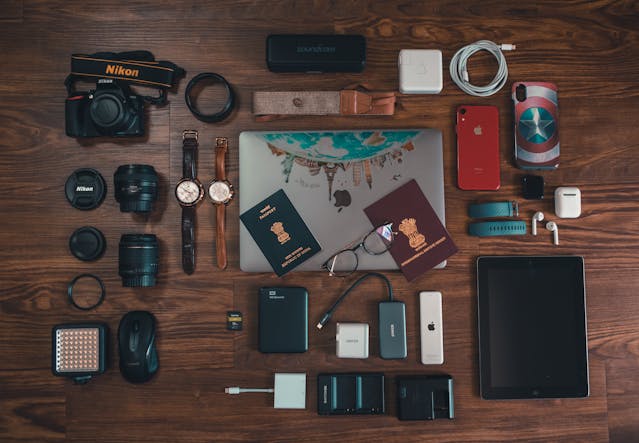
Long flights can feel draining, but the right digital travel accessories can significantly improve comfort, organisation, and entertainment while you’re in the air. Instead of packing lots of gadgets, experienced travellers focus on a few practical tools that solve real problems such as noise, battery life, ergonomics, and easy access to devices.
Noise-Cancelling Audio: Comfort and Focus
Noise-cancelling headphones or earbuds* are often considered the most important digital accessory for long flights. Cabin noise can be tiring, especially on overnight journeys, and reducing that background sound helps you relax or sleep more easily.
Key benefits include:
- Blocking engine noise and cabin chatter
- Making movies and music clearer at lower volume
- Improving focus if you plan to work during the flight
If you want a deeper guide on how noise reduction technology works and how to select the right style for travel, you may find our article on “Noise-Cancelling Audio: Comfort, Focus, and Choosing the Right Fit” helpful.
Power and Charging Essentials
Keeping your devices charged is essential when travelling long distances. Seat power is not always reliable, so having your own charging solution ensures your phone, watch, or tablet stays usable throughout the journey.
Core charging accessories:
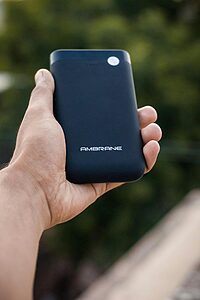
- Power bank* for backup energy
- Compact multi-port charger*
- Universal travel adapter* for international connections
Device Stand
Simple device stand* accessories can make a big difference to comfort. Holding a phone or tablet for hours often leads to neck or wrist strain, especially in tight economy seats. Device stands have come a long way and some designs can be mounted on the seat in front.
Why travellers use device holders:
- Raise screens to eye level
- Improve posture during films or work
- Free up tray-table space
Entertainment Devices for Long Flights
Having your own entertainment reduces reliance on onboard systems. Many travellers carry lightweight devices that allow them to switch between reading, watching, and listening.
Popular options include:
- E-readers for long battery life and reduced eye strain
- Tablets or phones with offline content downloaded in advance
For a closer look at which gadgets work best for different travel styles, you can also explore our guide to “Entertainment Devices for Long Flights: Comfort, Flexibility, and Smart Packing.”
Organisation: Cable Organisers and Tech Pouches
A cable organiser* or small accessory pouch keeps everything in one place. Rather than searching through your bag mid-flight, you can pull out a single kit containing chargers, cables, and earbuds. Additionally, some airlines ask you to keep power banks with you during the flight and not in the overhead locks so a cable organiser is a great place to store it.
Advantages of a tech organiser:
- Prevents tangled cables
- Speeds up airport security checks
- Makes settling into your seat quicker
Bluetooth Airplane Audio Adapters
Bluetooth airplane audio adapters* are small wireless transmitters designed to connect your own Bluetooth headphones or earbuds to an aircraft’s in-flight entertainment system. Because most seat-back screens still rely on wired headphone jacks, these adapters act as a bridge, sending audio from the plane directly to your wireless headphones.
What They Do
- Plug into the airplane’s headphone socket (single or dual-pin)
- Transmit audio wirelessly to Bluetooth headphones or earbuds
- Allow you to watch films or listen to music without wired cables
Why Travellers Use Them
- Use your own comfortable noise-cancelling headphones instead of airline headsets
- Reduce cable clutter in tight seats
- Move more freely during meals or rest without unplugging
🔧 How They Work
- Insert the adapter into the in-flight entertainment headphone jack.
- Pair it with your Bluetooth headphones like you would with a phone.
- Audio from the seat screen streams wirelessly to your headphones.
Good to Know
- These devices transmit audio only, they do not provide Wi-Fi or internet access.
- Some newer aircraft offer built-in Bluetooth, so an adapter may not always be necessary.
Overall, Bluetooth airplane audio adapters are a simple addition to a digital travel setup, helping travellers combine modern wireless headphones with traditional onboard entertainment systems for a more comfortable long-flight experience.
eSIMs and Digital Connectivity (Beyond the Flight)
While not strictly a flight accessory, eSIMs have become an important part of modern digital travel setups. An eSIM is a digital SIM card built into many smartphones that allows you to activate a mobile data plan without swapping physical SIM cards. For travellers, this means you can connect to local networks quickly after landing, avoiding roaming fees and the hassle of finding airport SIM kiosks.
What Is an eSIM?
- A built-in digital SIM that can be activated remotely
- Lets you download mobile data plans for different countries or regions
- Works alongside your main phone number in many cases
Why Travellers Use eSIMs
- Instant internet access when you land
- Avoid expensive international roaming charges
- Easy switching between multiple countries on one trip
- No need to carry or swap tiny physical SIM cards
🔧 How They Fit Into Your Travel Setup
- Download your data plan before departure
- Activate it when you arrive at your destination
- Use maps, ride-hailing apps, and messaging immediately after landing
Things to Consider
- Not all phones support eSIM, so check compatibility first
- Coverage and speeds depend on the provider and country
- Some travellers still keep a physical SIM as backup
Although eSIMs are not directly used during the flight itself, they play a key role in a seamless digital travel experience by ensuring you stay connected the moment your journey continues on the ground.
Final Thoughts
The best digital travel accessories are not about carrying more technology, they are about choosing smarter tools that improve comfort and efficiency. By focusing on essentials like noise-cancelling audio, reliable charging, ergonomic mounting, personal entertainment, connectivity extras, and a well-organised tech pouch, travellers can create a streamlined setup that makes even the longest flights feel far more manageable.
*This article contains affiliate links. If you make a purchase, we may earn a small commission at no extra cost to you.