So, you are travelling to the Philippines.
Excellent choice.
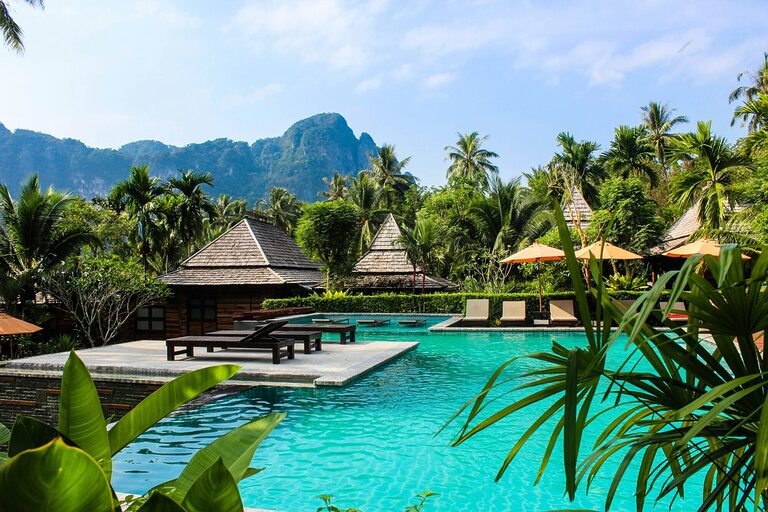
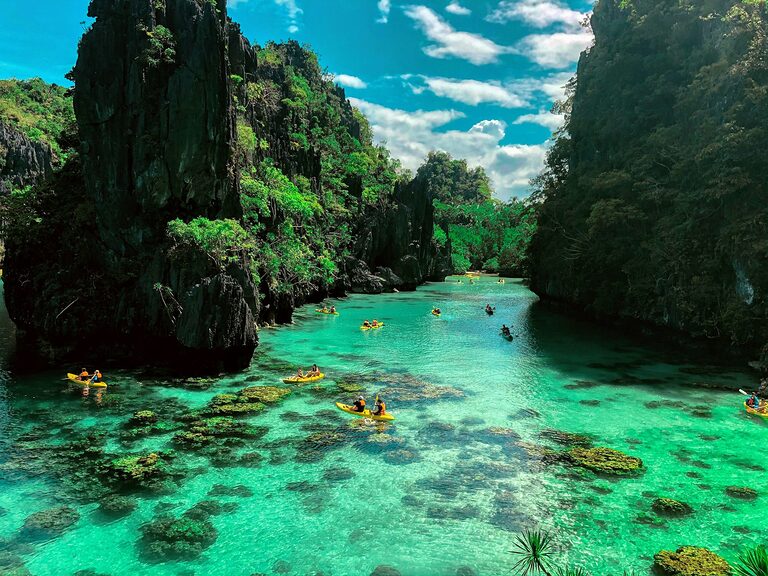
You are about to discover a spectacular country made up of more than 7,000 islands, filled with powder-white beaches, turquoise waters, dramatic limestone cliffs, tropical rainforests, impressive mountains and some of the friendliest people you are likely to meet.
And then there is the food.
And the karaoke.
Especially the karaoke.
You might arrive expecting a tropical holiday involving coconut trees, island hopping and spectacular sunsets.
And you will certainly find those.
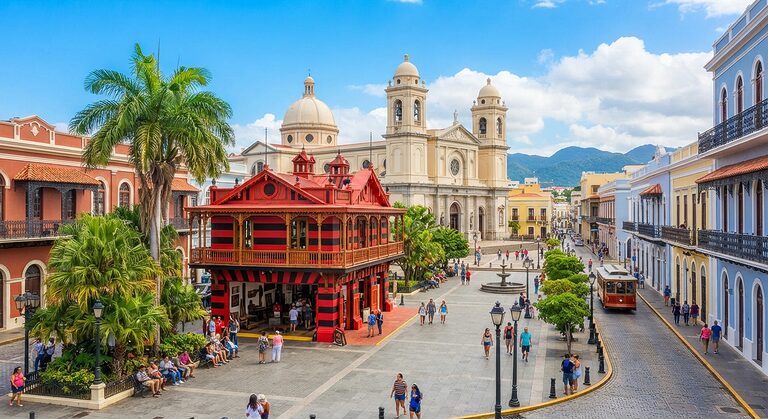
But you will also discover centuries of fascinating history, colourful jeepneys, extraordinary rice terraces, underground rivers, bustling cities and a culture where offering visitors something to eat is practically a national tradition.
Do not be surprised if somebody asks whether you have eaten before asking how you are.
Food is a language of affection in the Philippines.
This is a country where you can swim alongside sea turtles in the morning, explore a waterfall in the afternoon and finish your day enjoying freshly grilled seafood beside the ocean.
However, travelling around an archipelago of more than 7,000 islands requires a little preparation.
There are unpredictable weather conditions, complicated transport connections, occasional power cuts and traffic jams that may cause you to reconsider your understanding of time.
Because nothing interrupts a perfectly organised tropical adventure quite like discovering that your next destination is on an entirely different island and the last ferry has already departed.
To help you travel smarter, save money and enjoy your Filipino adventure with fewer unnecessary surprises, here are 10 useful travel hacks for visiting the Philippines.
1. Choose Your Travel Dates Carefully
🌤️ The Philippines enjoys a tropical climate.
Which sounds wonderful.
And generally, it is.
However, tropical weather does not always mean uninterrupted sunshine, gentle sea breezes and perfect beach conditions.
Sometimes it means watching the rain fall sideways while wondering whether your waterproof jacket was quite as waterproof as advertised.
The Philippines generally experiences two main seasons, although weather patterns vary considerably between regions.
Dry season (generally December to May)
This is a popular period for beach holidays, island hopping, hiking and outdoor adventures.
December to February generally offers cooler and more comfortable temperatures in many areas, while March to May can become extremely hot.
April and May are also popular holiday months for Filipino families.
Expect busier beaches, higher accommodation prices and increased demand for transport, particularly during Holy Week.
Rainy season (generally June to November)
Rainfall becomes more frequent across many parts of the country, with an increased risk of tropical storms and typhoons.
However, the rainy season does not necessarily mean continuous rainfall throughout the entire country.
Different islands experience different weather patterns.
For example, conditions in Palawan may be considerably different from those in Siargao.
The Philippines is geographically diverse enough to make a single nationwide weather forecast rather unhelpful.
💡 Travel Hack: Consider travelling between January and March for generally favourable weather across many popular destinations.
For potentially lower prices and fewer crowds, consider shoulder-season travel, taking regional weather patterns into account.
- Monitor official weather forecasts from PAGASA.
- Choose flexible accommodation and transport bookings.
- Purchase suitable travel insurance covering relevant weather disruptions.
- Pack a compact rain poncho, sunscreen and quick-drying clothing.
- Allow additional time for ferry and flight connections.
And remember that a little tropical rain does not necessarily ruin a holiday.
It might simply provide an excellent excuse to order another mango shake.
2. Complete Your Entry Requirements Before Travelling
🛂 Arriving in the Philippines is exciting.
Standing at an airport trying to complete an online registration form while connected to unreliable Wi-Fi?
Considerably less exciting.
Many nationalities, including British passport holders, are generally eligible to enter the Philippines visa-free for tourism for up to 30 days, subject to applicable entry requirements.
However, requirements vary according to nationality, passport type and individual circumstances.
Travellers should also familiarise themselves with the Philippine eTravel registration system.
The eTravel system collects information required by Philippine authorities for international travel.
Registration is free through the official government platform.
Unfortunately, unofficial websites may attempt to charge travellers for completing this process.
Paying unnecessarily for something that is free is hardly the ideal beginning to a holiday.
💡 Travel Hack: Check the latest Philippine immigration requirements before departure and complete your required eTravel registration within 72 hours before arrival.
Use the official website: etravel.gov.ph.
Before travelling, check the following:
- Passport validity requirements.
- Visa requirements for your nationality.
- Return or onward travel ticket requirements.
- eTravel registration requirements.
- Customs declaration requirements.
- Travel insurance coverage.
Save a screenshot of your eTravel QR code and keep offline copies of your important travel documents.
Also, bring a suitable travel plug adaptor.
The Philippines generally uses 220-volt electricity, with Type A, B and C sockets commonly encountered.
Check that your electrical devices are compatible.
An unexpected electrical incident is not the sort of adventure most travellers have in mind.
3. Plan Your Island Hopping Strategically
🏝️ The Philippines has more than 7,000 islands.
Which is wonderful news for adventurous travellers.
Less wonderful news for anybody attempting to visit all the famous destinations during a seven-day holiday.
Looking at a map, you might decide that Manila, Boracay, Palawan, Cebu, Bohol and Siargao could comfortably fit into one itinerary.
Technically, you might manage it.
You might also spend more time inside airports and ferry terminals than on actual beaches.
Travelling between islands often involves a combination of domestic flights, ferries, buses, vans and smaller boats.
And these connections do not always operate according to your carefully organised schedule.
Weather conditions, traffic and operational delays can affect even the simplest journeys.
One of the best ways to explore the Philippines is to concentrate on particular regions.
Luzon
Explore Manila’s historic districts, the rice terraces of Banaue, the mountain scenery of Sagada and the impressive Mayon Volcano in Albay.
Visayas
Discover Cebu’s waterfalls, Bohol’s Chocolate Hills, Siquijor’s beautiful coastline and Boracay’s famous white beaches.
Palawan
Experience El Nido’s limestone lagoons, Coron’s remarkable lakes, Port Barton’s peaceful beaches and Puerto Princesa’s underground river.
Mindanao
Discover Siargao’s surfing culture, Camiguin’s volcanic landscapes, Bukidnon’s mountain scenery and Davao’s natural attractions, while checking current travel advisories for your intended destinations.
💡 Travel Hack: Organise your itinerary around geographical regions rather than attempting to travel repeatedly across the country.
If you have seven to ten days, consider concentrating on two or three destinations with convenient transport connections.
For longer holidays, allow several nights in each location.
Book domestic flights and popular ferry routes in advance, particularly during weekends, festivals and public holidays.
Avoid booking an international departure immediately after a domestic ferry or flight connection.
Ideally, spend your final night near your international departure airport.
You do not need to visit every famous Philippine island during one holiday.
This is supposed to be a relaxing adventure.
Not an audition for The Amazing Race.
4. Understand How Local Transport Works
🚐 Transport in the Philippines is an experience in itself.
There are colourful jeepneys, motorised tricycles, buses, passenger vans, taxis, ferries and various forms of transport that may initially leave you wondering exactly how everything works.
Fortunately, once you understand the basics, getting around becomes considerably easier.
Here are some common transport options:
| Transport | Best for |
| Jeepney | Affordable local journeys along established routes |
| Tricycle | Short journeys within towns and neighbourhoods |
| Grab | Convenient car journeys in supported cities |
| Bus | Longer journeys between cities and provinces |
| Passenger van | Regional transfers and popular tourist routes |
| Ferry | Travelling between islands |
| Bangka | Traditional outrigger boats used for island hopping and local crossings |
| Domestic flight | Longer journeys between major islands |
Jeepneys are particularly iconic.
Originally developed from surplus military jeeps after the Second World War, they have become one of the country’s most recognisable forms of transport.
They are colourful, affordable and often wonderfully decorated.
You may also find yourself participating in an informal payment system involving passengers passing money towards the driver.
Congratulations.
You have temporarily joined the transport industry’s accounts department.
Then there is the traffic.
Metro Manila is particularly famous for congestion.
A destination that appears to be only a few kilometres away may take considerably longer to reach than expected.
💡 Travel Hack: Download Grab before arriving and check whether it operates in your chosen destinations.
For tricycle journeys, confirm the fare before getting in and establish whether the quoted price is per passenger or for the entire vehicle.
Carry small notes and coins when using public transport.
If travelling through Manila, allow generous time for airport transfers and check which terminal your flight departs from.
If hiring a scooter, ensure you have the appropriate driving licence, suitable insurance and a proper helmet.
Remember that vehicles drive on the right-hand side of the road.
And never underestimate Philippine traffic.
Your navigation app may confidently predict a 25-minute journey.
Reality may have prepared a completely different proposal.
5. Carry Cash And Understand The Local Currency
💰 The official currency of the Philippines is the Philippine peso (PHP), represented by the symbol ₱.
Credit and debit cards are widely accepted in many hotels, shopping centres, supermarkets and established restaurants in major cities.
However, things can be considerably different when visiting smaller islands, rural communities and local markets.
Your luxury hotel may happily accept your credit card.
The person selling fresh coconuts beside a remote beach probably has other arrangements.
Digital payment platforms such as GCash and Maya are also popular throughout the Philippines.
However, international visitors should not assume they can easily register for or use these services without meeting the relevant requirements.
Cash remains particularly useful for:
- Public transport.
- Local markets and street food.
- Small restaurants and shops.
- Environmental and entrance fees.
- Island-hopping excursions.
- Remote accommodation.
- Public toilets.
ATMs are available throughout many tourist destinations, but machines in smaller towns and islands may be limited, temporarily unavailable or occasionally run out of cash.
Which is particularly inconvenient when you have already ordered lunch.
💡 Travel Hack: Withdraw enough Philippine pesos before travelling to remote destinations.
Keep a mixture of smaller denominations, particularly ₱20, ₱50 and ₱100 notes.
Check your bank’s international withdrawal fees and be aware that local ATM operators may charge additional fees.
When a card terminal or ATM offers to convert the transaction into your home currency, paying in Philippine pesos will often provide a better exchange rate, depending on your card provider.
Keep your money in separate secure locations rather than carrying everything in one wallet.
An RFID-blocking travel wallet can also help keep your cards and travel documents organised.
And try not to pay for a small roadside snack with a ₱1,000 note.
You may discover that finding enough change becomes a community project.
6. Eat Like A Local And Discover Filipino Cuisine
🍽️ Filipino food deserves considerably more international attention.
This is a country where breakfast can involve garlic rice, fried eggs and meat.
Where sweet and savoury flavours happily coexist.
And where a meal without rice may leave some locals wondering whether you have actually eaten.
Filipino cuisine reflects Indigenous traditions alongside Spanish, Chinese, American and other international influences.
The result is a wonderfully diverse collection of dishes that vary across the country’s many regions.
Here are some foods worth trying:
- Adobo: Meat commonly cooked with vinegar, soy sauce, garlic and spices.
- Sinigang: A comforting sour soup often made with tamarind, vegetables, meat or seafood.
- Lechon: Whole roasted pig with crispy skin, particularly famous in Cebu.
- Sisig: A sizzling dish traditionally made with chopped pork, onions and seasonings.
- Pancit: Noodle dishes prepared with various combinations of vegetables, meat and seafood.
- Chicken Inasal: Marinated and grilled chicken particularly associated with Bacolod.
- Lumpia: Filipino spring rolls with various savoury or sweet fillings.
- Kinilaw: Fresh fish prepared with vinegar or citrus and seasonings.
- Halo-halo: A colourful dessert containing shaved ice, milk and an impressive assortment of sweet ingredients.
- Turon: Fried banana spring rolls coated with caramelised sugar.
Then there is balut.
A fertilised duck egg containing a developing embryo.
It is a traditional Filipino delicacy and something adventurous travellers may wish to try.
There is absolutely no obligation.
Your holiday achievements will remain valid even if you politely decline.
💡 Travel Hack: Look for local carinderias, public markets, bakeries and family-run restaurants rather than relying exclusively on tourist-oriented establishments.
A carinderia is a small local eatery that typically serves affordable, ready-cooked Filipino dishes.
Choose busy establishments with good hygiene practices and freshly prepared food.
If you have dietary restrictions or allergies, ask about ingredients carefully.
Fish sauce, shrimp paste, pork and seafood-based seasonings can appear in dishes where you might not expect them.
Vegetarian and vegan travellers may find more options in larger cities and established tourist destinations, although it is worth planning ahead when visiting rural areas.
Drink safe, purified water and avoid drinking untreated tap water.
Finally, leave room for dessert.
Filipino mangoes have a remarkable ability to make you question every mango you have previously eaten.
7. Learn A Few Filipino Phrases And Embrace The Local Culture
🗣️ One of the advantages of travelling in the Philippines is that English is widely spoken.
Filipino and English are the country’s official languages, making communication relatively straightforward for many international visitors.
However, the Philippines is also home to numerous regional languages, including Cebuano, Ilocano, Hiligaynon, Waray and many others.
Learning a few Filipino expressions can help you connect with local people and demonstrate appreciation for their culture.
You do not need to become fluent.
Nobody expects you to deliver a perfectly rehearsed speech in Filipino before ordering breakfast.
A few simple expressions will do nicely.
| Filipino phrase | Meaning |
| Kumusta? | How are you? |
| Magandang umaga | Good morning |
| Magandang hapon | Good afternoon |
| Salamat | Thank you |
| Maraming salamat | Thank you very much |
| Oo | Yes |
| Hindi | No |
| Magkano po? | How much is it? |
| Saan ang CR? | Where is the toilet? |
| Ingat | Take care |
You may also frequently hear the words po and opo.
These are expressions of respect, particularly when speaking to older people or in polite situations.
Adding po to a greeting or saying salamat po is a lovely way to show courtesy.
Another important part of Filipino culture is hospitality.
You may be invited to share a meal, attend a celebration or participate in a karaoke session.
Sometimes all three during the same afternoon.
💡 Travel Hack: Learn a handful of Filipino phrases before arriving and remain open to local customs.
Dress appropriately when visiting churches, religious sites and traditional communities.
Ask permission before photographing people and respect local traditions.
When visiting areas where regional languages dominate, learning a local greeting or expression of thanks can be especially appreciated.
And if somebody invites you to sing karaoke?
Do not worry too much about your singing ability.
Enthusiasm is often more important than musical accuracy.
Although your choice of song may be remembered long after you have returned home.
8. Book Popular Experiences Early And Respect Nature
🐢 The Philippines offers some extraordinary natural experiences.
You can explore hidden lagoons, snorkel alongside colourful marine life, hike volcanic landscapes, discover underground rivers and swim beneath tropical waterfalls.
Unfortunately, many other travellers have discovered these experiences too.
Popular attractions may have visitor limits, permit requirements, mandatory guides or specific operating schedules.
Some activities are also dependent on weather and sea conditions.
Experiences worth planning in advance include:
- Island hopping around El Nido and Coron.
- Visiting the Puerto Princesa Underground River.
- Canyoneering in Badian, Cebu.
- Hiking Mount Pulag.
- Diving in Apo Reef or Tubbataha Reefs Natural Park.
- Surfing lessons in Siargao.
- Snorkelling around Apo Island.
- Exploring Bohol’s Chocolate Hills and responsible tarsier sanctuaries.
However, enjoying the Philippines’ natural beauty also comes with responsibility.
Coral reefs, marine ecosystems and wildlife can be extremely sensitive to human activity.
Avoid touching coral, chasing sea turtles, handling starfish or disturbing wildlife for photographs.
Choose responsible wildlife experiences that prioritise conservation rather than guaranteed close encounters.
Wild animals are not holiday accessories.
And sea turtles have not agreed to participate in your underwater photography session.
💡 Travel Hack: Book popular activities through reputable operators and check exactly what is included in the price.
Ask whether equipment, transport, entrance fees, environmental fees, guides and meals are included.
Check cancellation policies in case weather conditions prevent an excursion from operating.
Bring a waterproof phone pouch, dry bag, suitable footwear and reusable water bottle when participating in outdoor activities.
Follow your guide’s instructions, wear a life jacket during boat excursions and never ignore swimming restrictions.
When hiking or visiting waterfalls, be particularly cautious following heavy rainfall because water levels can rise rapidly.
The Philippines offers plenty of opportunities for adventure.
There is no need to manufacture additional danger.
9. Prepare For Connectivity Problems And Pack Smart
📱 The Philippines is a country where smartphones are an important part of everyday life.
People use them for communication, shopping, navigation, payments, entertainment and documenting approximately every significant meal.
However, reliable internet access is not guaranteed everywhere.
Mobile coverage is generally better in major cities and populated areas.
Travel to remote islands, mountainous regions or isolated beaches and your mobile signal may become considerably less enthusiastic.
Occasional power interruptions can also occur, particularly in remote destinations or during severe weather.
If you are a digital nomad or somebody who needs to work during your holiday, this is worth considering.
A beachfront bungalow may look absolutely perfect in photographs.
Its internet connection may have been designed for somebody with considerably fewer professional responsibilities.
💡 Travel Hack: Consider purchasing a local SIM card or travel eSIM compatible with your device.
Globe, Smart and DITO are among the country’s mobile network providers, although coverage varies by location.
Check registration requirements and network coverage for your intended destinations.
Download offline maps and save important information before leaving areas with reliable internet access.
Domestic airlines and smaller aircraft may have restrictive baggage allowances, so check your allowance before packing.
Also, remember that power banks must generally be carried in cabin baggage rather than checked luggage, subject to airline restrictions.
Pack comfortable walking shoes as well as sandals.
Not every Philippine adventure involves walking gracefully along a sandy beach.
Some involve slippery rocks, muddy trails and discovering muscles you had previously forgotten existed.
10. Budget For Hidden Costs And Allow Plenty Of Flexibility
💸 The Philippines can be an excellent destination for travellers with different budgets.
Backpackers can enjoy affordable accommodation, local food and public transport.
Families can discover comfortable resorts and organised excursions.
Luxury travellers can enjoy private island retreats, spectacular beachfront villas and exclusive experiences.
However, one common mistake is assuming that everything in the Philippines is inexpensive.
Local meals and public transport can be very affordable.
But domestic flights, private boat tours, accommodation in popular destinations and imported products can quickly increase your expenses.
Then there are the smaller charges.
Depending on your destination and activities, you may encounter:
- Environmental fees.
- Ferry terminal fees.
- Marine sanctuary fees.
- Island entrance fees.
- Equipment rental charges.
- Guide fees.
- Hotel transfers.
- Additional baggage charges.
Individually, these expenses may seem insignificant.
Collectively, they can develop a surprisingly impressive relationship with your bank account.
💡 Travel Hack: Compare the total cost of activities and accommodation rather than focusing only on the advertised price.
Ask tour operators whether additional fees are included before booking.
Consider shared island-hopping tours instead of private boats if you are travelling on a tighter budget.
Eat at local restaurants, use public transport where practical and look for free or inexpensive attractions.
Travelling with friends or family can also make private transfers and excursions more economical when costs are shared.
Keep an emergency fund for unexpected accommodation, transport changes and medical expenses.
Most importantly, avoid organising every minute of your holiday.
Ferries can be delayed.
Flights can be rescheduled.
Rain can interrupt excursions.
And sometimes you may simply discover a beautiful beach that deserves another day of your attention.
A flexible itinerary allows you to enjoy these moments without feeling that your entire holiday has fallen apart.
Besides, spending an unexpected afternoon beside the Philippine Sea is hardly a terrible outcome.
🌴 Bonus Travel Hacks For The Philippines
Before you pack your bags, here are a few additional tips worth remembering.
Understand What CR Means
In the Philippines, public toilets are commonly referred to as comfort rooms, or CRs.
If you ask somebody where the CR is, they will immediately understand.
Public toilets may not always provide toilet paper or soap, particularly in rural areas, ferry terminals and smaller establishments.
Carry a small packet of tissues and hand sanitiser.
Some public toilets also charge a small fee.
This is another excellent reason to keep a few coins in your pocket.
A relatively minor preparation that you may appreciate considerably later.
Protect Yourself From The Tropical Sun And Mosquitoes
The Philippine sun can be surprisingly intense.
Even on cloudy days.
Use broad-spectrum sunscreen, wear a hat and drink plenty of safe drinking water.
Mosquitoes are also common in many areas and can transmit illnesses such as dengue.
Use an effective insect repellent throughout the day, particularly when exploring forests, rural areas and locations near standing water.
Consult a travel health professional before departure regarding recommended vaccinations and destination-specific health precautions.
And remember that a sunburn is not a particularly useful souvenir.
Especially when you still have another week of your holiday remaining.
Check Regional Travel Advisories
The Philippines is a large and geographically diverse country.
Safety conditions can vary considerably between regions.
Some areas, particularly parts of western and southern Mindanao and the Sulu archipelago, are subject to serious international travel advisories.
This does not mean that every destination in Mindanao has the same safety conditions.
Check advice specific to your intended destinations and transport routes.
Other international visitors should consult their own government’s travel advice.
Keep emergency contact details accessible and ensure your travel insurance covers your planned destinations and activities.
Experience A Local Festival
Filipinos know how to celebrate.
And they rarely approach a festival with a modest amount of enthusiasm.
The Philippines hosts numerous colourful festivals throughout the year, including:
- Sinulog Festival, Cebu: Usually held in January, featuring religious celebrations, colourful costumes and street dancing.
- Ati-Atihan Festival, Kalibo: A lively January celebration involving traditional music and dancing.
- Panagbenga Festival, Baguio: A spectacular flower festival generally held in February.
- Kadayawan Festival, Davao: An August celebration of cultural heritage, local produce and Indigenous traditions.
- MassKara Festival, Bacolod: Famous for its colourful smiling masks and lively street performances, generally held in October.
- Giant Lantern Festival, San Fernando, Pampanga: A spectacular display of illuminated lanterns during the Christmas season.
If your visit coincides with a festival, consider attending.
Check official event dates and book accommodation early.
Expect music, crowds, delicious food and a considerable amount of excitement.
And do not expect to have an early night.
Be A Responsible Traveller
The Philippines’ extraordinary natural beauty is one of its greatest treasures.
Unfortunately, plastic pollution, environmental damage and irresponsible tourism can threaten these remarkable landscapes.
Dispose of rubbish responsibly, reduce single-use plastics and support locally owned businesses.
Respect protected areas and follow local conservation regulations.
Do not remove coral, sand, shells or other natural materials where prohibited.
Support tourism operators that treat wildlife responsibly and contribute positively to local communities.
The best souvenirs are memories, photographs and locally made products.
Not pieces of the ecosystem that attracted you to the destination in the first place.
🌺 Final Philippines Thoughts
The Philippines is one of those destinations that offers considerably more than its beautiful beaches.
The landscapes are extraordinary.
The food is comforting.
The culture is fascinating.
The people are welcoming.
And the sheer variety of experiences makes it a wonderful destination for solo travellers, couples, families, backpackers and adventure enthusiasts alike.
But travelling well in the Philippines is not simply about knowing which islands to visit.
It is also about understanding how the country works.
Choose your travel dates carefully.
Check your entry requirements.
Plan your island connections.
Carry some cash.
Try the local food.
Learn a few Filipino phrases.
Respect the environment.
And always leave a little flexibility in your itinerary.
You might begin your morning exploring the limestone lagoons of El Nido and finish it watching the sunset beside a quiet beach, you might visit Cebu expecting beautiful waterfalls and discover that its food is equally memorable.
You might travel to Bohol to see the Chocolate Hills and find yourself falling in love with its peaceful countryside.
Or you might arrive in Siargao planning to stay for three days and spend your final evening seriously investigating the possibility of extending your holiday.
That is part of the Philippines’ charm.
Some of your favourite memories may have very little to do with famous tourist attractions.
They might involve a conversation with a friendly tricycle driver, a freshly prepared meal at a roadside eatery, an unexpected invitation to a family celebration or a spontaneous karaoke performance that nobody involved will ever forget.
For better or worse.
The Philippines rewards travellers who are curious, patient, respectful and willing to embrace the unexpected.
So pack your sunscreen.
Bring your sense of adventure.
Keep your itinerary flexible.
Practise saying salamat po.
And prepare to discover why the Philippines is affectionately known as the Pearl of the Orient Seas.
With more than 7,000 islands to explore, you may find that your biggest travel problem is not deciding where to go.
It is deciding which islands you will have to save for your next visit.
Maligayang paglalakbay! Happy travels! 🇵🇭