So, you are travelling to Ireland.
Excellent choice.
You are about to explore a country filled with dramatic cliffs, rolling green hills, ancient castles, colourful villages and lively cities.
And enough traditional pubs to make choosing where to spend your evening surprisingly difficult.
There will be music, there will be beautiful scenery.
There will probably be rain.
Actually, there will almost certainly be rain.
And somewhere along the way, somebody may offer you directions that begin with:
“Well, you wouldn’t want to start from here.”
Welcome to Ireland.
A country famous for its warm hospitality, fascinating history and wonderful storytelling.
But Ireland also has its own customs, cultural sensitivities and unwritten rules.
Some involve history.
Others involve manners.
And a few are simply common sense.
For example, assuming everyone in Ireland is British.
Expecting every pub to feature traditional music.
Or stopping your car on a narrow country road because you have spotted a particularly photogenic sheep.
Spoiler alert.
That last one is a terrible idea.
Fortunately, avoiding these mistakes is easy once you know what to expect.
Here are 10 things NOT to do in Ireland, along with practical tips to help you travel respectfully, stay safe and enjoy your Irish adventure.
1. Don’t Assume Ireland Is Part of the United Kingdom
Let’s begin with an important geography lesson.
The island of Ireland contains two different jurisdictions.
The Republic of Ireland is an independent country, while Northern Ireland is part of the United Kingdom.
They share an island and many cultural connections.
But they are not politically the same place.
Dublin is the capital of the Republic of Ireland.
Belfast is the capital of Northern Ireland.
The Republic uses euros.
Northern Ireland uses pounds sterling.
And these differences matter.
Calling someone from the Republic of Ireland British may cause offence.
Likewise, avoid assuming everyone in Northern Ireland identifies the same way.
Some people identify as Irish.
Others identify as British.
And some identify as both.
National identity is personal and can be historically sensitive.
🚫 What NOT to Do: Don’t refer to the entire island as part of Britain or assume everyone shares the same identity.
Instead, use the correct place names and respect how people describe themselves.
If someone explains Ireland’s history, listen with an open mind.
It is fascinating.
But also complicated.
Especially if your entire historical knowledge comes from a film you watched on the flight.
2. Don’t Expect Perfect Weather, Even in Summer️
Ireland is famously green.
Beautifully green.
Almost suspiciously green.
And there is a reason for that.
Rain.
Quite a lot of it.
Ireland has a maritime climate, which means the weather can change quickly.
Summer usually brings milder temperatures and longer days.
But sunshine is never guaranteed.
You might start your morning wearing sunglasses.
Put on a waterproof jacket before lunch.
Remove it twenty minutes later.
Then put it back on.
Welcome to Irish weather.
It likes to keep everyone guessing.
🚫 What NOT to Do: Don’t pack only summer clothes because you are visiting in June, July or August.
Instead, bring:
- A lightweight waterproof jacket
- Comfortable waterproof shoes
- Layers for changing temperatures
- A small daypack for essentials
Keep your itinerary flexible, too.
If rain interrupts your plans, visit a museum, explore a castle or relax in a cosy café.
You can always return outdoors when the weather improves.
Which might happen in ten minutes.
Or tomorrow.
Ireland likes to keep its options open.
3. Don’t Try to See the Entire Country in Three Days
Ireland may look small on a map.
But that doesn’t mean everything is close together.
Dublin.
Galway.
The Cliffs of Moher.
Killarney.
Dingle.
Cork.
Belfast.
The Giant’s Causeway.
All wonderful destinations.
Unfortunately, they haven’t been arranged specifically for your holiday itinerary.
You might look at the map and think:
“Surely we can visit Dublin, Galway and the Cliffs of Moher in one day?”
You could spend most of that day travelling.
But would you enjoy it?
Probably not.
Many scenic destinations involve winding country roads and slower driving conditions.
And you will want to stop.
Frequently.
Because Ireland keeps producing another beautiful viewpoint.
🚫 What NOT to Do: Don’t cram every famous attraction into a short trip.
Instead, focus on a few destinations and explore them properly.
For a three or four-day visit, consider Dublin and nearby attractions.
Alternatively, spend your time exploring Galway and part of the west coast.
If you have a week or longer, you can cover more ground.
Just remember to allow time for travel, meals and unexpected stops.
You are visiting Ireland.
Not attempting to break the national record for photographing castles in 72 hours.
4. Don’t Mock Irish Accents or Assume Everyone Sounds the Same️
Ireland has a wonderful variety of regional accents.
Dublin.
Cork.
Galway.
Donegal.
Kerry.
Belfast.
And many more.
Some accents are easy for international visitors to understand.
Others may require a little concentration.
Especially when someone speaks quickly and uses local expressions.
You might find yourself thinking:
“I speak English.”
“They speak English.”
“So why am I struggling to understand this conversation?”
Welcome to regional accents.
They exist everywhere.
Ireland simply has some particularly distinctive ones.
🚫 What NOT to Do: Don’t exaggerate someone’s accent for laughs or assume everyone sounds like a character from an Irish film.
If you don’t understand something, politely ask the person to repeat it.
You can also learn a few useful Irish expressions.
Grand: Often means fine or alright.
Craic: Refers to fun, news or enjoyable conversation.
What’s the craic?: A friendly way of asking what’s happening or how things are going.
And no.
It doesn’t mean what some first-time visitors initially suspect.
Ireland has enough linguistic surprises without creating additional ones.
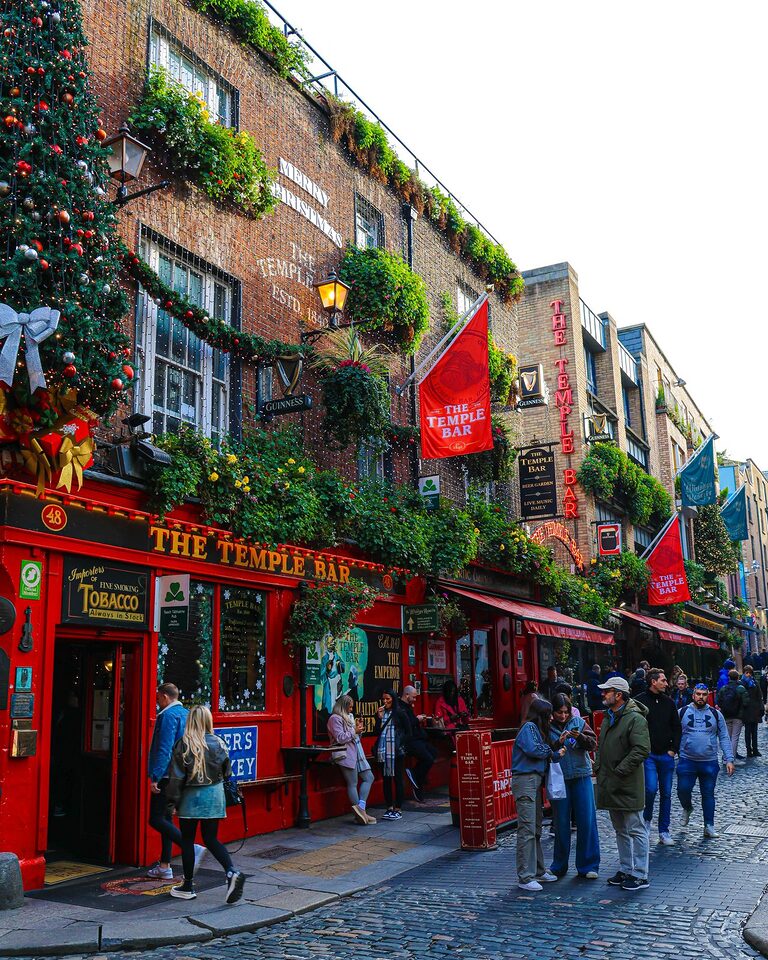
5. Don’t Treat Irish Pubs Like Theme Parks
Irish pubs are famous around the world.
Traditional music.
Friendly conversations.
Cosy interiors.
Guinness.
And the occasional spontaneous singalong.
Wonderful.
But not every Irish pub is a tourist attraction.
Many are simply places where locals meet friends, watch sport or relax after work.
Some pubs have live traditional music.
Others don’t.
Some are lively.
Others are quiet.
And some have regular customers who have probably occupied the same favourite corner for decades.
They may not appreciate becoming part of your holiday video.
Traditional music sessions also deserve respect.
Musicians may be playing informally rather than performing a scheduled show.
🚫 What NOT to Do: Don’t interrupt musicians, shout over performances or photograph strangers without permission.
Also, don’t assume drinking alcohol is compulsory.
You can enjoy Irish pub culture with a soft drink.
If you join a group buying rounds, understand how the arrangement works.
People usually take turns buying drinks.
You don’t have to participate.
But if you agree, remember that your turn will eventually arrive.
Suddenly disappearing when it’s time to buy a round is unlikely to make you popular.
Especially if everyone remembers your name.
6. Don’t Stop Wherever You Like on Narrow Country Roads
Ireland’s countryside is spectacular.
Rolling hills.
Stone walls.
Coastal cliffs.
Green fields.
And sheep.
Lots of sheep.
You will almost certainly encounter a view that makes you want to stop immediately.
Perhaps a beautiful valley.
A dramatic coastline.
Or a sheep looking thoughtfully into the distance.
The temptation is understandable.
Unfortunately, many Irish country roads are narrow and winding.
Some have limited visibility.
Others have no hard shoulder.
And many are regularly used by tractors and farm vehicles.
Stopping suddenly on a bend for a photograph is dangerous.
Even if the sheep is exceptionally photogenic.
🚫 What NOT to Do: Don’t stop in the middle of narrow roads or block farm entrances.
Instead, use designated parking areas, viewpoints and safe lay-bys.
Avoid obstructing gates or parking on soft verges.
If you’re driving slowly, allow faster traffic to pass when safe.
And remember that traffic drives on the left in Ireland.
This is particularly important when leaving car parks or turning onto unfamiliar roads.
The countryside may look peaceful.
But the tractor approaching around the corner has places to be.
And it is considerably larger than your hire car.
7. Don’t Ignore Safety Signs at Cliffs and Coastal Attractions
Ireland has some of Europe’s most dramatic coastal scenery.
The Cliffs of Moher.
Slieve League.
The Dingle Peninsula.
The Antrim Coast.
And countless other beautiful places.
These landscapes are extraordinary.
But they also present genuine dangers.
Cliff edges can be unstable.
Strong winds can arrive unexpectedly.
Paths can become slippery.
And coastal conditions can change quickly.
Unfortunately, some visitors become so focused on taking photographs that they forget basic safety.
You have probably seen the photographs.
Someone standing dangerously close to a cliff edge.
Arms stretched out.
Hair blowing dramatically.
Looking extremely adventurous.
Also looking one unexpected gust away from disaster.
🚫 What NOT to Do: Don’t cross safety barriers or approach unstable cliff edges for photographs.
Instead:
- Stay on designated paths.
- Follow warning signs and closures.
- Keep children away from dangerous drops.
- Avoid exposed areas during strong winds.
- Wear shoes with good grip.
Never assume somewhere is safe simply because other visitors are standing there.
A photograph is not worth risking your life.
The cliffs look just as impressive from a safe viewpoint.
And you will still be around to enjoy the pictures afterwards.
8. Don’t Make Careless Jokes About Irish History or Stereotypes
Ireland has a long and sometimes painful history.
Colonisation.
The Great Famine.
Emigration.
The struggle for independence.
Partition.
And the conflict in Northern Ireland, commonly known as the Troubles.
These events have shaped Irish society and identity.
Many families have personal connections to this history.
That doesn’t mean visitors should avoid learning about it.
Quite the opposite.
Ireland has excellent museums, historical attractions and guided tours.
But there is a difference between genuine curiosity and insensitive humour.
Outdated stereotypes about Irish people being constantly drunk, fighting or behaving foolishly are also best avoided.
🚫 What NOT to Do: Don’t make careless jokes about the Great Famine, the Troubles or Irish identity.
And don’t reduce Irish culture to alcohol, leprechauns and shamrocks.
Ireland is considerably more interesting than a souvenir shop.
Instead, visit museums and heritage sites.
Ask thoughtful questions.
Listen respectfully.
And remember that complicated historical events rarely have simple explanations.
Especially when delivered confidently by someone who has been in Ireland for approximately six hours.
9. Don’t Assume Every Tourist Attraction Is Free or Easy to Visit
Ireland is filled with fascinating attractions.
Ancient castles.
Historic abbeys.
Beautiful gardens.
National parks.
Museums.
And archaeological sites.
Some are free.
Others charge admission.
Some require advance booking.
And popular attractions may have limited capacity or timed entry.
This can surprise travellers who prefer spontaneous sightseeing.
You might arrive at a famous castle expecting to walk straight inside.
Only to discover that every tour is fully booked.
Your afternoon suddenly becomes an exercise in admiring the exterior walls.
Which may be lovely.
But probably wasn’t the original plan.
🚫 What NOT to Do: Don’t assume every attraction is open daily or available without a reservation.
Before visiting, check:
- Opening hours and seasonal closures
- Admission fees
- Advance booking requirements
- Guided tour arrangements
- Parking and transport options
Use official attraction websites for the latest information.
A little preparation can save considerable disappointment.
Because standing outside a closed castle while holding a non-refundable parking ticket is not quite the medieval experience you imagined.
10. Don’t Spend Your Entire Holiday in Dublin
Dublin is a fantastic city.
Historic streets.
Literary landmarks.
Museums.
Pubs.
Restaurants.
And beautiful parks.
It absolutely deserves a visit.
But Ireland has much more to offer.
Galway is famous for its lively culture and access to Connemara.
Cork offers excellent food, fascinating history and a distinctive local character.
Killarney is surrounded by lakes, mountains and spectacular countryside.
Kilkenny features beautiful medieval streets and historic attractions.
Donegal offers dramatic coastal landscapes and peaceful villages.
The Dingle Peninsula is known for breathtaking scenery and traditional Irish culture.
Belfast has fascinating museums, history and a vibrant cultural scene.
And smaller towns throughout Ireland can be just as memorable as the famous destinations.
🚫 What NOT to Do: Don’t assume you have experienced all of Ireland after spending one weekend in Dublin.
If your schedule allows, explore another region.
Take a train.
Join a day tour.
Hire a car.
Or spend a few nights in a smaller town.
You might discover that your favourite holiday memory has nothing to do with a famous attraction.
Perhaps it is a quiet beach.
A local market.
A traditional music session.
Or a small café serving excellent homemade cake.
Sometimes, Ireland’s greatest charm appears when you venture beyond the usual tourist routes.
And stop trying to see everything at once.
✨ Final Ireland Thoughts
Ireland is a country filled with breathtaking scenery, fascinating history, warm hospitality and unforgettable experiences.
But enjoying your visit isn’t just about knowing where to go.
It’s also about knowing what NOT to do.
Respect local customs.
Embrace the unpredictable weather.
Explore beyond Dublin.
And don’t try to squeeze the entire country into three days.
Because some of Ireland’s best memories happen when you slow down.
Perhaps it’s an unexpected conversation in a cosy pub.
A scenic drive through the countryside.
Or a traditional music session you never planned to attend.
So, explore the castles.
Wander through colourful villages.
Enjoy the local food.
Take the scenic route.
And leave room for a little spontaneity.
Most importantly, travel with curiosity, respect and a sense of humour.
Ireland will take care of the rest.
Well, almost.
You’ll still need that waterproof jacket.
Because the Irish weather has been practising its unpredictability for thousands of years.
And it’s very good at its job.