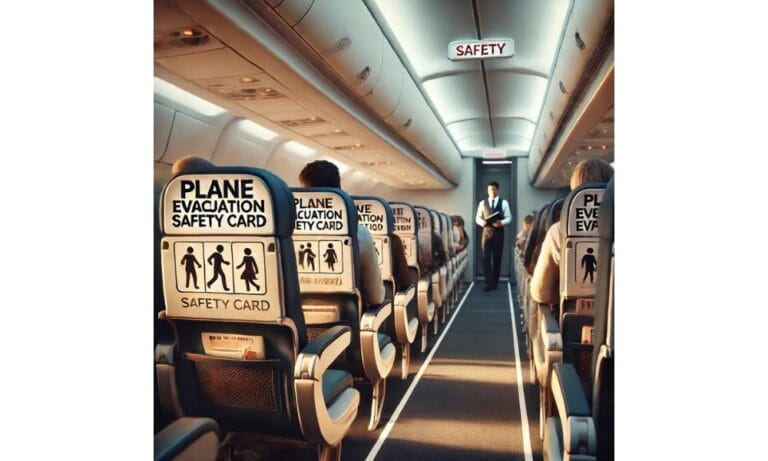
The plane evacuation notice in the seat pocket is often ignored, yet it contains vital information that could save your life in an emergency. Taking a minute to read the plane evacuation notice before take-off helps you understand the aircraft’s safety procedures and prepares you to react quickly and calmly if something unexpected happens.
Many passengers assume that cabin crew instructions are enough. However, every aircraft model is different and layouts can vary even within the same airline. Being personally familiar with the safety card ensures you are not relying solely on announcements during a stressful situation.
Essential Safety Tips for Travellers
Locate the Nearest Exit
Identify the closest emergency exit and count the rows between your seat and the exit. This is especially important in low visibility conditions such as smoke. Also locate the next nearest exit in case the closest one cannot be used.
Your seat location can also influence evacuation speed. Read “Choosing the Safest Seat on a Plane: Insights for Travellers” to understand how seating position affects accessibility to exits.
Understand Safety Equipment
Familiarise yourself with the location of life jackets, oxygen masks and fire extinguishers, as aircraft layouts vary. Make sure the people you are travelling with also understand the instructions so they do not delay you in an emergency.
Fasten Your Seatbelt Correctly
Keep your seatbelt securely fastened low and tight around your waist. You should also know how to release it quickly, even in darkness or if the cabin is disorientating.
Adopt the Correct Brace Position
Follow the safety card illustrations carefully. The recommended brace position is designed to reduce the risk of serious injury during impact.
Evacuate Efficiently
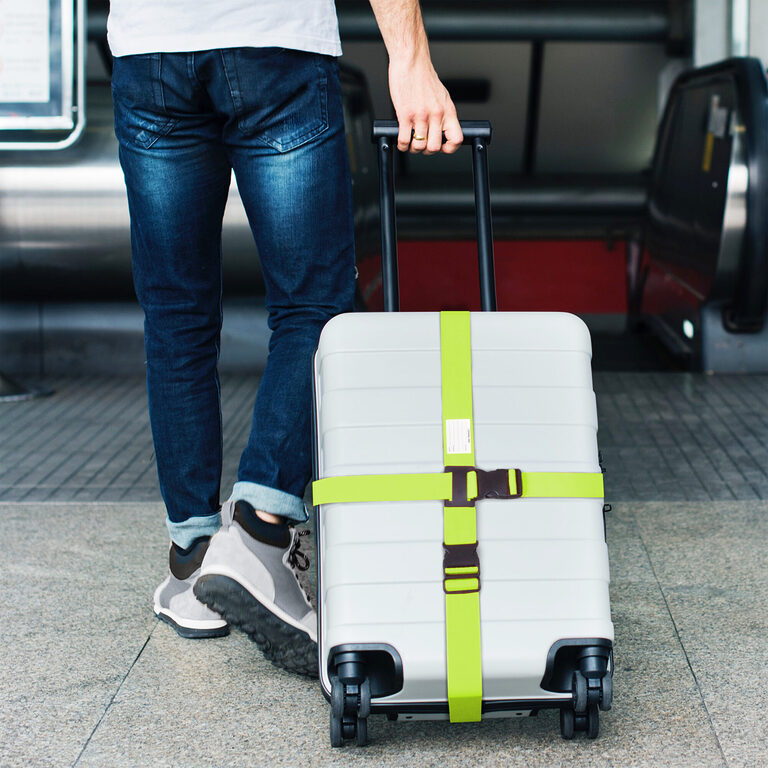
Never take your luggage. Carry-on bags slow down evacuation and put others at risk. Move quickly and follow crew instructions at all times. It is also advisable to wear shoes during the flight, preferably trainers or closed-toe shoes, to protect your feet from debris or sharp objects.
Quick and efficient evacuation is a key survival factor, as highlighted in “How to Improve Your Chances of Surviving a Plane Crash“, where response time and preparedness play a crucial role.
Stay Alert and Prepared
Even frequent flyers should review the safety information before every departure. Aircraft safety features can differ and preparation improves your confidence and reaction time.
Taking just a minute to review the instructions could make a critical difference. Stay informed and stay safe whenever you fly.