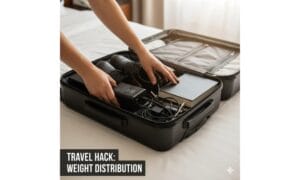
Carrying portable chargers in checked luggage is strictly prohibited for good reason. Aviation authorities around the world warn to avoid portable chargers in checked luggage as it can pose a serious fire risk. To protect everyone on board, you must always pack power banks in your cabin bag.
Why Portable Chargers in Checked Luggage Are Dangerous
The risk comes from the lithium batteries inside most portable chargers. Lithium batteries can overheat, especially if they are damaged, faulty or short circuited. In rare cases, they can ignite.
When you place portable chargers in checked luggage, you store them in the aircraft hold. Crew members cannot easily access this area during flight. If a battery overheats there, it becomes far harder to control. In extreme cases, a fire in the hold could threaten the safety of the aircraft.
Aviation regulators highlight a specific hazard known as thermal runaway. This chain reaction causes a battery to heat rapidly and potentially catch fire. By keeping power banks in the cabin, crew can respond quickly if a problem arises.
Airline Rules on Portable Chargers in Checked Luggage
Most airlines and aviation authorities clearly state that passengers must avoid portable chargers in checked luggage. Instead, you must carry them in your hand luggage.
Some airlines apply even stricter measures. For example, UK Civil Aviation Authority provides guidance on lithium battery safety for passengers. In Asia, Air Busan introduced tighter rules after a power bank incident on one of its flights in January 2025.
Before you travel, check your airline’s policy on lithium batteries. Pay attention to limits on battery capacity, which airlines often measure in watt hours.
How to Pack Portable Chargers Safely
Always place your power bank in your cabin bag. Protect it from damage by storing it in a separate pouch or protective case. Avoid loose metal objects that could cause a short circuit.
When you understand the risks of portable chargers in checked luggage, the rule makes sense. A small packing decision can significantly improve safety for you and your fellow passengers.