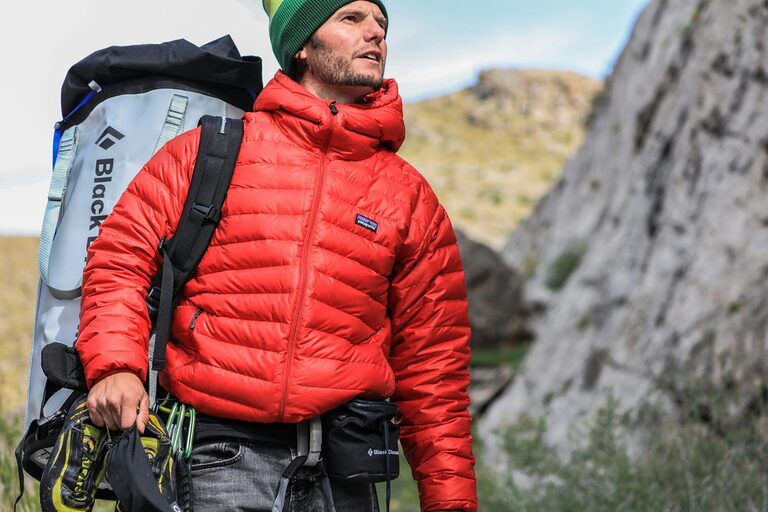
If you spend time outdoors, especially hiking, camping or travelling in unpredictable weather, understanding how your insulation works can make the difference between comfort and real risk. Down jackets are popular because they are lightweight and warm, but they have a serious weakness. When down gets wet, it stops insulating effectively.
This article explains why that happens, why the outer fabric cannot fully protect you, why synthetic insulation performs better in damp conditions and when each option makes sense.
Why Down Loses Warmth When Wet
Down insulation works because of loft. Loft is the fluffy structure created by clusters of feathers that trap air. That trapped air holds heat from your body and keeps you warm.
When down gets wet:
- The clusters collapse and clump together
- Air pockets disappear
- The insulation becomes flat
- Heat escapes rapidly
Without trapped air, there is no effective insulation. Even worse, wet down takes a long time to dry, especially in cold or humid environments. If you are on a multi day trip without access to proper drying conditions, this can leave you cold for extended periods.
In outdoor settings such as mountain hikes or damp campsites, moisture often comes from rain, snow, condensation inside a tent or even your own sweat. Down does not cope well with any of it.
Why the Outer Fabric Does Not Fully Save You
Many down jackets have water resistant or even waterproof outer fabrics. This helps, but it does not solve the core problem.
Here is why:
- Water resistant coatings wear off over time
- Heavy rain can overwhelm the fabric
- Seams and zips allow moisture in
- Sweat builds up from the inside
Even if rain does not soak through immediately, internal moisture from sweat can dampen the insulation. During active outdoor use, such as climbing a hill or carrying a pack, perspiration is unavoidable. Once the down becomes damp from the inside, performance drops.
In wet climates or changeable weather, relying purely on the outer shell to protect down insulation is risky.
Why Synthetic Jackets Cope Better
Synthetic insulation is designed to retain structure even when wet. Instead of natural feather clusters, synthetic fibres are engineered to resist clumping.
When synthetic insulation gets wet:
- Fibres maintain more of their shape
- Air pockets remain partially intact
- Drying time is much faster
- Warmth is reduced less dramatically
This makes synthetic jackets far more reliable in wet environments. If you are walking through steady rain, travelling in coastal regions or dealing with high humidity, synthetic insulation provides a safer margin of warmth.
For people who spend long periods outdoors in unpredictable weather, this reliability can be more important than absolute warmth.
When to Use Down
Down still has clear advantages in the right conditions:
- Cold, dry climates
- High altitude with low humidity
- Winter travel in stable weather
- Situations where weight and pack size matter
Down offers excellent warmth for its weight and compresses very small in a backpack. In dry snow conditions, it performs extremely well as long as it stays dry.
When to Use Synthetic
Synthetic insulation is often better for:
- Wet or damp climates
- Multi day hikes with uncertain weather
- High exertion activities
- Travel where drying opportunities are limited
If you expect rain, heavy condensation or frequent sweating, synthetic insulation is usually the safer choice.
Conclusion
Down insulation works by trapping air, but once wet it collapses and loses its ability to retain heat. Outer fabrics help but cannot fully protect against rain, humidity or internal moisture. Synthetic insulation handles wet conditions far better because it retains structure and dries quickly.
If you spend time outdoors, choose down for cold and dry conditions where weight matters. Choose synthetic when moisture is likely and reliability is essential.
*This article contains affiliate links. If you make a purchase, we may earn a small commission at no extra cost to you.