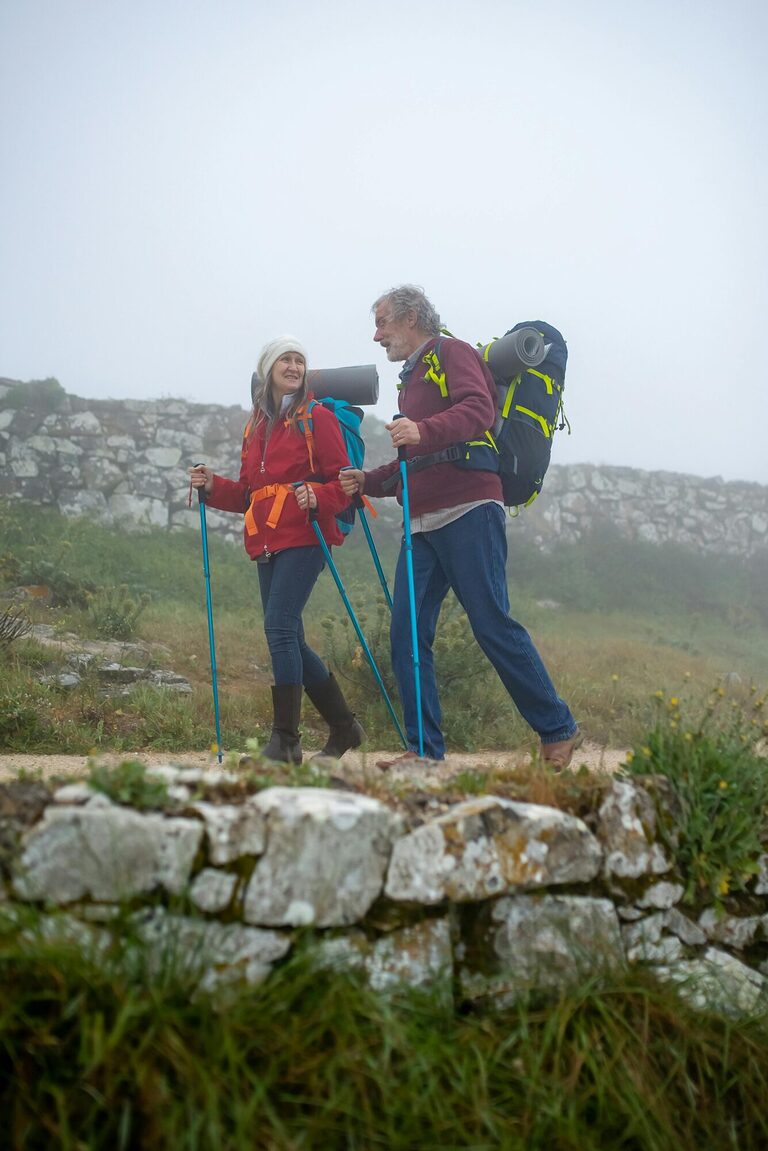
Many travellers dismiss walking sticks aka trekking poles as unnecessary. However, they are a vital “travel hack” for saving your joints, improving your posture, delaying fatigue and reducing the risk of injury.
Whether you are navigating the Highlands or walking across rolling meadows, a good pair of sticks can be the difference between a triumphant summit and a painful limp back to the final destination.
Pros and Cons of Walking Sticks
Pros
- Joint Protection: Reduces impact on knees, hips and ankles by up to 25%, especially on steep descents.
- Better Balance: Provides extra points of contact on slippery mud, loose scree or stream crossings reducing the risk of tripping or twisting ankles.
- Full-Body Workout: Engages your arms, shoulders and core, turning a walk into a full-body activity.
- Improved Posture: Promotes an upright stance, which opens up your chest for better breathing efficiency.
- Multi-tool: Use them to test mud depth, probe unclear terrain or even pitch an ultralight tarp. And if you are an adventurer crossing rivers and probing snowy paths.
Cons
- Extra Weight: Even light aluminium sticks add weight and bulk to your rucksack.
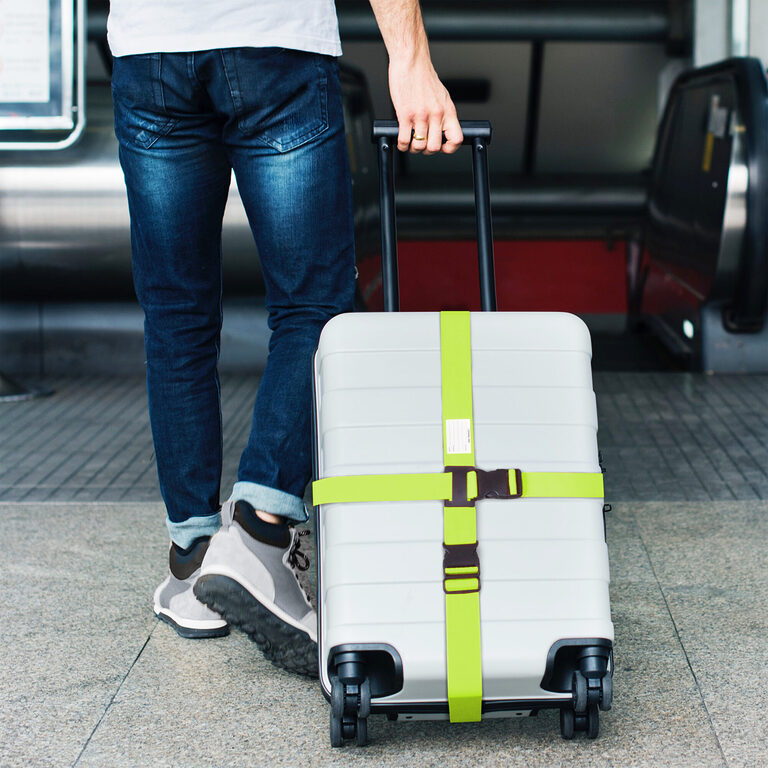
- Luggage Hassle: Most must be checked in on flights as they are often prohibited in hand luggage as they are classified as dangerous items because of the sharp pointed tip.
- Hand Fatigue: Can cause blisters or sweaty palms if the grips are poor-quality plastic, although the right kind of gloves can help mitigate this.
- Cost: High-end carbon fibre models are pricey and more prone to snapping under pressure.
Savvy Tips for the Thrifty Hiker
You don’t need to spend a fortune to get the benefits of trekking poles. Follow these tips to keep your costs low and your miles high.
- Wait for the sales or choose a lesser known brand, but always pay attention to the weigh. You get what you pay for.
- The “One Stick” Strategy: If you are really counting the pennies, carry just one pole. It still provides a massive boost to stability for half the price.
- Find Your Rhythm: Using poles helps establish a consistent gait symmetry, which reduces fatigue over long-distance journeys.
- Height Matters: Adjust your sticks so your elbow is at a 90-degree angle on flat ground. Shorten them for going up hills and lengthen them for the descent.
- Use the Straps Correctly: Put your hand up through the bottom of the strap and then grip the handle. This lets the strap support your weight so you don’t have to grip as hard.
Final Verdict
For the traveller, walking sticks are a brilliant investment in your long-term mobility. While the initial cost or the faff of packing them might seem like a drawback, the “hack” is in the recovery. By protecting your joints and spreading the physical load across your whole body, you can walk further each day and reduce the risk of injury.
If you would like to explore a range of walking sticks, I have included a link to Amazon Best Sellers list* to help you find a few great options.
*This article contains affiliate link. If you make a purchase, we may earn a small commission at no extra cost to you.