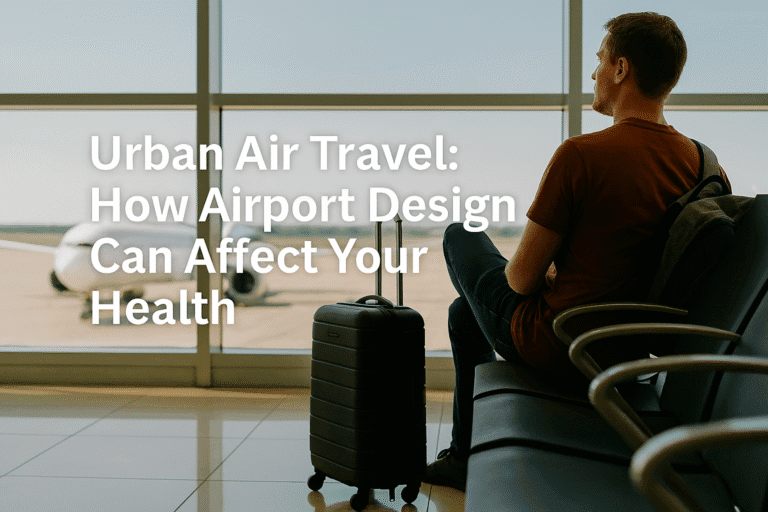
Airport design affects your health more than many travellers realise. Airports are usually designed for efficiency rather than comfort, but the layout and environment can have a direct impact on your wellbeing. Lighting, ventilation and noise levels can influence how relaxed or fatigued you feel during long journeys. Understanding how airport design affects your health can help travellers take simple steps to stay comfortable and reduce travel stress.
How Airport Design Affects Your Health
Modern airports handle thousands of passengers each day, which means many design choices prioritise movement and logistics over comfort. Poor ventilation, artificial lighting and long walking distances can sometimes lead to fatigue, dehydration and increased stress levels.
For example, artificial lighting can disrupt your natural body rhythm, especially during long layovers or overnight travel. Similarly, crowded terminals and constant announcements may contribute to sensory overload. These factors show how airport design affects your health even before your flight has begun.
Fortunately, some newer airport terminals are beginning to focus more on passenger wellbeing.
Modern Airport Features That Support Wellbeing
In recent years, airport planners have started introducing design features that support traveller comfort and health. Some modern terminals now include circadian lighting systems that adjust brightness to mimic natural daylight patterns. These lighting systems help travellers feel more alert during the day and more relaxed in the evening.
Green spaces and indoor gardens are also becoming more common in large international airports. These areas provide a calming environment where travellers can relax during long connections. Quiet zones are another helpful addition, offering spaces away from crowds and announcements where passengers can rest.
These improvements show how thoughtful airport design affects your health in positive ways.
Practical Ways to Stay Comfortable in Airports
Travellers can also take simple steps to reduce the negative effects of long airport stays. Choosing seating near windows allows you to benefit from natural light, which can help regulate your body clock.
Staying hydrated is equally important. Airport air can be very dry, so bringing a reusable water bottle* and drinking regularly can help prevent headaches and fatigue. Short walks around the terminal during layovers also support circulation and reduce stiffness after long periods of sitting.
These small habits can make a noticeable difference when considering how airport design affects your health.
Managing Noise and Crowds
Airports are often busy and noisy environments, which can be stressful for some travellers. If you are sensitive to noise or crowds, noise cancelling headphones can help create a calmer personal space.
Pre booked lounge access is another option for travellers seeking a quieter environment. Lounges typically offer comfortable seating, fewer crowds and a more relaxing atmosphere. Checking terminal maps before arriving can also help you locate quiet corners or designated wellness areas.
Being prepared can make it easier to manage the challenges of crowded airport environments.
Preparing for Changing Airport Conditions
Temperature and humidity levels often vary inside airport terminals, especially when moving between different sections. Wearing light layers allows you to adjust easily to these changes.
If you are prone to dry skin or headaches during travel, packing a small hydrating mist* or moisturiser* can help you stay comfortable. Simple preparations like these allow travellers to better manage how airport design affects your health throughout the journey.
Final Thoughts
Airport environments are complex spaces designed primarily for efficiency, but they can still influence passenger wellbeing. By understanding how airport design affects your health, travellers can take practical steps to stay comfortable during long journeys.
Choosing natural light, staying hydrated and finding quiet spaces can make airport experiences more relaxing and help you arrive at your destination feeling refreshed.
*This article contains affiliate links. If you make a purchase, we may earn a small commission at no extra cost to you.