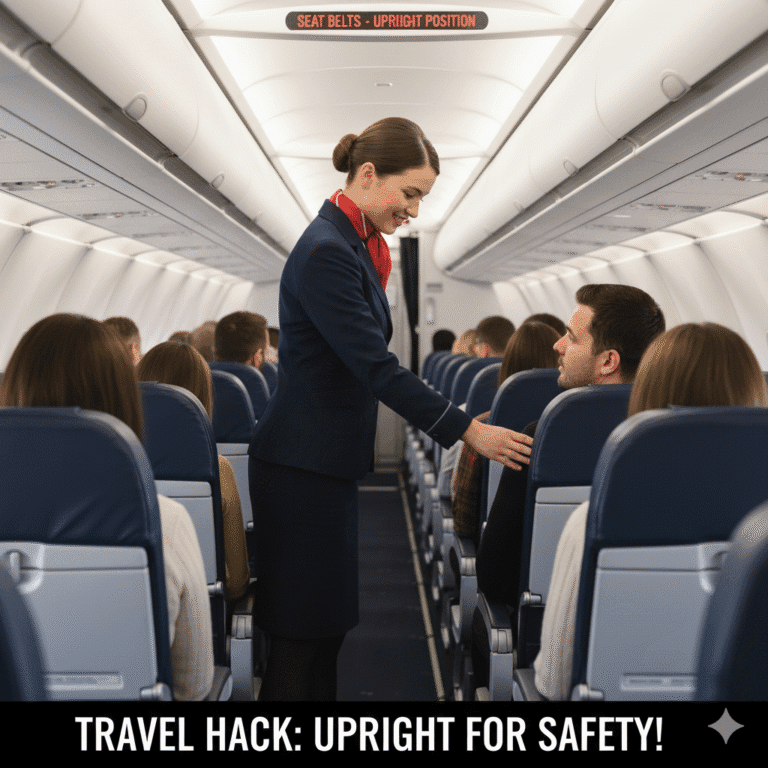
The tray table safety during take-off and landing rule is one of the most important yet misunderstood safety procedures on an aircraft. Flight attendants require all tray tables to be stowed and seat backs returned to the upright position during these critical phases of flight. This instruction is not about inconvenience; it is designed to improve emergency egress and reduce the risk of injury in the event of an evacuation.
Why Tray Table Safety During Take-Off and Landing Matters
Every second counts during an emergency evacuation. A lowered tray table can become a sharp obstacle, making it harder for passengers to reach the aisle quickly. If someone in the row behind needs to move out, an extended tray table can slow their exit and create unnecessary delays.
Similarly, a reclined seat reduces available space in the cabin. When seats are upright, the aisle remains clear and passengers can move more freely. This simple adjustment improves the overall flow of movement and helps emergency procedures function as intended.
The principle behind tray table safety is straightforward: clear pathways save time and reduce the risk of injury.
Emergency Egress and Passenger Protection
Aircraft evacuations require rapid movement. Obstacles such as extended tray tables or reclined seats can hinder escape routes and increase the likelihood of trips or collisions. Even minor delays can have significant consequences when every second matters.
By following the instructions for tray table safety during take-off and landing, passengers contribute to a safer cabin environment. These rules are based on aviation safety research and real-world emergency planning.
Compliance with these procedures supports both individual safety and collective efficiency during critical moments.
A Small Rule with Significant Benefits
Although stowing a tray table may seem trivial, it plays an important role in cabin safety. The rule ensures that aisles remain unobstructed and passengers can evacuate quickly if necessary.
Flight attendants enforce these procedures because they understand the operational importance of clear evacuation routes. Tray table safety during take-off and landing is a standard part of aviation safety protocols worldwide.
Following these instructions helps create a safer environment for all passengers.
Final Thoughts
Tray table safety during take-off and landing is not about restricting comfort; it is about preparing the aircraft for potential emergencies. Clear aisles and upright seats enable faster movement and reduce the risk of accidents.
Understanding the reasoning behind these rules helps passengers appreciate their importance. Small actions, such as stowing a tray table, contribute to overall cabin safety and effective emergency procedures.
Travel responsibly by respecting tray table safety during take-off and landing instructions and supporting a secure flight environment.