The final stop rule is a vital safety instruction that requires passengers to remain seated with seatbelts fastened until the aircraft has come to a complete standstill at the gate. Unbuckling too soon may seem harmless, but it creates a risk of injury if the plane experiences sudden movement while taxiing. Understanding the final stop rule helps travellers stay safe and avoid preventable accidents during disembarkation.
Why the Final Stop Rule Matters?
When a plane lands, it must still taxi to the gate and may encounter abrupt braking or minor jolts. These movements can occur without warning and are part of normal ground operations. If passengers stand or unbuckle before the aircraft is stationary, they risk losing balance and suffering injuries.
The final stop rules ensures that everyone remains secure until the aircraft is fully parked. Seatbelts act as the primary protection against unexpected motion, preventing passengers from being thrown forward or colliding with cabin fixtures.
For more insight into cabin safety, travellers may also refer to “Why You Should Always Read the Plane Evacuation Notice,” which highlights how being familiar with emergency instructions can further reduce risks during unexpected movements.
This simple instruction reduces the likelihood of accidents and supports a safer disembarkation process.
Avoiding Injuries During Taxiing
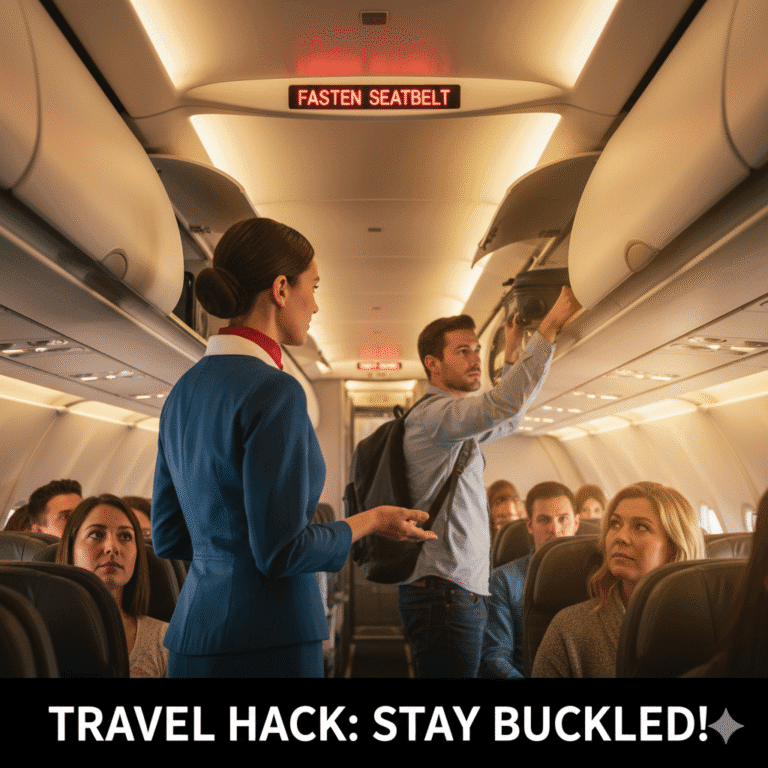
Even after landing, the aircraft is not completely stable until it reaches its parking position. Sudden stops or turns can occur while taxiing, particularly in busy airports. An unbuckled passenger who is standing or reaching for overhead luggage may fall and sustain serious injuries.
By following the final stop rule, travellers protect themselves and others. Remaining seated until the seatbelt sign is switched off ensures that passengers are prepared for any minor movements before the aircraft comes to rest.
Cabin crew enforce this rule because it is based on aviation safety principles and real-world risk management.
Respecting Safety Procedures
Airline safety procedures exist to protect passengers. The final stop rule is one of the simplest ways to minimise avoidable accidents. Although disembarkation can feel slow after a long flight, patience contributes to a safer travel environment.
Passengers who follow instructions help maintain order and efficiency during the arrival process. Safety rules are not designed to inconvenience travellers but to reduce risks and ensure that everyone reaches the terminal without incident.
Final Thoughts
The final stop rule is an essential part of aviation safety. Unbuckling too soon can lead to injuries if the aircraft moves unexpectedly while taxiing. By staying seated until the plane is fully parked, passengers protect themselves and others.
Understanding and respecting this rule promotes a safer and more organised disembarkation process. Small actions, such as waiting for the seatbelt sign to switch off, contribute to overall travel safety.
Complementing this, advice from “How to Improve Your Chances of Surviving a Plane Crash” reminds passengers that awareness of safety protocols and remaining calm during critical moments significantly increases survival outcomes.
Travel responsibly by observing the final stop rule and supporting a secure flight experience.