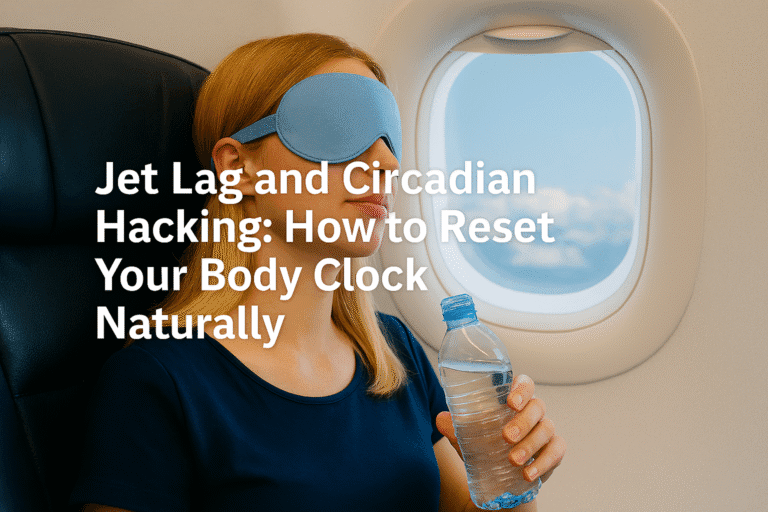
How to beat jet lag naturally is a common concern for travellers crossing multiple time zones. Jet lag is not just about feeling tired. It happens when your body’s internal clock struggles to adjust to a new time zone. Understanding how to beat jet lag naturally can help travellers adapt faster, sleep better and feel more energised when arriving at their destination.
For more strategies to recover quickly after long flights, “Beating the Clock: How to Minimise Jet Lag After Long Flights” provides practical tips to reduce fatigue and adjust faster.
Understanding Jet Lag and Your Body Clock
Jet lag occurs when your circadian rhythm becomes misaligned with the local time of your destination. Your body is still operating on the time zone you departed from, which can lead to fatigue, difficulty sleeping and reduced concentration.
Learning how to beat jet lag naturally involves helping your body clock adjust gradually through natural cues such as light exposure, temperature and daily routines. These signals help your body recognise when it should feel awake or ready for sleep.
Use Light to Reset Your Circadian Rhythm
One of the most effective ways to beat jet lag naturally is by using natural light. Light is the strongest signal that influences your circadian rhythm.
Expose yourself to natural daylight as soon as you arrive at your destination. Spending time outdoors during the day helps your body recognise the new time zone more quickly. In contrast, reducing exposure to bright lights and screens in the evening allows your body to prepare for sleep.
Simple habits such as taking a short walk outside during the day can significantly help your internal clock reset.
Use Temperature to Encourage Better Sleep
Temperature changes can also signal to your body that it is time to rest. A warm shower before bed can relax your muscles and prepare you for sleep. Afterward, keeping the room cool can encourage deeper rest.
Many sleep experts recommend a bedroom temperature of around 18°C. This cooler environment helps your body maintain the natural drop in temperature that occurs during sleep.
For additional guidance on protecting your sleep while travelling, see “Safe Sleep While Travelling: How to Protect Your Rest” for practical tips on maintaining rest and comfort in unfamiliar environments.
Using temperature cues is another natural technique for travellers learning how to beat jet lag naturally without relying on sleep medication.
Adjust Your Meal Timing
Meal timing also plays an important role in helping your body adapt to a new schedule. Eating according to your destination’s local time helps reset your digestive rhythm alongside your sleep cycle.
Even while travelling, try to follow your destination’s meal schedule as closely as possible. Avoid heavy meals during overnight flights and choose light, protein rich foods that will not interfere with sleep.
To make the transition easier, begin shifting your meal times by one to two hours each day before departure. This gradual adjustment allows your body to adapt more smoothly and reduces the shock of sudden time changes.
Prepare Your Body Before Travelling
Preparing your routine before leaving home can make a significant difference in managing jet lag. Adjusting sleep and meal schedules ahead of time helps your body slowly adapt to the new time zone.
Travellers who prepare in advance often find it easier to stay alert during the day and fall asleep at night once they arrive. This proactive approach is one of the most practical strategies for anyone learning how to beat jet lag naturally.
Final Thoughts
Understanding how to beat jet lag naturally allows travellers to enjoy their trips with more energy and less discomfort. By using natural light exposure, maintaining a cool sleep environment and adjusting meal timing, your body can gradually reset its internal clock.
With a little preparation and awareness of your body’s rhythms, adapting to new time zones can become a much smoother and more comfortable experience.