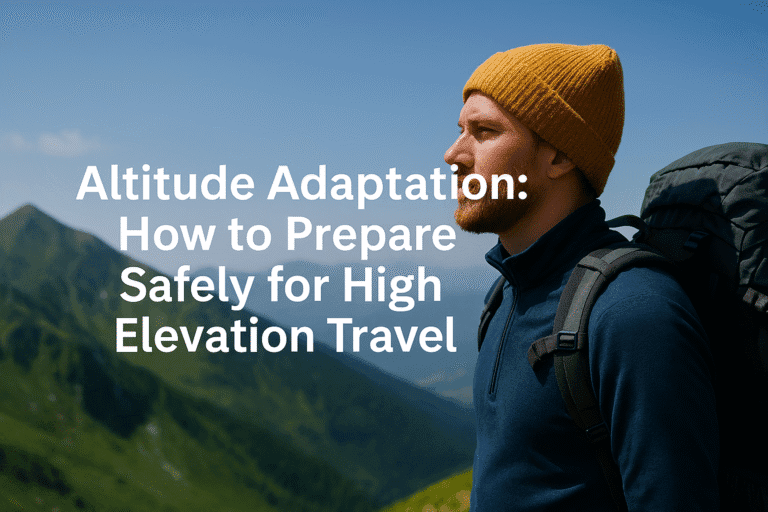
Acclimatising safely at high elevations is essential when travelling to mountainous regions above 2,000 metres. Destinations such as the Alps, the Andes foothills or Himalayas base camps expose travellers to thinner air and lower oxygen levels. With gradual altitude gain and sensible planning, acclimatising safely at high elevations becomes manageable and far less intimidating.
Make sure your first aid kit is suited to the terrain and conditions, as highlighted in “Tailoring Your Kit to Your Destination,” so you are prepared for altitude related issues and minor injuries.
Why acclimatising safely at high elevations matters?
At higher altitudes, air pressure drops and your body receives less oxygen with each breath. This change can trigger altitude related symptoms such as headaches, dizziness, nausea and fatigue. Proper acclimatisation allows your body time to adapt to these conditions.
To support acclimatising safely at high elevations, avoid ascending more than 300 to 500 metres per day once you are above 2,500 metres. Build rest days into your itinerary to help your body adjust naturally.
Practical tips for gradual acclimatisation
Gradual ascent is the foundation of acclimatising safely at high elevations. If possible, spend a few days at a moderate altitude before moving higher. Light activity such as walking can help your body adapt, but avoid intense physical exertion during the first 24 to 48 hours.
Hydration also plays a key role. Drink water regularly and limit alcohol, which can worsen dehydration and symptoms. Eating balanced meals supports energy levels and recovery.
If hiking or travelling alone, remember to share your planned route and schedule, following the advice in “Solo Hiking Safety Tips: Always Share Your Plans,” to ensure someone knows your whereabouts in case of emergencies.
Managing mild altitude symptoms
Mild symptoms may occur even with careful planning. Over the counter remedies such as ibuprofen or paracetamol can relieve headaches. Anti nausea tablets may also help if you feel unwell.
If you have experienced altitude sickness before or plan a rapid ascent, consult a GP or travel clinic two to three weeks before departure. A medical professional can advise whether acetazolamide, commonly known as Diamox, is suitable for your trip.
When to descend?
Listening to your body is crucial when acclimatising safely at high elevations. If symptoms such as persistent headache, dizziness or nausea do not improve with rest, descending to a slightly lower altitude often brings relief. Ignoring warning signs can lead to more serious complications.
Travelling at altitude does not have to be daunting. With gradual planning, awareness of symptoms and sensible precautions, acclimatising safely at high elevations allows you to enjoy mountain landscapes with confidence and peace of mind.