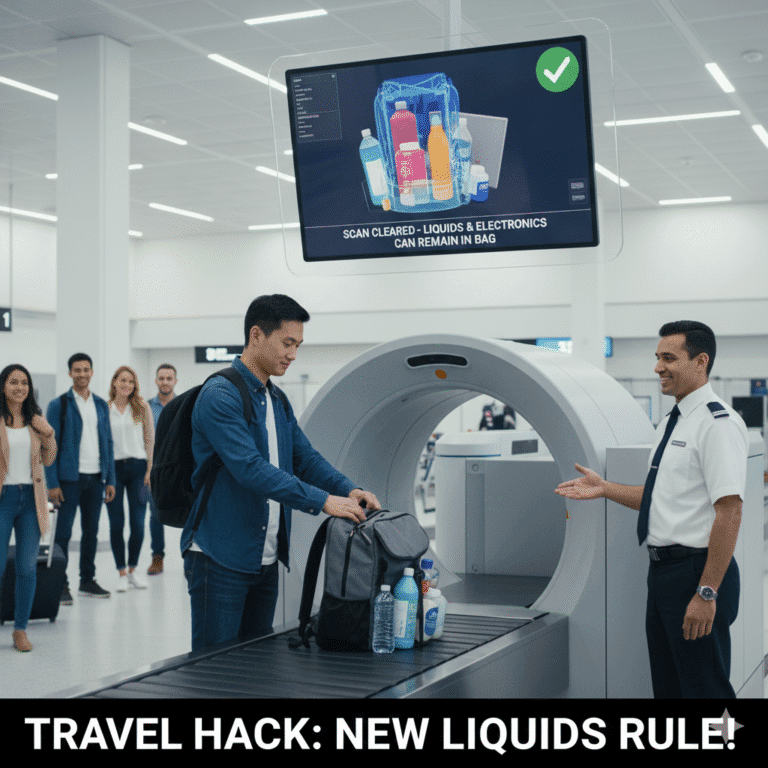
CT security scanners at airports are transforming the way security screening is conducted and what travellers can carry in their hand luggage. These advanced scanners use computed tomography to create detailed 3D images of bag contents, allowing security staff to inspect items without removing them. The introduction of CT security scanners at airports means many travellers can now leave liquids and electronics in their bags, making the security process faster and more convenient.
For general tips on avoiding delays, see “Top Tips for Smooth Airport Security: How to Avoid Extra Screening“, which explains practical steps to move through checkpoints efficiently.
How CT Security Scanners at Airports Work
For years, the 100ml liquid rule has been a source of frustration for air travellers. Clear plastic bags and careful packing were required to comply with security restrictions. However, CT security scanners at airports are changing these procedures.
Computed tomography technology generates high-resolution images that reveal the structure and composition of items inside luggage. Security officers can examine these images in detail, identifying potential risks without requiring passengers to unpack their belongings. This advancement reduces queues and simplifies the screening process.
At airports equipped with CT security scanners, liquids of up to two litres and electronic devices such as laptops can often remain inside hand luggage. This represents a significant improvement in convenience compared with older security methods.
To prepare effectively, also review “Carry-On Security Check Essentials for Smooth Airport Travel“, which shows how to organise liquids and electronics for a faster and smoother security check.
Benefits of CT Security Scanners at Airports
The primary advantage of CT security scanners at airports is efficiency. Travellers no longer need to remove liquids or electronics from their bags in many cases. This speeds up security checks and reduces the stress associated with preparing items for screening.
In addition, the technology improves security accuracy. Detailed imaging allows officers to assess items more thoroughly, enhancing safety without inconveniencing passengers. These benefits explain why more UK airports are adopting CT security scanners.
However, not all airports or security lanes have transitioned to the new technology. Some locations still enforce traditional rules, requiring liquids to be placed in clear bags and electronics to be removed for inspection.
Practical Travel Tips
To make the most of CT security scanners at airport, check the rules of your departure airport before travelling. Major hubs are increasingly using the new technology, but smaller airports may still rely on older screening methods.
If your airport uses CT scanners, you can often leave liquids and electronics in your hand luggage. This simplifies preparation and reduces delays at security checkpoints. Nevertheless, staying informed about specific requirements ensures a smooth travel experience.
Travellers should also remain mindful of liquid limits in destinations where traditional rules still apply.
The Future of Airport Security
CT security scanners represent a significant step forward in aviation security and passenger convenience. As more airports adopt this technology, the travel experience is likely to become faster and less restrictive.
While traditional rules remain in place at some locations, the transition to advanced scanning systems demonstrates the industry’s commitment to modernisation and efficiency.
Final Thoughts
CT security scanners at airports are improving the security screening process and reducing restrictions on liquids and electronics. By providing detailed imaging of luggage contents, these systems enhance both safety and convenience.
Travellers should check their departure airport’s rules and understand whether CT scanning technology is in use. Being prepared ensures a smoother journey and fewer delays at security.
As airport technology evolves, passengers can expect continued improvements in the travel experience.