Introduction
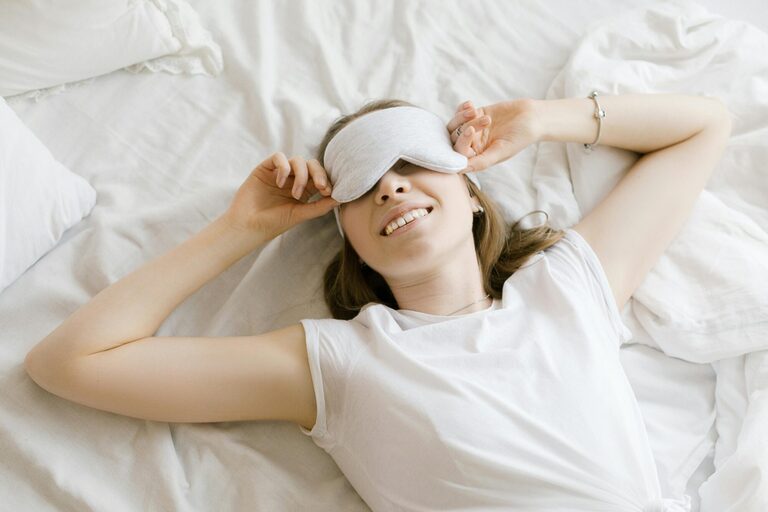
Sleeping masks are lightweight travel accessories designed to block out light and create a darker environment for rest. Travellers use them to improve sleep quality during flights, train journeys or in unfamiliar accommodation.
Quick answers
What is a sleeping mask?
A soft eye covering worn over the eyes to block light and aid sleep.
Do sleeping masks work?
Yes, they help reduce light exposure which can support deeper and more consistent sleep.
When should you use a sleeping mask?
Use one when travelling, in bright environments or whenever you need to rest in daylight.
What is a sleeping mask?
A sleeping mask is a fabric or padded covering worn over the eyes, secured with a strap around the head. Its main purpose is to block ambient light and help the body maintain a natural sleep cycle, particularly in situations where darkness is limited.
Why travellers use sleeping masks
- Helps block cabin or room lighting
- Supports rest during flights and long journeys
- Useful for daytime naps across time zones
- Creates a consistent sleep environment
- Lightweight and easy to pack
Types of sleeping masks
Contoured sleeping masks
Designed with shaped eye cups to avoid pressure on the eyes.
- Moulded structure
- Allows eye movement
- Reduces contact with eyelids
Flat fabric sleeping masks
Simple and compact designs made from soft materials.
- Lightweight construction
- Easy to store
- Often elasticated strap
Weighted sleeping masks
Include gentle weight for added comfort and relaxation.
- Even pressure distribution
- Often filled with beads or grains
- May support relaxation during rest
Comparison table
| Type | Security or function | Visibility or convenience | Best use |
| Contoured sleeping masks | Blocks light without eye pressure | Comfortable for longer wear | Long flights and sensitive eyes |
| Flat fabric sleeping masks | Basic light blocking | Very portable and lightweight | Short trips and everyday use |
| Weighted sleeping masks | Adds gentle calming pressure | Slightly bulkier to carry | Relaxation and rest |
Typical specifications
| Feature | Typical range |
| Length or size | 18 to 22 cm |
| Width | 8 to 12 cm |
| Material | Cotton, polyester, memory foam |
| Closure mechanism | Elastic strap or adjustable band |
| Weight | 20 to 120 grams |
Materials used
Cotton
A natural breathable fabric often used in basic masks.
- Soft against skin
- Lightweight
- Easy to wash
Memory foam
A cushioning material used in contoured designs.
- Adapts to face shape
- Reduces pressure
- Enhances comfort
How to choose a sleeping mask
- Consider comfort for long periods of wear
- Check light blocking effectiveness
- Look for adjustable straps for fit
- Choose breathable materials for warm climates
- Assess packability for travel
Popular brands
Luxury silk + skin care:
Slip, Drowsy, Blissy
Maximum blackout + ergonomics:
Manta Sleep, ZLEEPY
Budget options:
Alaska Bear, INNELO, generic Amazon brands
Relaxation / therapy style:
Nodpod, weighted or gel masks
Frequently asked questions
Do sleeping masks help with jet lag?
They can support better sleep timing which may help manage jet lag.
Are sleeping masks safe to use overnight?
Yes, provided they fit comfortably and do not apply excessive pressure.
Can you wash sleeping masks?
Most fabric masks can be hand washed or machine washed depending on the material.
Example travel solution
Some travellers choose Manta Sleep contoured sleeping masks designed to block light effectively and suitable for long haul flights.
Summary
Sleeping masks are a practical accessory for travellers seeking better rest in bright or unfamiliar environments. They are compact, easy to use and available in a range of designs to suit different comfort preferences.