Introduction
Luggage locks are small security devices used to secure suitcase zips and compartments during travel. They are designed to deter casual tampering, improve organisation and allow compliance with airport security checks, particularly when using TSA approved designs.
Quick answers
What is a luggage lock?
A small lock used to secure suitcase zips or compartments during travel.
Do luggage locks work?
They deter opportunistic access rather than prevent determined theft.
When should you use a luggage lock?
When checking luggage, storing bags in transit or using shared accommodation.
What is a luggage lock?
A luggage lock is a compact locking mechanism that attaches to suitcase zippers or bag compartments to restrict access. Most modern travel locks are designed to balance security with practicality, allowing authorised inspections where required without damaging the bag.
Why travellers use luggage locks
- Deter casual tampering and opportunistic theft
- Keep zips closed during handling and transit
- Support TSA-compliant travel for airport inspections
- Secure multiple compartments or bags together
- Provide peace of mind in shared environments
Types of luggage locks
Combination locks
A dial based lock that uses a numeric code instead of a key.
- 3 or 4 digit combinations
- No key required
- Common for suitcases
Key locks
A simple lock operated with a physical key.
- Straightforward to use
- Lightweight design
- Requires carrying a key
Cable locks
A flexible lock using a cable instead of a rigid shackle.
- Fits awkward or multiple zips
- Useful for backpacks and duffel bags
- Slightly less rigid than solid locks
Comparison table
| Type | Security or function | Visibility or convenience | Best use |
| Combination lock | Medium deterrence with code access | Easy to use, no key needed | General suitcase travel |
| Key lock | Basic deterrence with key control | Simple but requires key management | Occasional trips or don’t like numbers |
| Cable lock | Flexible locking across multiple points | High versatility | Backpacks and soft bags |
Typical specifications
| Specification | Typical range |
| Size | 3 cm to 6 cm body length |
| Width | 1.5 cm to 3 cm |
| Material | Zinc alloy, steel, reinforced plastic |
| Closure mechanism | Combination dial or key |
| Weight | 30 g to 100 g |
Materials used
Zinc alloy
A commonly used metal for travel locks offering a balance of strength and weight.
- Corrosion resistant
- Lightweight
- Suitable for frequent travel
Hardened steel
A stronger material often used in shackles or internal components.
- High durability
- Resistant to cutting or bending
- Slightly heavier construction
How to choose a luggage lock
- Check for TSA approval with the Travel Sentry logo
- Decide between combination or key based on preference
- Choose cable locks for flexible or soft luggage
- Look for durable materials such as zinc alloy or steel
- Consider 3 digit versus 4 digit combinations
- Ensure the size fits your suitcase zips
- Prioritise ease of use for frequent access
Popular brands
OW-TRAVEL
Master Lock
Samsonite
Osprey
ZHEGE
Diyife
Frequently asked questions
Do TSA luggage locks prevent theft?
They mainly deter casual access rather than stop determined theft.
Are 3 digit or 4 digit locks better?
4 digit locks offer more combinations, though 3 digit locks are usually sufficient for travel.
Can airport security open luggage locks?
Yes, TSA approved locks can be opened by security using a master key.
Example travel solution
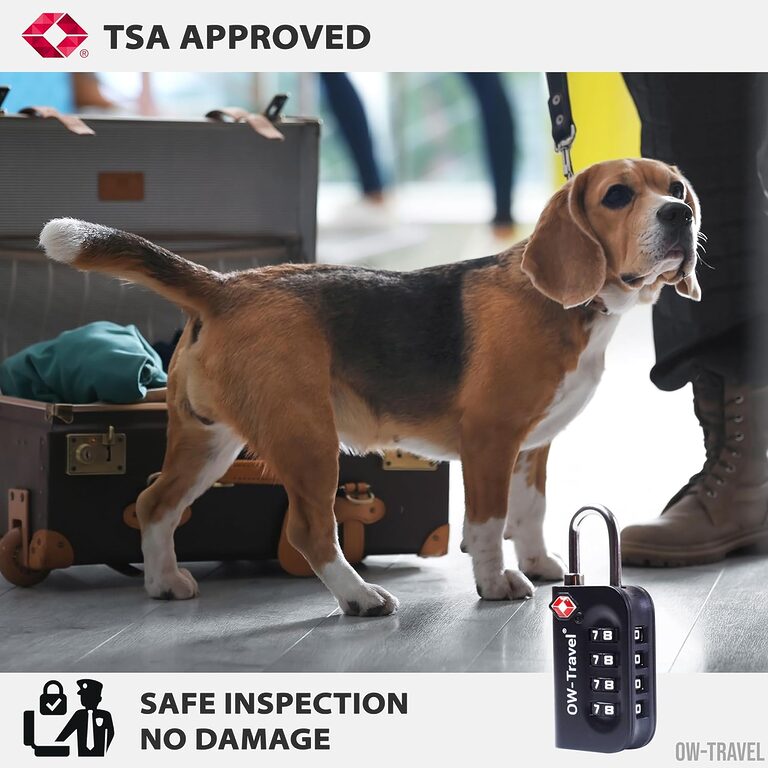
Some travellers choose OW-TRAVEL luggage locks designed to provide simple combination security and TSA compliant access, suitable for suitcases, backpacks and carry on bags.
Summary
Luggage locks provide a practical balance between security, convenience and travel compliance. While they do not make a bag theft proof, they are effective at deterring casual interference and keeping belongings organised during transit.