Introduction
Avoiding lost luggage is an important part of travel planning. Each year many travellers experience delayed or misplaced baggage during flights and transfers. While most bags eventually return to their owners, travellers can take simple precautions to reduce the chances of losing their luggage during a journey. Additionally, by using clear identification, smart packing habits and tracking tools, travellers can actively improve the chances of their bags arriving safely at the destination.
For example, travellers can personalise their bags to stand out; see “Avoid Lost Luggage: Simple Personalisation Tips That Really Work” for practical ideas.
Quick answers
What does avoiding lost luggage mean?
Avoiding lost luggage means using practical steps such as labelling, tracking and packing carefully to reduce the risk of bags being misplaced during travel.
Additionally, travellers can enhance luggage visibility by using specialised accessories; for details, refer to “Complete Guide to Suitcase Identification Accessories.”
Why does luggage get lost during travel?
Luggage may be delayed or lost due to tight flight connections, airport handling errors or missing or confusing baggage labels.
How can travellers avoid lost luggage?
Travellers can reduce the risk by using clear luggage tags, removing old labels, adding contact details inside the suitcase and allowing enough time between connecting flights.
What is avoiding lost luggage?
Avoiding lost luggage refers to the set of practices travellers use to reduce the risk of their bags being delayed, misplaced or sent to the wrong destination. These practices focus on making luggage easier to identify, improving tracking visibility and ensuring airline baggage systems can correctly route bags during flights.
Although airline baggage systems are generally reliable, luggage can still be delayed during complex journeys or busy travel periods. Preparing luggage properly helps minimise these risks.
Why travellers focus on avoiding lost luggage
- Reduces the stress caused by delayed baggage
- Helps travellers quickly identify their suitcase at baggage claim
- Makes it easier for airlines to return misplaced luggage
- Improves visibility of bags during complex travel routes
- Helps travellers track luggage during flights and transfers
Common causes of lost luggage
Flight connection timing
Short connection times between flights may leave insufficient time for baggage to be transferred between aircraft.
Incorrect baggage tagging
If a baggage label is damaged or incorrectly printed, the airline system may not route the bag correctly.
Airport handling errors
During busy travel periods luggage may be placed on the wrong baggage cart or aircraft.
Missing identification
If luggage does not contain a visible tag or contact information, it can be harder for airlines to identify the owner.
Large airport transfers
Major international airports handle thousands of bags each hour which can increase the chance of misrouted baggage.
Practical methods for avoiding lost luggage
Clear luggage identification
Using visible luggage tags* with contact information helps airlines identify and return misplaced bags.
Remove old labels and stickers
Old airline baggage labels, barcode tags or destination stickers from previous trips can confuse automated sorting systems. Removing these labels before travelling helps ensure scanners only read the current baggage tag.
Distinctive luggage appearance
Bright luggage straps*, covers or unique tags make bags easier to recognise at baggage claim.
Smart luggage tracking
Using a luggage tracker* allows travellers to monitor where their bag is during flights and transfers.
Contact details inside the suitcase
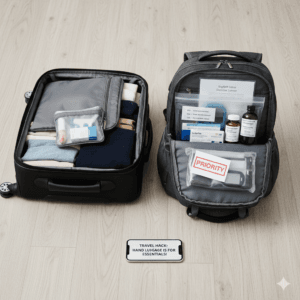
Placing a piece of paper with your name, phone number and email address inside the suitcase provides an additional way for airlines to identify the owner if the external tag is damaged. Positioning this information so it is visible when the suitcase is opened can make identification easier.
Secure packing habits
Keeping important items and travel documents in carry on bags reduces disruption if checked luggage is delayed.
Allowing sufficient connection time
Choosing flights with reasonable transfer times reduces the risk of baggage missing the next flight.
Comparison table
| Method | Security or function | Visibility or convenience | Best use |
| Luggage identification tags | Provides owner information | Easy airline identification | All checked luggage |
| Distinctive luggage accessories | Makes luggage easier to recognise | Visible at baggage claim | Busy airports |
| Luggage tracking devices | Shows bag location | Smartphone monitoring | Flights and complex journeys |
Typical specifications
| Specification | Typical range |
| Luggage tag size | 6 cm to 11 cm length |
| Luggage strap length | 150 cm to 200 cm adjustable |
| Tracking device size | 3 cm to 5 cm |
| Tracking battery life | 6 months to 12 months |
| Typical accessory weight | 10 g to 200 g |
Materials used
Silicone
Silicone is commonly used for flexible luggage tags and protective covers.
Typical properties
- Flexible and durable
- Water resistant
- Lightweight
- Easy to attach to luggage
Polyester webbing
Polyester webbing is widely used in luggage straps and travel accessories.
Typical properties
- Strong woven structure
- Resistant to stretching
- Lightweight but durable
- Suitable for frequent travel use
How to choose accessories for avoiding lost luggage
- Clear and durable luggage identification tags
- Distinctive colours or accessories for visibility
- Reliable luggage tracking devices
- Strong straps or attachments that remain secure during handling
- Compact accessories that do not add unnecessary weight
Popular brands
OW-Travel
Samsonite
Travelon
Eagle Creek
Lewis N Clark
Frequently asked questions
Why does luggage sometimes get lost at airports?
Most lost luggage is caused by missed flight transfers, baggage handling errors or confusion caused by old baggage labels remaining on the suitcase.
Do luggage trackers help avoid lost luggage?
Trackers do not prevent loss but they help travellers and airlines locate luggage more quickly.
Should you put identification inside luggage?
Yes, placing a paper with your contact details inside the suitcase helps airlines identify the owner if the external luggage tag is missing or damaged.
Example travel solution
Some travellers choose OW-Travel Luggage Identification Tags designed to provide clear contact details and help airlines return misplaced luggage more easily.
Summary
Avoiding lost luggage involves using practical travel habits and accessories that improve luggage visibility and identification. Removing old baggage labels, adding clear identification tags and including contact details inside the suitcase can help airlines correctly route and return luggage. Combined with tracking devices and sensible packing habits, these steps help travellers reduce the risk of misplaced baggage during a journey.
If you want to explore a range of luggage accessories, I have included a link to Amazon Best Seller list* to help you find a few great options.
*This article contains affiliate links. If you make a purchase, we may earn a small commission at no extra cost to you.