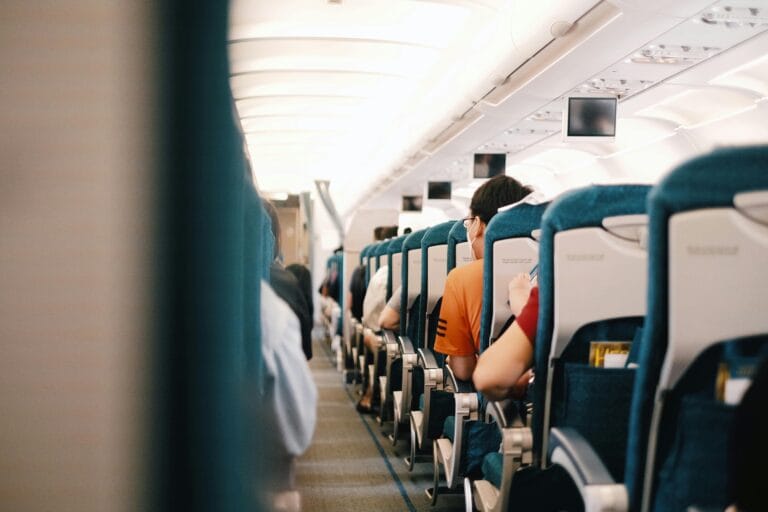
Safest seat on a plane is a question many travellers ask when booking a flight. While comfort and legroom often guide seat selection, safety statistics suggest that certain areas of the aircraft may offer slightly better protection in the rare event of a crash. Understanding where the safest seat on a plane might be, along with knowing how to respond in an emergency, can help you travel with greater awareness and confidence.
For a broader understanding of in-flight safety strategies, see “How to Improve Your Chances of Surviving a Plane Crash“, which explains how preparation and behaviour can influence survival outcomes.
Where Is the Safest Seat on a Plane?
Studies that analysed past aviation accidents have found interesting patterns. Passengers seated towards the rear of the aircraft have, in some cases, shown higher survival rates than those seated at the front. Data has suggested that middle seats at the back of the plane recorded lower fatality rates, around 28 percent.
By contrast, aisle seats in the middle section have shown higher fatality rates, approaching 44 percent in certain analyses. These figures do not guarantee safety in any position. However, they offer insight into trends observed in historical incidents.
It is important to remember that air travel remains one of the safest forms of transport. Crashes are extremely rare, and aircraft are designed with multiple safety systems.
Why Seat Location Is Only Part of the Picture?
The safest seat on a plane is not always available. Even if it is, seat location alone does not determine survival. Your actions during an emergency play a crucial role.
Before take off, identify the nearest emergency exits in front of and behind you. Count the number of rows between your seat and each exit. In a real emergency, visibility may be reduced by smoke or low lighting. Knowing the distance in advance saves valuable seconds.
Reading the safety card is essential for this. Refer to “Why You Should Always Read the Plane Evacuation Notice” to understand aircraft layouts and emergency procedures before take-off.
Practical Safety Tips for Any Seat
Stay calm if an emergency occurs. Unbuckle your seatbelt quickly and leave belongings behind. Follow the illuminated floor path if present. Move steadily towards the exit without pushing others.
Keep low if there is smoke, as cleaner air is usually closer to the floor. If someone nearby struggles, offer brief assistance without delaying your own evacuation.
Mental preparation improves reaction time. Listen carefully to the safety briefing and review the safety card in the seat pocket. These simple habits increase your awareness, no matter where you are seated.
Ultimately, while discussions about the safest seat on a plane are interesting, preparation and alertness are just as important. Combining informed seat choice with calm, decisive action gives you the best possible advantage in any situation.