Knowing the banned items in checked baggage can prevent serious travel problems before you even reach the gate. Many travellers assume that items rejected from hand luggage can simply go into the aircraft hold. In reality, airlines strictly regulate several banned items in checked baggage because they can create fire or safety risks during a flight.
Most travellers understand the rules for cabin bags. However, far fewer know that checked luggage has its own restrictions. Ignoring these rules may cause airport delays, luggage inspections or confiscated belongings. To avoid unexpected issues, review “Avoid Airport Surprises: The Importance of Checking Airline Baggage Policies” before packing.
Why Certain Items Are Banned in Checked Baggage?
Airlines prohibit many banned items in checked baggage because of potential fire hazards. Cargo holds remain secure but crew members cannot easily access them during a flight. If a fire starts in the hold, the crew may struggle to respond quickly.
For this reason, aviation authorities frequently update the list of banned items in checked baggage. Safety experts review new risks and adjust regulations when necessary. Some everyday products may become restricted even if they appear harmless.
Common Banned Items in Checked Baggage
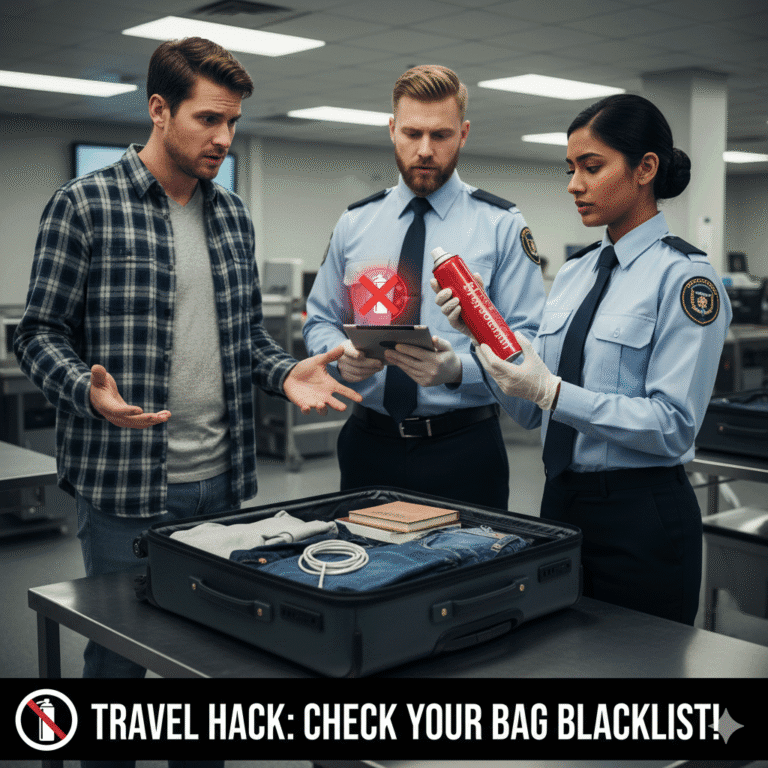
Aerosol products cause many problems for travellers. Large cans of hairspray, deodorant or shaving foam often face strict limits. Some airlines allow small quantities but others restrict them entirely.
Lithium ion batteries also rank among the most important banned items in checked baggage. Large power banks or spare batteries can overheat and cause fires. Airlines therefore require passengers to carry them in cabin bags where crew members can respond quickly if necessary.
Certain electronic devices also contain these batteries. Travellers should check airline rules before packing them in their suitcase.
How to Avoid Problems at the Airport?
Travellers should review airline safety guidance before packing their luggage. This helps you avoid placing banned items in checked baggage by mistake.
If you feel unsure about an item, check the airline website or ask airport staff before travelling. When possible, place permitted electronics in your carry on bag instead.
Careful packing and simple preparation will help you avoid delays and keep your journey smooth from the start. You can also follow a structured approach in “Long-Haul Flight Travel Essentials Packing Checklist” for safer packing decisions.