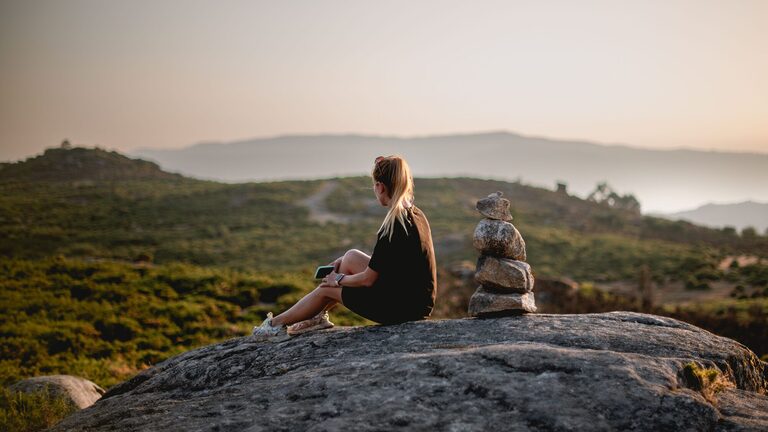
There is something quietly radical about booking a trip entirely for yourself. No compromises on the destination, no negotiating the itinerary and no checking whether anyone else is free that week. Solo travel for mental health is a topic that is gaining serious traction and for good reason. Research and lived experience alike point to the same conclusion that travelling alone done thoughtfully, can do more for your emotional wellbeing than almost any other experience you will invest in.
Whether you are considering your first solo trip or you have been on the fence for a while, this article breaks down exactly what the psychological benefits are, how they work and what to realistically expect along the way.
Overview: Key Mental Health Benefits of Solo Travel at a Glance
- Builds genuine confidence by placing you in situations where you rely entirely on yourself
- Increases independence as you make every decision without external input or approval
- Improves mental clarity by removing you from familiar stressors and routines
- Reduces anxiety over time as you prove to yourself that you can navigate the unfamiliar
- Encourages self-reflection in a way that busy, social travel rarely allows
- Combats isolation by pushing you toward authentic connection with strangers and locals
- Resets emotional baseline particularly after periods of burnout, loss or stagnation
You Build Confidence in a Way That Sticks
There is a particular kind of confidence that only comes from doing something hard, alone and succeeding at it. Booking the train in a language you do not speak. Navigating an unfamiliar city with a dead phone battery. Finding your way back to your accommodation after a wrong turn in a foreign neighbourhood. These are not dramatic challenges, but they accumulate.
The psychological term for this is self-efficacy, which is your belief in your own ability to handle situations. Research by Albert Bandura, one of the most cited psychologists in history, found that the most reliable way to build self-efficacy is through what he called “mastery experiences”, meaning actual hands-on success at challenging tasks. Solo travel delivers these in concentrated doses over days or weeks.
A traveller I spoke to who completed a solo three-week trip through South-East Asia described returning home and feeling as though everything in her daily life looked smaller and more manageable. “I had sorted out a missed connection in Bangkok on my own,” she said. “After that, a difficult work meeting felt like nothing.” This is one of the most commonly reported travelling alone benefits and it is grounded in real psychological science, not just feel-good anecdote.
Choosing a destination that matches your confidence level also plays a big part in a positive experience, so it is worth exploring our guide to the best solo travel destinations before booking your trip.
It Forces You Into a Deeper Independence
When you travel with others, there is always a quiet process of deference happening. Someone suggests the restaurant, someone else picks the activity and you go along with it to keep the peace or because you genuinely do not mind. Over years, this can erode your sense of your own preferences and instincts.
Solo travel strips all of that away. You decide what you eat, where you go, how long you stay and when you leave. At first, this can feel paralysing, particularly for people who are not used to making decisions purely for themselves. But within a few days, most solo travellers report that something shifts. They start to enjoy it.
This is one of the subtler but more profound solo travel benefits. You rediscover what you actually like when no one else’s opinion is shaping the choice. You might discover you prefer slow mornings in cafes over packed museum tours. Perhaps you will realise that spontaneous detours suit you better than rigid itineraries. Whatever it is, you learn something true about yourself.
Mental Clarity: What Happens When You Step Away?
Mental clarity is not something you can force. It tends to arrive when you stop cramming your schedule and your attention with obligations, noise and familiar worries. Travel is one of the few contexts in which your brain is genuinely forced to focus on the present because there is simply too much new information coming in for your mind to retreat into its usual loops.
Psychologists call this the “novelty effect” and it is well documented. New environments activate parts of the brain associated with alertness, curiosity and learning. This is why a day abroad can feel richer and more memorable than a month at home. For people dealing with low-level anxiety, overthinking or burnout, this cognitive reset can be genuinely therapeutic.
Many travellers also find that small wellness rituals help reinforce a sense of mental reset while on the road. Practices such as journalling, meditation or creating a calming scent ritual can offer brief moments of pause during long journeys or busy travel days. For travellers interested in exploring this further, Wildfire’s guide to essential oils for mood and relaxation explains how scent can be incorporated thoughtfully into everyday relaxation practices. These habits are not a substitute for professional mental health support, but they may form part of a broader personal wellbeing routine
One of the most common things people say after solo travel is that they came back with answers they had not been able to find at home. Not because the trip magically solved their problems, but because stepping outside the usual environment allowed them to see those problems from a different angle. Distance, both physical and psychological, has a clarifying effect.
If your goal is to return home feeling refreshed and recharged, you may also enjoy exploring wellness travel experiences that combine mindful activities such as yoga, meditation and healing retreats with meaningful travel.
Does Solo Travel Get Lonely? Addressing the Fear Honestly
It would be dishonest to say that solo travel loneliness is never a factor. It can be. There are evenings in restaurants when you wish you had someone to share the meal with. There are extraordinary views that feel slightly less complete when you are the only one standing there. That is real and it is worth acknowledging.
However, the evidence suggests that solo travel loneliness is generally short-lived and often replaced by something better like genuine connection with strangers. When you travel with a companion, you are largely sealed inside a social bubble of two. When you travel alone, you are far more approachable and far more likely to approach others.
Hostels, group tours, cooking classes, local markets and even solo meals at communal restaurant tables regularly produce friendships that last well beyond the trip. Many solo travellers report that they actually feel more connected to people during solo trips than they do during group trips, precisely because they are open and available in a way that paired-up travellers rarely are. The idea of travelling alone but not lonely is not a marketing slogan. For most people who try it, it becomes the reality within the first few days.
A practical note: if solo travel loneliness does hit, particularly in quieter destinations, it helps to have a few go-to strategies. Booking a walking tour, finding a lively co-working space or simply sitting at a bar and striking up a conversation with the person beside you can shift the mood entirely. These are not complicated fixes, but they work.
A Comparison: Travelling Solo vs Travelling With Others for Mental Health
| Factor | Solo Travel | Group/Paired Travel |
| Decision-making | Entirely your own | Shared or compromised |
| Self-discovery | High | Moderate to low |
| Social connection | Effort required but often deeper | Built-in but can be surface-level |
| Mental rest | Easier to achieve | Can be disrupted by group dynamics |
| Confidence building | Significant | Less opportunity |
| Loneliness risk | Present but manageable | Low |
| Flexibility | Maximum | Reduced |
| Personal growth | Often transformative | Variable |
The Link Between Solo Travel and Reduced Anxiety
This might seem counterintuitive. Surely travelling alone, particularly to unfamiliar places, would increase anxiety rather than reduce it? In the short term, yes, it can spike. But the research and the anecdotal evidence point to a longer-term reduction for many people.
The mechanism is exposure. Anxiety tends to grow when we avoid the things that make us uncomfortable. Solo travel, by its nature, requires you to face low-level discomfort repeatedly like booking things alone, speaking to strangers, making decisions without a safety net. Each time you do this and it goes reasonably well, your brain updates its threat assessment. The unfamiliar becomes familiar. The frightening becomes manageable.
This is essentially the same process used in cognitive behavioural therapy through graduated exposure. Solo travel is not therapy, but for many people it produces a similar outcome with a quieter, more grounded relationship with uncertainty.
Practical Tips for Getting the Mental Health Benefits Right
- Start with a shorter trip if you are new to solo travel. A long weekend in a city a few hours from home is a legitimate starting point.
- Stay somewhere social such as a boutique hostel or a guesthouse with common areas if you are worried about loneliness.
- Give yourself permission to do nothing. Some of the best mental health benefits of solo travel come from unscheduled time.
- Limit social media check-ins. The urge to document everything for others can pull you out of the present-moment experience that makes travel so restorative.
- Budget for flexibility. Even a relatively modest solo trip of around $800 to $1,500 for a week, depending on destination and accommodation, can deliver significant returns in terms of perspective and wellbeing.
FAQ: Solo Travel and Mental Health
For many people, yes. While it can trigger anxiety in the short term, regular solo travel tends to reduce overall anxiety levels by building confidence and tolerance for uncertainty.
Some moments of loneliness are normal, but most solo travellers find they make connections more easily when travelling alone than when paired with companions. Being open and choosing social accommodation helps significantly.
If you are going through a serious mental health episode, it is worth speaking to a professional before undertaking a major trip. That said, many people find that a carefully planned solo trip can support recovery and provide perspective during difficult periods.
A long weekend or four to five days is a manageable and effective starting point. You will still get the core benefits without being overwhelmed by the experience.
Confidence building, greater independence, improved mental clarity, reduced anxiety over time and increased self-awareness are the most consistently reported benefits of solo travel.
Final Thoughts
The benefits of solo travel for mental health are not reserved for a particular type of person. You do not need to be brave, extroverted or especially adventurous. What you need is a willingness to spend a little time in your own company, in a place that is new enough to demand your full attention.
Most people who try it come back changed in some small but meaningful way. Quieter in the best sense. More certain of what they want. Less afraid of the unfamiliar. If you have been considering it, that is probably reason enough to go.