Imagine stepping off a plane in Dublin as the sun rises, the city waking up around you. In just 24 hours, you can eat a full Irish breakfast on Grafton Street for under a tenner, walk the Grand Canal in the afternoon and still be home before midnight. Total cost: under £150 including flights, food and a couple of pints of Guinness. That is a micro-cation. Not a compromise. A deliberate, time-efficient way to actually go somewhere rather than spending the next three months saying you will.
The trend is growing fast, particularly among people who find that annual leave disappears into obligation, recovery and family commitments before they’ve seen the inside of a single airport. The biggest driver is straightforward: time scarcity. High-performing professionals, busy couples and families with complex schedules find it difficult to unplug for a full week. England and Wales have just 8 bank holidays a year, the lowest figure in Europe, compared to 11 in France, up to 13 in Germany and 14 in Spain. That gap is exactly why the micro-cation has taken hold the way it has.
The 24-hour version is the extreme end of the format. It sounds chaotic until you understand how it actually works.
Pick a Destination That Does the Work For You
The single biggest mistake is treating this like a compressed version of a normal holiday. You are not trying to see Amsterdam in 24 hours. You are trying to have one genuinely good day in Amsterdam. Those are different things and once you accept that, the whole thing gets easier.
Destination choice matters a lot. You need somewhere with fast, reliable airport-to-centre transport. If you spend 90 minutes on a bus each way, you’ve lost three hours of your day before you’ve done anything. When time is limited, navigating logistics can consume half your trip, so prioritise cities where you can move around easily.
Travel hack: Pre-book your airport transfer before you travel. Many cities offer fixed-rate taxi or private transfer services you can lock in the night before. You step off the plane and someone is already there with your name on a sign. No queue, no faff, straight into the city. If you’re landing during rush hour, check the public transport options before you arrive instead. A pre-planned metro or train route can be significantly faster than a taxi sitting in gridlock, and it costs a fraction of the price. Either way, make that decision at home, not at arrivals.
For UK travellers, the best 24-hour destinations are:
Dublin. Under two hours from most UK airports, with return flights regularly starting at around £44 from London. The Airlink Express bus runs from the airport to the city centre in about 45 minutes for €7. Pick one area and stay in it: the Merrion Square and National Gallery end or the Liberties neighbourhood around Guinness Storehouse and St Patrick’s Cathedral. Don’t try to do both.
Bruges. Brussels is the more obvious choice, but Bruges is better for 24 hours. The centre is compact and almost entirely walkable. The Eurostar to Brussels takes two hours, then the train to Bruges is another hour, so an early start is essential. Worth it for the Markt square, the chocolate and the fact that it doesn’t feel like anywhere else in Europe.
Porto. Budget airlines fly London to Porto in under two and a half hours, often for well under £60 return if you book a few weeks out. The Ribeira district and the wine cellars of Vila Nova de Gaia are within walking distance of each other. One of the best cities in Europe for a single neighbourhood deep-dive.
Lisbon. Similar flight time to Porto and the metro from the airport to the city centre takes 25 minutes. Alfama is the obvious focus for a short visit: narrow streets, tiled facades and views over the Tagus.
For US travellers
Domestic micro-cations lean on short-hop flights or drive distance rather than international routes. Google Flights’ Explore feature and tools like Flight Connections are useful for finding routes that are just one direct flight away, and it’s worth checking what’s within driving distance before assuming you need to fly.
From the Northeast, Montreal is the standout. Under an hour by plane from New York, a genuinely different cultural experience and a walkable city that rewards a single day. The Plateau-Mont-Royal neighbourhood, a poutine from La Banquise and a walk up Mont-Royal itself is a complete and satisfying day.
Chicago to Toronto is another strong option. Direct flights take about 75 minutes and Billy Bishop Island Airport drops you essentially into the city. Kensington Market and the Distillery District cover a full day between them.
The One Focus Rule
Decide what you’re going for before you book and let that decision make most of your other decisions for you.
You’re going to Dublin for the food scene. You’re going to Porto for the wine cellars. You’re going to Montreal for the French-speaking North American oddity of it. That one thing is your anchor. Everything else, the wandering, the coffee stops, the unexpected detour, happens around it.
People who try to optimise every hour of a micro-cation come home feeling like they ran an errand. People who give themselves one proper mission and let the day flow around it come home feeling like they actually went somewhere.
How to Build the Day?
Morning (arrival to noon). Get to the city as early as possible. Eat breakfast near where you arrive rather than where you’re going. Walking into the centre with a coffee and no agenda is often the best part of the whole trip. Give yourself an hour to find your bearings before the day has a shape.
Travel hack: Make the first leg of the day completely decision-free. The night before: know which metro line you’re taking, which exit you’re coming out of and where you’re eating breakfast. Those decisions take two minutes at home. The same decisions in an unfamiliar arrivals hall at 7am take twenty.
Midday (noon to 4pm). This is your focus time. Whatever your anchor activity is, do it properly. Book anything that needs booking in advance — museum entry, a restaurant, a guided tour — so you’re not making decisions while standing on a pavement in a city you don’t know.
Afternoon into evening (4pm to departure). This is when you slow down. A good bar. A walk somewhere you passed earlier. A long dinner if your flight allows it. This stretch is where the day stops feeling like a challenge and starts feeling like a trip.
Build at least 90 minutes between leaving wherever you are and being at the gate. It is not a fun story to tell when you miss your flight home from a 24-hour trip.
A Sample 24-Hour Itinerary: Porto
This works on a 6:30am departure from London Gatwick on Ryanair or easyJet, both of which fly this route regularly for £25 to £50 one way booked a few weeks out.
8:30am: Land at Porto Airport. Take Metro Line E (Purple) direct to Aliados in the centre. Around 35 minutes and €2.50. Pre-booked, the fixed-rate taxi alternative runs about €25 and is worth it if you’re landing during the morning rush.
9:15am: Coffee and a pastel de nata near Praça da Liberdade. Majestic Café is worth seeing but pricey to sit in. The cafe at A Brasileira on Rua do Bonjardim is better value and less tourist-facing.
10:00am to 12:30pm: Walk down through the São Bento area and across the Luís I Bridge to Vila Nova de Gaia on the south bank for a port wine cellar tour. Book it the moment your flights are confirmed — Graham’s and Ramos Pinto both run excellent guided visits with tasting included for around €20 and the good slots go weeks in advance.
1:30pm: Lunch on the Ribeira waterfront. Taberna São Pedro does excellent bacalhau and a glass of Vinho Verde for under €15 a head.
3:00pm to 5:30pm: Walk back across the bridge and up through the Miragaia neighbourhood or take the cable car back up from Gaia if your legs are done. If you like contemporary art, the Serralves Foundation is worth the detour — book online and allow two hours.
6:30pm: Dinner. Ask whoever served you at lunch where they would go. That question almost always gets a better answer than anything on a review site.
8:30pm: Metro back to the airport. 90 minutes before your flight.
11:00pm: Back in the UK. You went to Portugal today.
Pack Like You Mean It
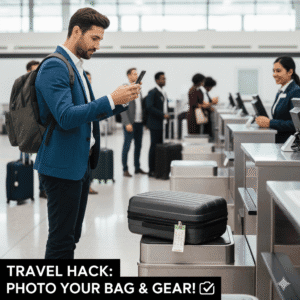
One bag, under the seat in front of you, not the overhead locker. This means you skip the baggage carousel entirely on both ends and clear the airport in ten minutes flat.
Travel hack: Travelling with no checked luggage means app check-in, zero queues at departures and straight to security. On a 24-hour trip that’s a meaningful amount of your day back.
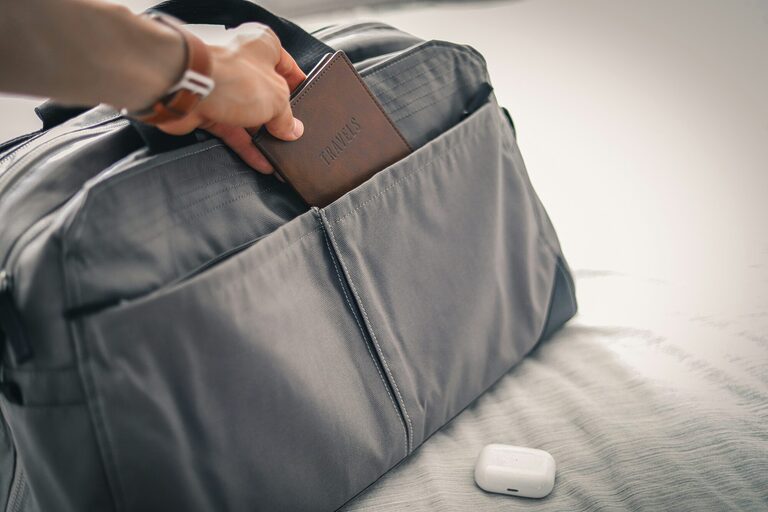
You still want a small bag even if you’re not staying overnight: a portable charger, a light jacket, a change of clothes for the evening, and any medication. The bag is not the problem; carrying it around a city for eight hours is. This is where a luggage locker earns its keep. Drop your bag at the locker near the centre, go off with just your phone and wallet and pick it up before you head back to the airport. Stasher and Radical Storage both operate in most European cities, using local shops and hotels as drop points for around €5 to €8 per bag per day.
Travel hack: Download your maps offline before you leave home. Google Maps lets you save any city for free. When you’re navigating an unfamiliar metro system with your phone at 10% battery, you’ll be glad you did.
Book It Like a Pro
One of the real advantages of the micro-cation format right now is that shorter trips carry far less risk if plans change. Many travellers are wary of locking in plans months ahead given economic uncertainty and a £60 return flight is a much easier decision than a £1,200 package holiday.
Most European budget flights can be booked six to eight weeks out without paying a premium and flexible fare options are now standard on most carriers.
Travel hack: Set a price alert on Google Flights or Skyscanner for your preferred routes and let the algorithm do the watching. Check in once a week. Most people are genuinely surprised how cheap the flights are once they actually look.
Travel hack: Be flexible on which departure airport you use. A Monday morning Ryanair from Stansted might be £20 cheaper than the same route from Gatwick on the same day. Run the comparison before you assume.
Book direct with the airline once you’ve found your price on a comparison site. You’ll deal with them directly if anything goes wrong and it’s usually the same price.
The Itch You Actually Need to Scratch
If you’ve got itchy feet and a life that never quite opens up space for a proper week away, the micro-cation isn’t a workaround. It’s the answer. One well-planned day in a city you’ve been meaning to visit does something that no amount of scrolling through travel content can replicate. You went. You saw something new. You ate something unfamiliar. You came home with a story.
The low stakes are part of the appeal. You’re not betting two weeks of annual leave on whether you like a place. You’re giving it a day and if you love it you go back properly. A lot of people have discovered a city on a micro-cation and booked a longer trip within a week of getting home.
The barrier to doing this is almost entirely in your head. The flights are cheap, the planning is straightforward and the payoff is completely disproportionate to the effort involved. The only thing standing between you and going to Porto this month is booking the flights. So book the flights.
Start with Google Flights’ Explore tool. Set your departure airport, leave the destination blank and see what’s cheap on the dates you have free. Give it twenty minutes and a destination will find you.