Introduction
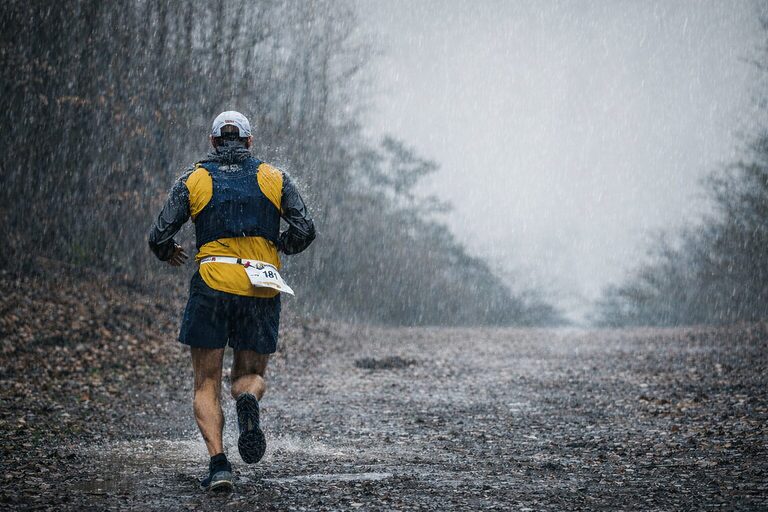
If you are an adventure runner preparing for long distances in unpredictable weather, understanding how different insulation materials behave in wet conditions is essential. In this gear guide, you will learn why many ultrarunners avoid down mid layers during races and multi hour training runs in the rain and what to do instead to stay warm, safe and efficient.
Ultrarunning often involves long periods of exposure, changing terrain and limited shelter. Clothing choices are not about comfort alone. They are about performance and safety.
To better understand how layering systems work in different environments, you may find it useful to read the 3-layer system for cold weather, which explains how each layer functions together.
The Problem with Down in Wet Conditions
Down insulation is well known for being lightweight and warm in dry environments. However, it performs poorly once exposed to moisture.
Here is why ultrarunners are cautious:
- Down absorbs moisture from rain, sweat and humidity
- Once wet, down clumps together and loses loft
- Reduced loft means significantly reduced insulation
- Wet down dries very slowly during movement
When you are running for six, ten or even twenty hours, sweat build up is unavoidable. Even if it is not raining heavily, damp air, body heat and condensation inside a shell can cause down to retain moisture.
Unlike a static activity such as camping, ultrarunning generates constant perspiration. A damp down mid layer can quickly become a liability rather than an asset.
Why This Matters in an Ultra?
During an ultramarathon, body temperature fluctuates constantly. You may overheat on climbs and cool rapidly on descents or exposed ridgelines.
If your mid layer:
- Holds onto sweat
- Loses insulation when damp
- Adds unnecessary weight when wet
You risk becoming chilled when you slow down, stop at checkpoints or encounter wind.
Hypothermia risk increases when clothing cannot regulate moisture effectively. Many experienced ultrarunners therefore avoid down except as an emergency backup layer in mandatory kit for mountain races.
Sweat Is Just as Problematic as Rain
A common misconception is that down only fails in heavy rain. In reality, internal moisture from sweat is often the bigger issue.
Adventure runners typically:
- Climb hard
- Produce high levels of perspiration
- Layer and unlayer frequently
A down mid layer worn during effort can quickly trap moisture. Even if you remove it later, it may not fully dry before you need it again.
In long races where conditions shift from warm valleys to cold summits, this becomes a serious concern.
What Ultrarunners Use Instead?
In wet conditions, many runners choose synthetic insulation* or breathable fleece style* mid layers.
These materials:
- Retain warmth even when damp
- Dry faster while you move
- Manage moisture more effectively
- Maintain structure rather than clumping
The goal is not maximum warmth at all times. It is adaptable warmth that works during movement and brief stops.
Layering systems commonly include:
- A moisture wicking base layer
- A lightweight breathable mid layer
- A waterproof shell for wind and rain protection
This type of system is especially important when facing sudden weather changes, so you may also want to explore tips for staying prepared when disembarking colder climate for additional practical guidance.
This combination allows runners to adjust quickly without relying on insulation that fails when wet.
When Down Still Has a Place?
Down is not completely avoided. It is often carried:
- As mandatory emergency kit in mountain ultras
- For post race warmth
- For extremely cold and dry winter conditions
In these scenarios, it is used during low activity or static periods where sweat production is minimal.
Practical Advice for Wet Conditions
If you are preparing for an ultra in changeable weather:
- Prioritise moisture management over maximum insulation
- Test your layering system during long training runs
- Practise adding and removing layers quickly
- Assume you will get wet and plan for it
Understanding how materials behave under effort will help you stay comfortable and safe for the duration of your event.
Conclusion
Many ultrarunners avoid down mid layers in wet conditions because they retain moisture, lose loft and dry slowly. In a sport where sweat and exposure are constant, reliable performance matters more than theoretical warmth.
For adventure runners tackling long distances in unpredictable weather, choosing insulation that works when damp is often the smarter and safer approach.
*This article contains affiliate links. If you make a purchase, we may earn a small commission at no extra cost to you.