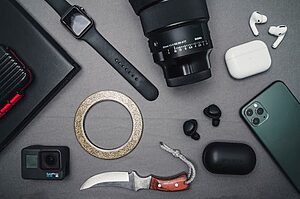
Bringing your own entertainment devices on long flights can significantly improve the travel experience. While many aircraft offer onboard screens, relying solely on airline systems can be limiting due to restricted content choices, technical issues, or uncomfortable viewing angles. Personal devices allow travellers to control what they watch, read, or listen to, creating a more relaxed and personalised journey.
Many travellers now carry lightweight entertainment tools that make it easy to switch between activities. Changing from reading to watching a film or listening to music helps reduce fatigue during long periods of sitting and can make a long-haul flight feel shorter.
Choosing the Right Entertainment Device
The best device depends on how you prefer to spend your time onboard.
If you are planning your own setup in advance, you may also find our guide on DIY entertainment for long flights helpful, as it focuses on preparing content and backup options before you travel.
E-readers
E-readers* are popular because they are extremely lightweight and offer long battery life, often lasting weeks on a single charge. Their matte screens reduce glare and eye strain compared with traditional tablets, making them ideal for extended reading sessions during overnight flights or in bright cabin lighting. If you normally prefer physical books and are considering buying an e-reader specifically for a trip, it is worth testing it well before departure. Learning how to navigate menus, adjust brightness, or download books takes a little practice and discovering you are uncomfortable using the device halfway through a long-haul flight can be frustrating.
Tablets or smartphones
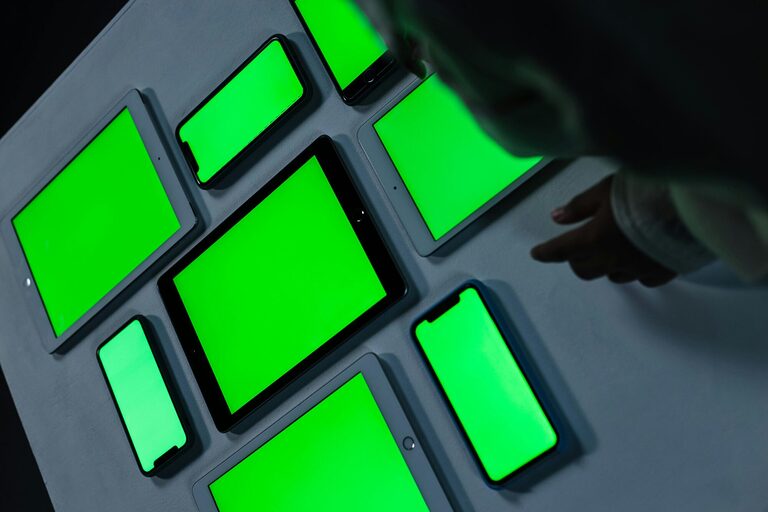
Tablets* and phones* provide more flexibility, allowing you to watch films, play games, or listen to downloaded podcasts. Preparing offline content before departure is essential, as in-flight Wi-Fi may be slow or unavailable. Many travellers also use reading apps on their smartphones as an alternative to carrying extra devices. While phone screens are smaller, they can still provide a convenient reading option without adding additional weight to your bag.
Audiobooks as a lightweight alternative
Another increasingly popular option is audiobooks*. Listening instead of reading reduces screen time and allows you to rest your eyes during long journeys. Audiobooks take up no physical space and can be stored directly on your phone, making them one of the lightest entertainment options available. They are especially useful during overnight flights when you want to relax without looking at a screen.
Strength vs Weight: Finding the Balance
When choosing an entertainment device for travel, weight and durability are key considerations. Ultra-light devices are easier to hold and reduce strain during long sessions, but they may feel less robust if dropped or squeezed in a tightly packed bag. Heavier tablets often feel sturdier and may have larger screens, yet they can become tiring to hold without a stand.
Protective cases can help balance strength and portability. Slim folio cases add minimal bulk while protecting screens, whereas rugged cases offer stronger impact resistance at the cost of extra weight. For frequent travellers, selecting a device that feels solid but remains comfortable to carry is often the best compromise.
Practical Tips for Long-Flight Entertainment
- Download films, music, books, or audiobooks before leaving for the airport to avoid connectivity issues.
- Lower screen brightness slightly to reduce eye strain and extend battery life.
- Consider using a device stand to keep your screen at eye level rather than holding it for hours.
- Rotate between watching, reading and listening to reduce fatigue during long flights.
To further improve comfort and convenience during your journey, you can also explore our guide on best digital travel accessories for long flights, which covers useful tools that complement your entertainment setup.
Final Thoughts
Entertainment devices are no longer just a convenience; they are an essential part of a well-planned travel setup. By choosing lightweight but durable equipment, testing new devices in advance and mixing reading apps, audiobooks and offline content, travellers can stay comfortable, engaged and relaxed throughout even the longest journeys.
*This article contains affiliate links. If you make a purchase, we may earn a small commission at no extra cost to you.