When travelling to somewhere cold like the Arctic, most travellers prioritise cold-weather gear. However, one humble piece of kit can make or break your experience: how you carry your drinks. In sub-zero temperatures, a standard water bottles become a useless block of ice in minutes, and before that happens your probably won’t be able to open it as it will be frozen shut. I can attest to this when I went to Everest Base Camp. A high-quality vacuum flask is a vital travel hack to ensure your drinks stay hot or at room temperature and your body stays warm.
For more tips on keeping drinks safe and accessible during travel, you can also refer to hiker’s good thermal flask and staying safe with water and ice abroad. These articles complement the advice here by covering both hiking and general travel scenarios.
The Vacuum Flask (Thermos)
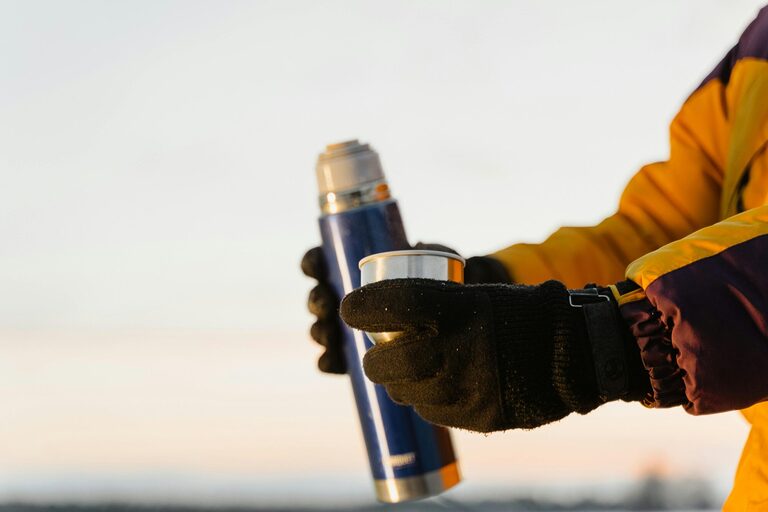
If you want to enjoy a warming hot drink after hours of trekking in the cold, a stainless steel vacuum flask* is the undisputed champion. Try to avoid flasks with complicated pouring mechanisms, as they are more likely to leak.
Pros:
- Excellent Heat Retention: A decent flask can keep tea, coffee or water piping hot for up to 24 hours, even in brutal sub-zero winds.
- Durability: Stainless steel is incredibly tough and built to withstand the knocks and drops of a rugged expedition.
- Leak-Proof: Most screw-top designs are completely airtight, preventing any hot liquid from spilling onto your expensive thermal gear.
- Physical Boost: In the extreme cold, a hot drink provides immediate internal warmth and a massive psychological lift.
Cons:
- Weight: Stainless steel flasks are significantly heavier than plastic alternatives, which matters if you are hiking long distances.
- Fixed Structure: Unlike plastic, steel has no “flex.” If liquid were to freeze inside, the pressure could permanently damage the vacuum seal.
- Cold Metal Hazard: The exterior can become painfully cold. Always use the lid-cup or keep your gloves on when handling the flask.
Arctic Hydration Hacks
- The “Hot Start”: Always fill your vacuum flask with boiling water before leaving your accommodation. This gives the flask maximum thermal energy to fight the external cold.
- Pre-Heat the Flask: Before the final fill, pour a little boiling water into the flask, swill it around, and tip it out. This “primes” the steel so it doesn’t steal heat from your actual drink.
- Cup Etiquette: Only pour out what you intend to drink immediately. Leaving the flask open unnecessarily allows heat to escape.
- The Sock Hack: If you are using a cheaper or older flask, wrap it in a thick woolly sock or a dedicated thermal sleeve. This extra layer of insulation helps maintain the temperature for even longer.
- Internal Storage: Store your flask in the centre of your backpack, surrounded by your spare clothes. This uses your gear as additional insulation against the freezing air.
Final Verdict
For any traveller heading into the extreme cold, a stainless steel vacuum flask is a non-negotiable investment. It is the only reliable way to ensure you have a hot drink to boost your core temperature when the mercury drops to -40°C. Avoid any hydration systems with straws or exposed valves, as these will fail instantly. Stick to a simple, robust flask, and you’ll stay warm throughout your Arctic adventure.
After pouring a drink, always dry the screw cap and the threaded neck of the bottle. Any remaining liquid will freeze the bottle shut.
In sub-zero conditions, drinking bladders are ineffective: the water in the tube will freeze solid, even if insulated. Pouring hot water into a bladder is also not recommended, as it cools quickly and may increase the risk of chemical leaching from plastic components.
If you would like to explore a range of popular vacuum flasks, I have included a link to Amazon Best Sellers list* to help you find a few great options.
*This article contains affiliate links. If you make a purchase, we may earn a small commission at no extra cost to you.