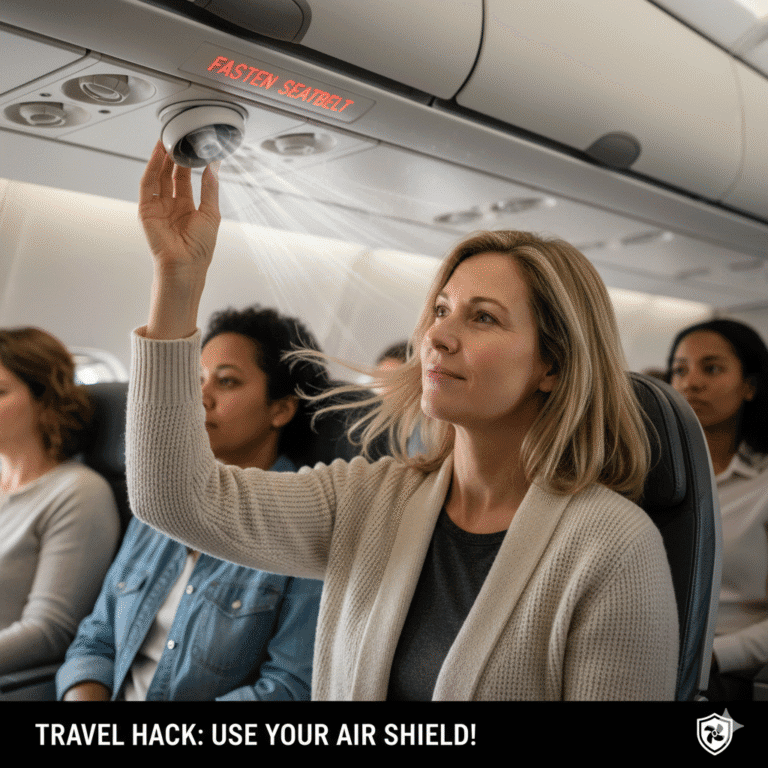
The airplane air vent above your seat may seem like a simple comfort feature, but it actually plays an important role in keeping passengers healthier during a flight. When settling into your seat on an aeroplane, many travellers adjust the vent only to regulate temperature or ignore it entirely. However, using your airplane air vent properly can create a small protective airflow around your personal space, helping reduce exposure to airborne droplets that circulate within the cabin.
For long haul flights, combining proper use of the airplane air vent with techniques from how to reset your body clock naturally can help your body adjust more quickly to new time zones.
Directing that stream of air towards your personal area is not just about staying cool. It can help create an invisible air barrier against micro droplets and contaminants that may travel through the enclosed environment of an aircraft cabin.
How the Airplane Air Vent Protects You?
The air supplied through an airplane air vents is highly filtered before reaching passengers. Most modern aircraft use HEPA filters, which are designed to capture up to 99.97 percent of airborne particles, including many viruses and bacteria.
This means the air flowing from the airplane air vent is cleaner than many people expect. When angled correctly, the vent can produce a gentle and steady flow of filtered air around your seat area. This airflow helps disperse nearby airborne particles before they reach your breathing zone.
While it is not a substitute for general hygiene practices, this small adjustment can contribute to a healthier flying experience.
How to Position Your Airplane Air Vent Correctly?
To make the most of your airplane air vent, aim the airflow slightly in front of your face rather than directly at your eyes, nose or mouth. The goal is to create a light circulating breeze around your seating space rather than blasting air directly onto your face.
A soft downward flow works well because it encourages a protective air curtain that pushes potential airborne droplets away from you.
Passengers who close the vent completely may unintentionally reduce this protective airflow, allowing stagnant cabin air to linger around their seating area.
A Simple In-Flight Health Tip
Many experienced travellers treat the airplane air vents as part of their routine when boarding. Adjusting it only takes a few seconds but can improve both comfort and air circulation throughout the flight.
Also, trusting your instincts when choosing a seat or deciding when to move around the cabin, as discussed in trust your instincts and intuition when travelling, can complement this simple health habit.
By keeping your airplane air vent open and directed correctly, you help create a steady stream of filtered air around your seat. It is a small but effective step that supports better comfort and helps reduce exposure to airborne particles during long journeys.