When everyday life feels too loud, a few days without notifications, traffic and constant conversation can be surprisingly refreshing. Meditation retreats in silent monasteries give travellers a chance to step away from busy routines and spend time focusing on meditation, reflection and simple living. Whether you are an experienced meditator or simply curious about switching off for a few days, a monastery retreat can offer a very different kind of holiday. This article walks you through what these retreats involve, what rules to expect and how to prepare, so you can decide if this kind of trip is right for you.
Overview: What You Need to Know
- A silent monastery retreat usually means limited or no talking for set periods, along with a fixed daily schedule built around meditation, prayer or quiet reflection.
- Retreats can last anywhere from a weekend to several weeks, with three to seven days often being a manageable option for first-time visitors, although some traditions require longer stays.
- Costs range widely, from low-cost or donation-based stays at some monasteries in Asia to several hundred pounds or dollars per night at private wellness retreat centres.
- Many monasteries welcome people of any religion or none at all, though some ask guests to follow basic religious customs during their stay.
- Booking ahead is essential, as many popular monasteries only accept a small number of guests at a time.
- Some retreats are completely silent while others include scheduled discussions, teacher interviews or group sessions, so check the exact format before booking.
What Is a Silent Retreat?
A silent retreat is a stay, usually inside a monastery, ashram or dedicated retreat centre, where guests agree to limit conversation for most or all of the visit. This is not just about staying quiet out of politeness. It is a deliberate practice meant to reduce everyday distractions and give participants more time for meditation, reflection and awareness.
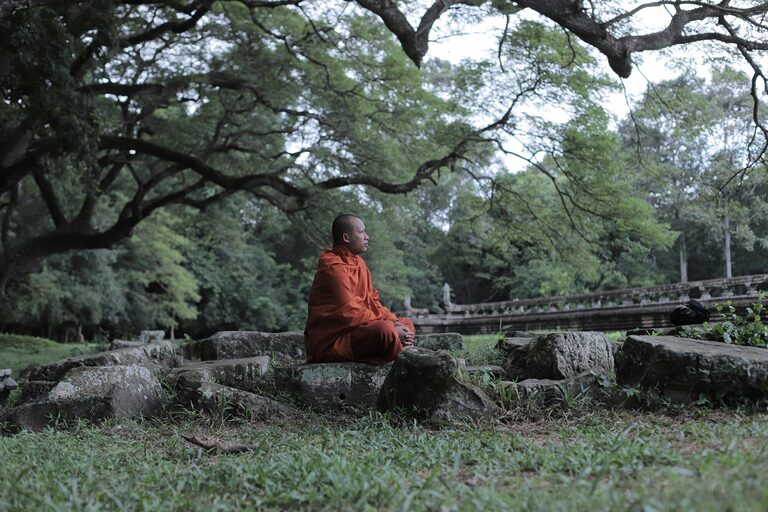
During a typical day, guests wake early, sometimes before sunrise and follow a schedule that includes several sitting meditation sessions, simple meals eaten in silence and periods of walking meditation or light chores such as gardening or cleaning. Depending on the tradition, guests may still be allowed to read, write or attend guided teaching sessions, while some stricter retreats restrict these activities too.
For many travellers, the hardest part is not the silence itself but the boredom or restlessness that can show up on the second or third day, once the initial calm wears off. Experienced retreat-goers often say this restlessness is a normal part of adjusting to fewer distractions, as the mind becomes less dependent on constant entertainment.
Travel hack: Do not plan a packed sightseeing itinerary immediately after your retreat. Leave a few quiet hours, or even an extra night, before travelling home so you have time to readjust to normal routines.
Rules and Expectations in Monasteries
Every monastery has its own house rules, but a few expectations tend to appear again and again:
- No or limited speaking, except during scheduled check-ins with a teacher or group discussions.
- No phones, laptops or cameras during designated silent periods, with some retreats asking guests to hand devices in at check-in.
- Simple, shared accommodation, usually a basic single room or a shared dormitory rather than anything resembling a hotel.
- Set mealtimes, often vegetarian, eaten in silence and sometimes limited to one or two meals a day depending on the tradition.
- Early wake-up calls, sometimes as early as 4 am, followed by the first meditation session of the day.
- Modest dress, often covering the shoulders and knees, particularly in Buddhist and Christian monastic settings.
- Participation in scheduled activities, which can be expected at stricter retreats.
It helps to email the monastery directly before booking, since some places expect guests to attend every session, while others allow more flexibility for beginners who may need rest breaks.
Before paying a deposit, ask whether meals, bedding, towels, transfers and meditation equipment are included. A low room rate can become less attractive once these extras are added.
Best Monastery Retreats in Europe and Asia
Below is a quick comparison of well-known retreat centres and traditions that travellers may want to research. Prices and availability can change, so check each centre’s current information before booking.
| Retreat | Location | Typical Length | Approx. Cost |
| Plum Village | France | Several days to weeks | Donation or retreat fee varies |
| Monte Oliveto Maggiore | Italy | Varies | Check directly with the monastery |
| Kopan Monastery | Nepal | Course length varies | Check current course fees |
| Wat Suan Mokkh | Thailand | 10 days | Low-cost, donation-based or modest course fee depending on the programme |
| Vipassana Centres | Worldwide | 10 days | Donation-based |
| Tushita Meditation Centre | India | Course length varies | Check current course fees |
Plum Village, founded by the late teacher Thich Nhat Hanh, is one of the more approachable Buddhist retreat communities for beginners, as it combines periods of silence with guided teaching and mindfulness practices. Meanwhile, the global Vipassana network is known for its strict silent meditation retreat format, where participants generally observe noble silence during the course and follow a demanding daily meditation schedule.
For travellers drawn to mindfulness retreats in nature rather than a strictly religious setting, look at forest monasteries in Thailand or hillside retreat centres in the Himalayas, where the natural surroundings become part of the practice itself.
Travel hack: If you are travelling internationally for a retreat, arrive at your destination at least one day before the programme begins. This gives you time to recover from the journey, find the retreat centre and settle in before the silent schedule starts.
Mental Health Benefits of Silence
Meditation and periods of quiet can support relaxation, attention and stress management for some people. However, the experience varies from person to person and a retreat should not be treated as a replacement for professional mental health care.
Beyond the research, many returning guests describe a few common effects:
- Reduced mental chatter and fewer racing thoughts.
- A clearer sense of personal priorities once daily distractions are removed.
- A greater awareness of emotions, thoughts and everyday habits.
- A stronger sense of calm or mental space after spending several days away from normal routines.
That said, silence is not always comfortable at first. Some guests report feeling unexpectedly emotional, since removing distractions can make thoughts and feelings more noticeable. This does not necessarily mean something is wrong, but anyone experiencing significant distress should speak with a retreat teacher or seek appropriate professional support.
Important: If you have a serious mental health condition or are currently struggling emotionally, speak with a qualified healthcare professional before booking an intensive meditation retreat. Some forms of prolonged meditation and isolation can feel challenging rather than relaxing.
How to Prepare Emotionally and Physically?
A little preparation goes a long way towards making the experience smoother.
Before You Go
- Reduce screen time gradually in the week leading up to the retreat rather than stopping suddenly.
- Practise sitting still for 20 to 30 minutes a day if you are new to meditation, so the longer sessions feel less overwhelming.
- Pack light, comfortable clothing in neutral colours, along with a journal for reflection if writing is permitted.
- Tell close family or friends you will be unreachable and share the monastery’s emergency contact details with them.
- Check the weather forecast and pack suitable layers, especially if the retreat starts early in the morning or is located in the mountains.
- Bring enough essential medication for the full trip, plus a small backup supply where appropriate. Do not stop prescribed medication simply because you are attending a retreat.
During the Retreat
- Expect an adjustment period of two to three days before the mind may begin to feel more settled.
- Use walking meditation breaks to stretch, since long sitting sessions can be tough on the back and knees.
- Avoid comparing your experience to other guests, as everyone processes silence differently.
- If a teacher offers a private check-in, use it, since talking through difficult emotions with a guide can prevent a small struggle from becoming overwhelming.
- Follow the retreat schedule rather than trying to create your own routine. The structure is often an important part of the experience.
- Stay hydrated unless the retreat’s rules or your medical needs require a different approach.
After You Return
- Reintroduce noise and screens slowly over a few days rather than diving straight back into busy routines.
- Keep a short daily meditation practice going at home to hold onto some of the calm gained during the retreat.
- Write down a few habits that worked well during the retreat and choose one or two to continue at home.
- Avoid judging the experience by whether you felt calm every day. Restlessness, boredom and difficult moments can also be part of the experience.
Frequently Asked Questions
No. Many centres welcome complete beginners and provide basic instruction. However, some intensive retreats are designed for people who already have meditation experience, so check the course description before booking.
Yes, many people attend meditation retreats alone. Monasteries and retreat centres usually have structured schedules and staff or teachers on site, although the level of support varies. Check the accommodation arrangements and emergency procedures before travelling, particularly if the retreat is in a remote location.
Nothing serious. Staff understand that it can take practice and a quiet reminder is usually all that follows. If you need to speak because of an emergency or health concern, follow the centre’s procedure rather than worrying about breaking the rule.
Most places have procedures for leaving early, although some intensive courses strongly encourage participants to speak with a teacher first. Check the cancellation and early-departure policy before booking, particularly if you have paid a non-refundable fee.
Comfortable loose clothing, a light jacket for early mornings, a reusable water bottle, comfortable walking shoes or sandals, any personal medication and a journal if permitted. Leave valuables at home where possible.
Travel hack: Pack a small torch or headlamp if the retreat involves very early starts or shared outdoor facilities. It can be much more useful than relying on your phone, which may need to stay switched off.
No. While many are set in Buddhist monasteries or Christian monastic settings, some retreats focus primarily on meditation and mindfulness rather than religious practice. Others may expect guests to participate in prayers or religious ceremonies. Read the programme carefully so you know what will be expected before you arrive.
Final Thoughts
A stay in a silent monastery is not always easy, but for many travellers it delivers something rare: time away from constant notifications, busy schedules and everyday distractions. Whether you choose a forest monastery in Thailand, a monastic retreat in Europe or a Vipassana centre closer to home, going in with realistic expectations and a little preparation will help you get the most from the experience. The best retreat is not necessarily the cheapest or most luxurious one. Look for a programme whose rules, level of silence, accommodation and daily schedule match what you are comfortable with.