Travelling with your dog can be exciting but it can also feel worrying if your pet becomes nervous or frightened during journeys. Many owners consider sedating a dog for flight because they hope it will make the trip easier. However, sedation is not always the safest choice and, in many cases, it can create more risks than benefits. Understanding when sedation may be appropriate and learning safer ways to keep your dog calm can help make flying a more comfortable experience for both of you.
Overview
If you are wondering whether you should sedate your dog before a flight, here is the short answer:
- Most veterinarians do not recommend sedating healthy dogs before flying.
- Sedation can affect breathing, blood pressure and balance, especially at high altitudes.
- Many airlines discourage or even refuse pets that have been sedated.
- Training, proper travel preparation and natural calming methods are often safer alternatives.
- Always speak with a pet travel vet before giving any medication before air travel.
Is Sedation Safe for Dogs During Flights?
In most situations, sedating a dog for flight is not recommended unless your veterinarian has advised it for a specific medical reason.
When a dog is sedated, its body reacts differently to changes in air pressure, temperature and oxygen levels. Even healthy dogs may struggle to regulate these changes while travelling in an aircraft.
Dogs travelling in the cargo hold cannot be monitored constantly during the flight. If a sedated dog experiences breathing problems or another medical issue, immediate treatment may not be available.
For this reason, many veterinary organisations encourage owners to avoid unnecessary sedation and instead focus on reducing travel stress through preparation and training.
Why Sedating Dogs Before Flying Can Be Risky?
Sedatives affect every dog differently. Even if a medication worked well at home, the stress of travelling and changes during a flight may cause unexpected reactions.
Possible risks include:
- Slower breathing
- Lower blood pressure
- Poor balance and coordination
- Difficulty maintaining body temperature
- Increased risk of dehydration
- Vomiting or nausea
- Confusion after waking
- Difficulty standing inside the travel crate
Some dogs may even become more anxious instead of calmer because certain medications reduce physical movement without reducing fear.
Older dogs, puppies and dogs with heart or breathing problems are usually at greater risk.
Airline Rules About Sedated Pets
Many airlines have strict rules regarding sedated animals.
Some airlines:
- Do not recommend sedation at all.
- Require owners to declare if medication has been given.
- May refuse transport if a dog appears heavily sedated.
- Require a health certificate completed by a veterinarian before travel.
Every airline has different pet policies, so always check their requirements several weeks before departure.
If you are travelling internationally, you should also confirm destination requirements for:
- Pet entry permits
- Microchipping
- Pet travel vaccination records
- Import health certificates
- Breed restrictions
- Quarantine rules if applicable
Preparing these documents early avoids last-minute problems.
When Might a Vet Recommend Sedation?
Although routine sedation is usually avoided, there are situations where a veterinarian may prescribe medication.
Examples include:
- Severe panic disorders
- Previous injuries caused by extreme anxiety
- Certain medical conditions requiring special management
- Specific behavioural problems that cannot be managed through training alone
Only use medication exactly as prescribed.
Never give:
- Human sleeping tablets
- Anti-anxiety medication prescribed for another pet
- Over-the-counter medicines without veterinary advice
Every dog’s age, weight, breed and medical history must be considered first.
Safer Alternatives to Sedation
Fortunately, there are many safer ways to help your dog feel relaxed while flying.
Train With the Travel Crate
One of the best ways to reduce stress is helping your dog see the crate as a safe place.
Several weeks before travelling:
- Leave the crate open at home.
- Feed meals inside it.
- Hide treats inside.
- Allow naps in the crate.
- Reward calm behaviour.
Dogs that already enjoy their crate usually cope much better during flights.
Exercise Before Leaving
A long walk or play session before heading to the airport helps many dogs release excess energy.
Avoid exhausting your dog completely, especially during hot weather, but aim for healthy physical activity.
A tired dog is often more relaxed during travel.
Keep Feeding Times Sensible
Most veterinarians recommend avoiding a large meal immediately before flying.
Instead:
- Feed a light meal several hours before departure.
- Provide water before check-in.
- Follow airline advice about water containers inside the crate.
This may also reduce nausea during travel.
Practise Short Journeys
If your dog becomes nervous in vehicles, start with short trips before attempting a flight.
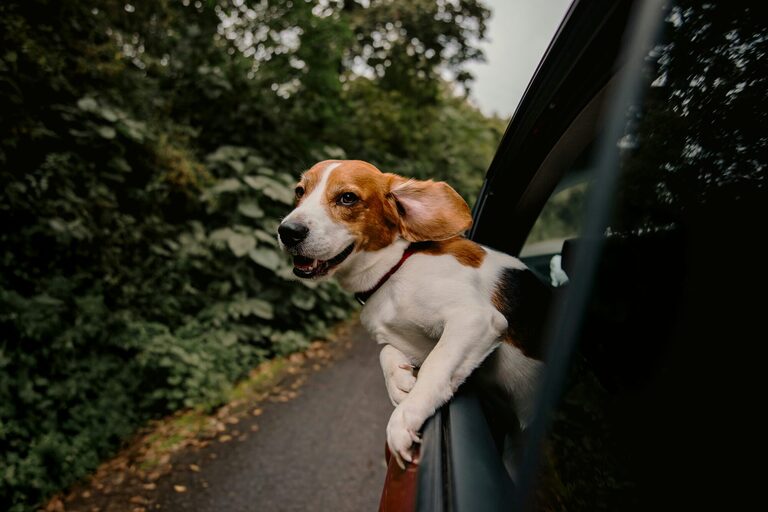
This also teaches owners how to calm dogs on road trips, which often improves confidence for air travel as well.
Gradually increase journey length while rewarding calm behaviour.
Natural Calming Products for Dogs
Many owners prefer natural options instead of sedatives.
Examples include:
- Pheromone calming sprays
- Calming collars
- Anxiety wraps
- Soft calming music before travel
- Familiar blankets carrying home scents
- Favourite toys
- Vet-approved calming chews
Some owners also use specially designed travel anxiety products for dogs. While these may help reduce mild stress, they should never replace professional veterinary advice.
Always introduce new products well before your travel date rather than trying them for the first time on the day of your flight.
Should You Use Motion Sickness Medication?
Some dogs become sick because of movement rather than anxiety.
If your dog regularly vomits during journeys, your veterinarian may recommend pet travel sickness tablets that are suitable for dogs.
These medications are different from sedatives and are designed to reduce nausea rather than make your dog sleepy.
Never buy motion sickness medicine intended for people without checking with your veterinarian first.
Advice From a Pet Travel Vet
Booking an appointment with a pet travel vet several weeks before your journey is one of the smartest travel decisions you can make.
They can:
- Perform a health examination.
- Confirm your dog is fit to fly.
- Review medications.
- Explain airline health requirements.
- Update vaccinations if needed.
- Complete travel certificates.
- Recommend anxiety management plans.
This is especially important if your dog has existing medical conditions.
How to Prepare Your Dog Before Flying?
Preparation often has a bigger impact than medication.
Try this simple checklist:
| Before Your Flight | Why It Helps? |
| Book direct flights if possible | Reduces travel time and transfers |
| Choose cooler travel times | Helps prevent overheating |
| Label the crate clearly | Makes identification easier |
| Attach emergency contact details | Helps if delays occur |
| Freeze water inside the bowl | It melts slowly during travel |
| Place familiar bedding inside | Provides comfort through familiar smells |
| Visit the vet before departure | Confirms your dog is healthy enough to fly |
| Arrive at the airport early | Reduces rushing and stress |
Signs of Travel Stress to Watch For
Knowing the warning signs helps you respond early.
Watch for:
- Heavy panting
- Excessive drooling
- Trembling
- Constant whining
- Barking
- Refusing food
- Vomiting
- Restlessness
- Attempts to escape the crate
- Wide eyes or pinned-back ears
If your dog shows severe distress before travel, contact your veterinarian before continuing with your journey.
Practical Travel Hacks for Flying With Dogs
These simple tips can make a noticeable difference.
- Book flights with the shortest total travel time.
- Avoid connecting flights whenever possible.
- Choose flights during cooler parts of the day if travelling in warm climates.
- Use an airline-approved travel crate well before your departure date.
- Place an unwashed T-shirt inside the crate so your scent comforts your dog.
- Attach recent photographs of your dog to the crate in case identification becomes necessary.
- Trim your dog’s nails before travelling to reduce the risk of injury inside the crate.
- Allow plenty of toilet breaks before arriving at the airport.
- Practise airport-like sounds at home using recordings to build confidence.
- Keep your own behaviour calm because dogs often notice their owner’s emotions.
- Prepare copies of all travel documents in both printed and digital form.
- Pack extra food in case your journey is delayed.
- Bring cleaning supplies and spare absorbent crate liners for unexpected accidents.
- Confirm airline pet check-in times before travelling because they are often earlier than passenger check-in.
Frequently Asked Questions
No. Never give any medication unless your veterinarian specifically recommends it. Some medicines that seem harmless can become dangerous during air travel.
Most veterinarians recommend crate training, exercise before travel, familiar bedding, gradual travel practice and professional advice instead of sedation.
Yes. A veterinary appointment helps confirm your dog is healthy enough to travel and ensures all pet travel vaccination requirements and travel documents are complete.
Final Thoughts
For most dogs, sedating a dog for flight is not the safest solution. While medication may occasionally be appropriate for specific medical or behavioural conditions, it should only be used under veterinary supervision. Careful preparation, crate training, calming routines and advice from a qualified pet travel vet usually provide a safer and more comfortable travel experience.
With enough planning and patience, many dogs can fly successfully without heavy sedation, allowing both you and your pet to begin your journey with greater confidence.