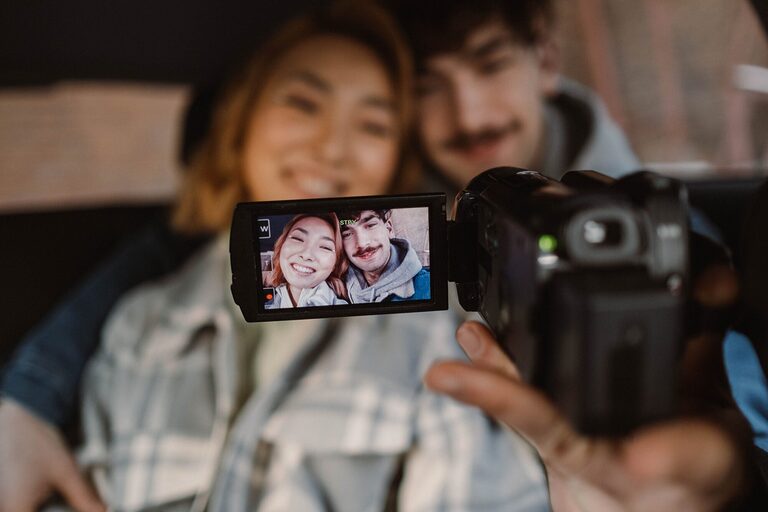
Every couple has that one travel moment they wish they had captured properly. It might be a sunrise above the clouds, a hidden café discovered by accident or an unforgettable view at the end of a long hike. While smartphones are more capable than ever, they do not always deliver the video quality, stabilisation or audio needed to bring those memories to life. Choosing the best travel cameras for vlogging can help you create sharper footage, better sound and more professional-looking travel content without carrying a suitcase full of equipment. Whether you are documenting a honeymoon, a round-the-world adventure or weekend city breaks, this guide covers the best cameras, useful accessories and practical filming hacks to help couples capture their travels with confidence.
Overview: Quick Answer for Skimmers
If you only have a minute, here is what you need to know:
- Best overall for couples: DJI Osmo Pocket 3, thanks to its built-in gimbal and vertical shooting mode
- Best beginner mirrorless: Sony ZV-E10 II, with a flip screen and easy autofocus
- Best fixed-lens compact: Canon PowerShot V10, small enough to fit in a jacket pocket
- Best for action and water: GoPro HERO13 Black, rugged and waterproof without a case
- Best low-light performer: Cameras with a one-inch sensor or larger, such as the DJI Osmo Pocket 3 or Sony ZV-1 II
- Best budget pick: Refurbished or older-generation compacts under $400
- Essential extras: a lightweight tripod, an external microphone and one spare battery per person
Compact vs Professional Cameras
Before you spend anything, it helps to understand the two main paths.
Compact cameras are small, often fixed-lens and built with vlogging in mind. They usually have flip-out screens facing forward, simple menus and automatic settings that do most of the thinking for you. They fit in a daypack or even a large pocket, which matters a lot when you are walking for hours between sights.
Interchangeable-lens cameras give you more creative control, sharper low-light shots and the ability to swap lenses for wide landscapes or close-up detail. The trade-off is weight, cost and a steeper learning curve. For most couples starting out, this extra control is not worth the bulk unless one of you is already comfortable with manual camera settings.
A simple way to decide is to ask yourselves how far you plan to walk each day and whether you are shooting mostly photos, mostly video or a mix of both. Couples doing city breaks and beach days generally do better with a compact travel vlogging camera. Those planning a long-term trip with more serious content goals may prefer investing in a small interchangeable-lens body.
Best Beginner-Friendly Travel Cameras
For couples who are new to filming their trips, ease of use matters more than specifications.
- DJI Osmo Pocket 3: a stabilised gimbal camera about the size of a chocolate bar. It shoots smooth stabilised 4K footage and performs exceptionally well in low light for its sizewithout you needing to hold it steady and it switches between horizontal and vertical framing with a tap, which is handy for both YouTube and social reels.
- Sony ZV-E10 II: a small interchangeable-lens camera with a Product Showcase mode that shifts focus automatically when you hold something up to the lens, a useful feature for food videos, travel gear reviews and showcasing souvenirs while travelling
- Canon PowerShot V10: built specifically as a camera for couples travel content, with a kickstand built into the body so you can prop it up on a café table and start talking.
All three of these hold your hand through the technical side, leaving you free to focus on what you are actually saying and filming.
Travel Creator Hack: Capture Better Couple Footage
Many couples struggle because one person always ends up behind the camera. A few simple tricks can solve this:
- Use a mini tripod and set a 10-second timer for natural-looking photos without asking strangers for help
- Record short walking clips from multiple angles rather than one long take, which creates a more professional edit later
- Film a quick introduction at each location while your impressions are fresh
- Take screenshots of favourite filming locations in Google Maps before your trip to save time searching on the day
- Capture a few seconds of ambient sound, such as waves, birds or market chatter, to make videos feel more immersive during editing
Best Cameras for Low-Light Travel Shots
Sunset dinners, night markets and dimly lit hotel rooms are where cheap cameras usually fall apart. Sensor size is one of the most important factors here, alongside lens quality and image processing. A one-inch sensor, found in the Osmo Pocket 3 and the Sony ZV-1F, gathers noticeably more light than the smaller sensors used in budget compacts or older smartphones. If evening content is a priority for your trip, prioritise a one-inch sensor over extra zoom range. It will make a bigger difference to how usable your footage looks once the sun goes down.
A few practical low-light hacks worth trying:
- Turn on your camera’s night or low-light shooting mode rather than relying on flash
- Face a light source, such as a shopfront or streetlamp, instead of standing with it behind you
- Keep the camera as steady as possible, since shake becomes far more visible in dim conditions
- Avoid digital zoom at night, as it makes grainy footage even worse
Essential Accessories for Travel Vlogging
A great camera is only half the story. A few small extras make a huge difference to the finished result.
- Mini tripod or handheld stabiliser: lets you both appear in the shot together without asking a stranger to film
- External clip-on microphone: built-in mics pick up wind and crowd noise, so even a basic external mic improves your audio dramatically
- Spare batteries and a portable charger: compact cameras tend to run out of charge faster than you expect, especially in cold weather
- Extra memory cards: 4K footage fills up storage quickly and running out of storage during a once-in-a-lifetime experience is a surprisingly common mistake among new creators
- A soft padded pouch: protects the camera from sand, rain and the inevitable bump against a train seat
- A compact lens cleaning cloth, especially for beach holidays where salt spray and fingerprints quickly affect image quality
- A waterproof pouch or dry case for filming near water, even if your camera is weather resistant
These accessories are inexpensive compared to the camera itself, but they are often what separates polished holiday vlogging equipment from footage that feels amateurish.
Budget Camera Recommendations
You do not need to spend a fortune to start creating good couple travel content. Here is a rough guide to what to expect at each price point.
| Budget | What you can expect | Example options |
| Under $400 | Solid 4K compact cameras, smaller sensors, good for daytime content | Canon PowerShot V10, refurbished Sony ZV-1 models or quality action cameras |
| $400 to $700 | Better low-light performance, stabilisation, flip screens | DJI Osmo Pocket 3, Sony ZV-1F |
| $700 to $1,200 | Interchangeable lenses, stronger autofocus, more manual control | Sony ZV-E10 II, entry-level mirrorless bodies |
| $1,200 and above | Professional-grade sensors, cinematic depth of field | Full-frame mirrorless cameras |
Prices for camera gear shift often, particularly with import costs and seasonal sales, so treat these as a starting guide and check current pricing before you buy.
Tips for Filming Travel Content as a Couple
- Take turns filming each other rather than always relying on a tripod, since candid over-the-shoulder shots often feel more authentic than posed ones
- Film more than you think you need. Extra footage of hands, food and street scenes gives you options when editing later
- Agree on a simple signal for when to start and stop filming, so neither of you keeps talking after the shot has already been cut
- Keep clips short, especially for social media, where three to eight seconds per scene usually holds attention better than long static shots
- Use natural light whenever possible. Early morning and late afternoon light is softer and more flattering than the harsh midday sun
- Back up your footage daily, either to a laptop or cloud storage, so a lost phone or stolen bag does not mean losing the whole trip’s content
- Film establishing shots of each destination before filming yourselves, as these clips help tell a stronger story
- Carry a small power bank in your day bag rather than leaving it at your accommodation
- Use airplane mode while filming to prevent calls and notifications interrupting recordings
- Create a shared cloud folder so both partners can upload footage and avoid losing clips if one device is damaged
- Film a few clips in both horizontal and vertical formats if you plan to post on multiple platforms
Travel content creation is as much about habits as it is about gear. A couple with a mid-range compact camera and a consistent filming routine will usually produce better results than one with an expensive camera used inconsistently.
Frequently Asked Questions
The Canon PowerShot V10 is a strong budget-friendly choice thanks to its compact size, built-in kickstand and simple controls, making it easy for two people to share.
No. Many successful travel creators started with compact cameras or even smartphones. Consistency and storytelling matter more than the camera specifications.
The DJI Osmo Pocket 3 is one of the smallest options available while still offering a one-inch sensor and smooth stabilised footage.
At least one spare battery per camera and two if you plan long filming days without easy access to charging.
A phone is often enough for casual travel memories and social media updates. However, a dedicated travel camera generally provides better stabilisation, superior audio options, longer recording times and stronger low-light performance, making it a worthwhile upgrade for regular vlogging or content creation.
For most beginners, filming in 4K at 30fps with continuous autofocus and automatic exposure is a good starting point. These settings provide sharp footage while keeping file sizes manageable for travel.
Most couples only need one main camera and a smartphone as a backup. This keeps luggage lighter while still providing a second device for photos, maps and emergency recording.