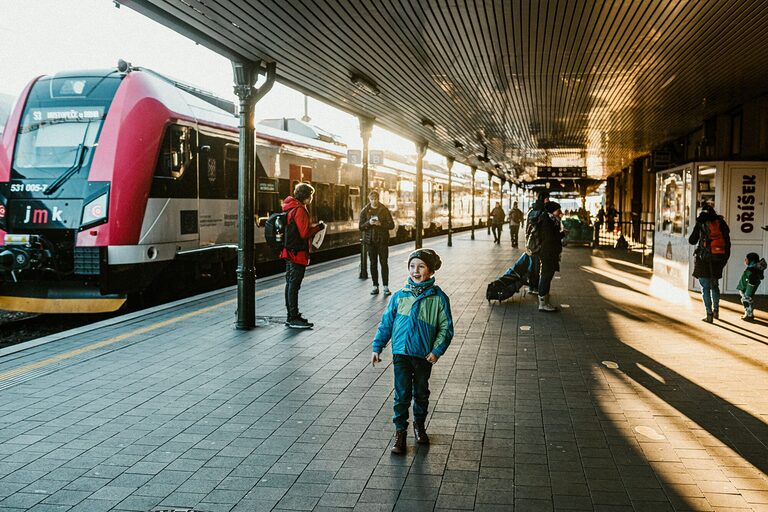
Picture stepping off a train into a sunny European square with no traffic jam behind you, no parking meter to feed and no tired toddler asking when you will arrive. Car-free family holidays in Europe are becoming one of the easiest ways for young families to explore new places without the stress of driving on unfamiliar roads or hunting for parking near a hotel. With excellent rail networks, trams, ferries and walkable town centres across the continent, families can enjoy a relaxed and sustainable trip while still covering plenty of ground and keeping children entertained along the way.
Overview: Quick Answers for Car-Free Family Travel
- Best destinations for car-free family trips include Bruges, Copenhagen, Ljubljana, Zermatt and Amsterdam
- Trains are the easiest way to travel between cities, with family carriages, seat reservations and often free or discounted travel for young children
- City breaks work well when the destination has trams, metros or buses that reach major attractions
- Ferries suit island hopping or coastal routes and often include cabins and play areas for children
- Luggage is easier to manage with one bag per person, packing cubes and a lightweight foldable buggy
- Budget savings come from avoiding car hire, fuel, parking and insurance costs
- Many European cities offer family transport passes that combine unlimited public transport with attraction discounts
Best Car-Free Destinations in Europe
Some European towns and cities are made for exploring on foot or by public transport, which makes them ideal for a family trip that skips the car altogether.
- Bruges, Belgium is small enough to walk almost everywhere, with canal boat rides that children usually love
- Copenhagen, Denmark has a clean and efficient metro system along with harbour buses that double as a scenic tour
- Ljubljana, Slovenia has a pedestrian-only city centre with a relaxed riverside atmosphere
- Zermatt, Switzerland bans private petrol and diesel vehicles, allowing families to enjoy alpine views without worrying about traffic
- Amsterdam, Netherlands offers trams, ferries and canal boats, though buggies are often easier to manage on public transport than bicycles
- Freiburg, Germany is another excellent option, with extensive tram networks, green spaces and a highly walkable city centre
These destinations support the sustainable travel experiences many families increasingly seek, since fewer cars on the road mean cleaner air and quieter streets for children to enjoy.
Travel hack: When booking accommodation, check the walking distance to the nearest train station or tram stop. Saving even a ten-minute walk can make a huge difference when travelling with young children and luggage.
Travelling by Train with Children
Family train travel in Europe is often the backbone of a car-free holiday, since trains connect most major cities and many smaller towns as well.
- Book seats together in advance, especially during school holidays and summer travel periods
- Choose a family carriage when available, as some operators provide play areas and child-friendly seating
- Pack snacks, refillable water bottles and small activities to keep children occupied
- Consider night trains for longer distances, which can save both travel time and accommodation costs
- Look into family rail passes, since many countries offer discounted or free travel for children under a certain age
- Reserve a space for a buggy or pram where possible, as luggage areas can fill quickly
- Download train tickets and timetables offline in case station Wi-Fi is unreliable
Trains also make it easy to build a relaxed itinerary, since families can move between destinations without the fatigue of long drives.
Travel hack: Pack a small picnic lunch for longer train journeys. Food bought at stations is often significantly more expensive than supermarket alternatives.
City Breaks with Great Public Transport
A city break becomes far less stressful when public transport is straightforward, affordable and frequent.
- Vienna has an extensive tram and metro network that reaches most museums, parks and family attractions
- Berlin offers day passes covering buses, trams and underground services, often making them better value than multiple single tickets
- Barcelona has improved accessibility at many metro stations, including lifts that are helpful for buggy users
- Look for family or group transport tickets, which usually provide better value than individual fares
- Check whether the local transport app offers real-time arrivals to minimise waiting with restless children
- Many European cities allow children below a certain age to travel free with a paying adult, so check local rules before purchasing tickets
Cities with strong public transport networks let families see more attractions in a day without the hassle of finding parking near each stop.
Family-Friendly Ferry Routes
Ferries can be a memorable part of the journey rather than simply a means of transport.
- Baltic Sea ferries, such as the Stockholm to Helsinki route, often include cabins, play areas and buffet dining
- UK to France ferries provide a scenic alternative to flying and allow families more space to move around
- Greek island hopping by ferry allows families to visit several islands without needing a hire car on each one
- Book a cabin for overnight routes, since a private space helps young children sleep better
- Arrive early for boarding, as ferry terminals can be busy and slower to navigate with buggies or young children
- Pack a light jacket even in summer, as ferry decks can feel surprisingly cool and windy
Ferries can also support lower-carbon travel choices compared with driving long coastal routes.
How to Plan Luggage Without a Car?
Managing luggage without a car boot takes a little planning, but it quickly becomes second nature.
- Stick to one bag per person where possible, making transfers between trains, trams and hotels much easier
- Use packing cubes to keep clothing organised and simplify repacking
- Choose a lightweight suitcase that can be lifted easily onto train luggage racks
- Bring a lightweight foldable buggy that can be carried when lifts are unavailable
- Use station luggage lockers or left-luggage services during longer sightseeing days
- Consider luggage forwarding services for multi-city trips
- Pack one small day bag with snacks, wipes, chargers and essentials so you do not need to unpack larger luggage during travel days
Travel hack: Place a brightly coloured luggage strap or ribbon on each suitcase. It makes spotting bags much faster in busy train stations.
Budget Benefits of Car-Free Travel
Skipping the hire car often means significant savings for families, alongside environmental benefits.
- No car hire fees
- No fuel expenses
- No parking charges
- No additional insurance costs
- Discounted or free rail travel for children in many countries
- Reduced toll charges, which can be surprisingly expensive in parts of France, Italy, Spain and Portugal
A less obvious benefit is that families often spend less on unexpected expenses such as parking fines, navigation apps and vehicle upgrades.
Car Travel vs Car-Free Travel for Families
| Factor | Car Travel | Car-Free Travel |
| Average daily cost | Higher due to hire, fuel and parking | Lower, especially with family rail passes |
| Stress level | Higher with unfamiliar roads and parking | Lower with fixed schedules and less navigation |
| Flexibility | High for remote areas | High for cities and well-connected towns |
| Environmental impact | Higher emissions per trip | Lower emissions, especially by train or ferry |
| Best suited for | Rural regions and road trips | City breaks, island hopping and sustainable holidays |
Frequently Asked Questions
Yes. It works particularly well in destinations with strong public transport networks. Planning seat reservations, accommodation locations and buggy access in advance makes the experience much smoother.
Switzerland is often considered the gold standard thanks to its rail network, while the Netherlands, Denmark and Austria are also excellent choices for families.
Pack lightly, use luggage lockers during sightseeing days and consider luggage forwarding services if travelling between several destinations.
In many cases, yes. Once fuel, parking, tolls and insurance are included, train travel can be significantly cheaper, particularly for families benefiting from child discounts.
Trains generally produce some of the lowest emissions per passenger kilometre, making them one of the most sustainable ways to explore Europe as a family.